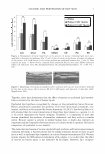
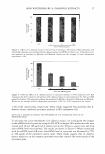
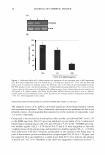
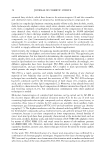
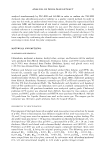
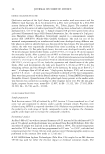
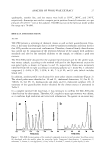
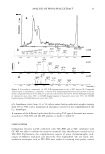
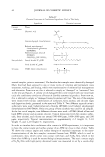
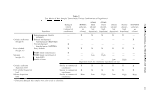
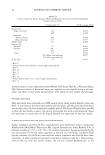
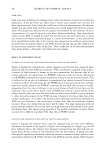
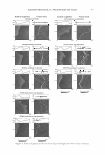
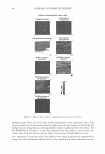
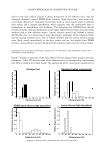
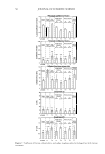
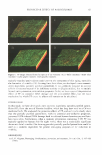
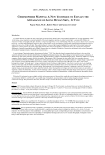
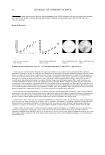
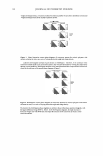
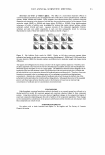
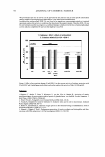
PROTEC T1VE Efl◄ECT ◄ OF P AEONll◄LORlN 3 Figure 5. 3D images obtained from s ·in replicas of one volunteer. (.A,C) "before treatment." (B,D) "after treatment." (A,B) sample treatment. (C,D) placebo treatment. topically uppliecl anti-o. idants could prevent the symptoms of ski11 aging, especially the fi rnrntion , , f wrink l ·s O ) ... rarting from rh . _ id as, we developed a new cosmetic ,1Cliv in rrcdicnr, pnnially p 1rificd paeoniflorn. .1t was primarily tL rgeted to preve11t cdlular senc. cence bernus. of i s inhibitory acti ity on J3-galactosidast:, but we mainly f cus, d o irs protective,,. ntioxidacive properties. :c far, w� hav� reported the protective eHecrs f PF on 0 iclativ D1 TA damage and the anti-wrinkle efect, f hut the exact me hanism by ,vhich PP ex .rts its effects stiU remains to be elucidated. CONCUJ"JON In this study, we have developed a new cosmetic it gredient, parcial.l y purified paeoni- florin (PF), from the root of Paeoniae lactiflm·.,J which has lon.g been u •,�d as a Chin se medicinal herb. We evaluated che protective effe t of PF, and om resuhs clearly show that the p.artiall purified paeoniflorin, with its potential anti-oxidative properties, prevented DVB-induced DNA damage both in cul ured human keratinocytes and hair- less mouse skin. Furthermore, when a cosmetic pr paration containing 0.5% PF was topicaUy applied to human skin for eight \-..' .k , chcrc \1.ras a srariscically significant decre��e in facial \;\'tinkle . Our dma suggest tha par ially purified pa oniflorin could be used a ,1 cosmetic ingredienr for general anti-aging purposes or for reduct.ion in ,vrinklc R Eir◄ER El TCE. .. (1) L. H. Kligman, Photo�ging: 1-hnifestations, prevention, and treatment, D 'l'tJMtol. Clin., ·, 517-528 (1986).

64 JOURNAL OF COSMETIC SCIENCE (2) P. Brenneisen, H. Sies, and K. Scharffetter-Kochanek, Ultraviolet-B irradiation and matrix metallo- proteinases: From induction via signaling to initial events, Ann. N. Y. A cad. Sci., 97 3, 31-43 (2002). (3) S. K. Katiyar and H. Mukhtar, Green tea polyphenol (-)-epigallocatechin-3-gallate treatment to mouse skin prevents DVB-induced infiltration of leukocytes, depletion of antigen-presenting cells, and oxidative stress,]. Leukoc. Biol., 69, 719-726 (2001). (4) S. K. Katiyar and H. Mukhtar, Green tea polyphenolic antioxidants and skin photoprotection (review), Int.]. Oneal., 18, 1307-1313 (2001). (5) Y. Shindo, E. Witt, D. Han, W. Epstein, and L. Packer, Enzymic and non-enzymic antioxidants in epidermis and dermis of human skin,]. Invest. Dermatol., 102, 122-124 (1994). (6) H. Tsuboi, K. Hossain, A. A. Akhand, K. Takeda, J. M. Du, and I. Nakashima, Paeoniflorin induces apoptosis of lymphocytes through a redox-linked mechanism,]. Cell. Biochern., 93, 162-172 (2004). (7) J. Liang, A. Zhou, M. Chen, and S. Xu, Negatively regulatory effects of paeoniflorin on immune cells, Eur.]. Pharmacol., 183, 901-902 (1990). (8) J. Ye, H. Duan, X. Yang, W. Yan, and X. Zheng, Anti-thrombosis effect of paeoniflorin: Evaluated in a photochemical reaction thrombosis model in vivo, Planta. Med., 67, 766-767 (2001). (9) H. Y. Tsai, Y. T. Lin, C. H. Tsai, and Y. F. Chen, Effects of paeoniflorin on the formalin-induced nociceptive behaviour in mice,]. Ethnopharmacol., 75, 267-271 (2001). (10) J. E. Yendle, H. Tinwell, B. M. Elliott, and J. Ashby, The genetic toxicity of time: Importance of DNA-unwinding time to the outcome of single-cell gel electrophoresis assays, Mutat. Res., 375, 125-136 (1997). (11) N. P. Singh, Microgels for estimation of DNA strand breaks, DNA protein crosslinks and apoptosis, Mutat. Res., 455, 111-127 (2000). (12) K. Konca, A. Lankoff, A. Banasik, H. Lisowska, T. Kuszewski, S. Gozdz, Z. Koza, and A. Wojcik, A cross-platform public domain PC image-analysis program for the comet assay, Mutat. Res., 534, 15-20 (2003). (13) J. T. Oh, B. M. Kim, S. R. Son, S. W. Lee, D. Y. Kim, and Y. S. Kim, Quantification of skin wrinkles using low coherence interferometry, Proc. SPIE, 5316, 463--466 (2004). (14) J.P.Cesarini,L. Michel, J.M. Maurette, H. Adhoute, and M. Bejot, Immediate effects of UV radiation on the skin: Modification by an antioxidant complex containing carotenoids, Photodermatol. Photoim- munol. Photomed., 19, 182-189 (2003). (15) A. K. Greul, J. U. Grundmann, F. Heinrich, I. Pfitzner, J. Bernhardt, A. Ambach, H. K. Biesalski, and H. Gollnick, Photoprotection of UV-irradiated human skin: An antioxidative combination of vitamins E and C, carotenoids, selenium and proanthocyanidins, Skin. Pharmacol. Appl. Skin. Physiol., 15, 307-315 (2002). (16) D. W. Fairbairn, P. L. Olive, and K. L. O'Neill. The comet assay: A comprehensive review, Mutat. Res., 339, 37-59 (1995). (17) T. Okubo, F, Nagai, T. Seto, K. Satoh, K. Ushiyama, and I. Kano, The inhibition of phenylhydro- quinone-induced oxidative DNA cleavage by constituents of Moutan cortex and Paeoniae radix., Biol. Pharm. Bull., 23, 199-203 (2000). (18) P. G. Humbert, M. Haftek, P. Creidi, C. Lapiere, B. Nusgens, A. Richard, D. Schmitt, A. Rougier, and H. Zahouani, Topical ascorbic acid on photoaged skin. Clinical, topographical and ultrastructural evaluation: Double-blind study vs. placebo, Exp. Dermatol., 12, 237-244 (2003).
Purchased for the exclusive use of nofirst nolast (unknown)
From: SCC Media Library & Resource Center (library.scconline.org)