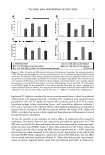
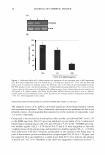
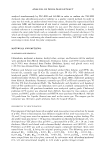
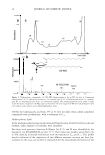
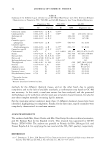
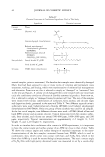
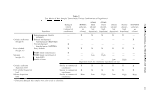
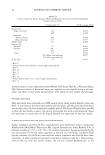
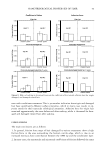
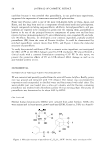
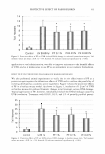
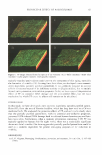
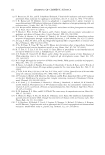
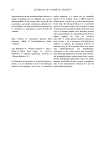
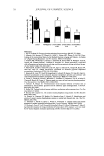
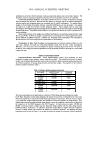
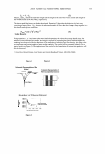
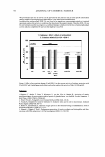
2005 ANNUAL SCIENTIFIC MEETING THE BIOENERGETIC CONSEQUENCE OF GLYCATION IN THE AGING HUMAN SKIN Lieve Declercq', Ph.D., H. Corstjens', Ph.D.,A. Neven', G. Eyckmans', L. Hellemans', Ph.D., and Daniel Maes2, Ph.D. Introduction 1 Estee Lauder Companies, Oevel, Belgium 2 Estee Lauder Companies, Melville, NY The reaction between sugars and proteins (glycation) leads to the reversible formation of intermediate reaction products like methylglyoxal and glycolaldehyde. Through complex rearrangements these early glycation products react with proteins to give rise to protein modifications, inter-and intra-molecular cross-links and formation of Advanced Glycation Endproducts (AGEs). These AGEs have been demonstrated to accumulate as a function of age (1) and in age-related diseases such as diabetes (2) and chronic renal failure (3). Glycation in the aging human skin Some glycated modifications show typical fluorescent properties. Skin autofluorescence is correlated with the increased presence of specific AGEs as a function of age and diabetes duration (4) and has been proposed as a clinical tool for assessing risk of progression of long-term diabetic complications (5). We have measured in vivo fluorescence intensity in the skin of 94 panellists, 78 non-smokers and 16 smokers. Multiple linear regression analysis was used to take into account individual differences in skin color, after which the fluorescence intensity attributed to AGEs (�xf�m 3 701440nm) and elastin-collagen cross-links (�xl�m 4401520nm) increased as a function of panelist age and smoking behavior. An aqueous extract of cigarette smoke was found to induce AGE-related fluorescence in a model protein, consistent with its presumed role as a source of reactive glycation intermediates (6). Consequences of glycation for the human skin It is generally accepted that the cross-linking of long-lived structural proteins like collagen and elastin may contribute to the loss of elasticity in aging skin (7). Enzymes are susceptible to glycation-induced deactivation when modifications in functional groups are introduced by reaction with glycation propagators (8). This can lead to a decrease in antioxidant defense capacity when enzymes like catalase and superoxide dismutase are affected, and a loss of bioenergetic capacity when mitochondrial energy production is compromised. The latter can be the result of an overall increase in intracellular free radicals causing mitochondrial DNA mutations, as well as a direct consequence when mitochondrial enzymes are deactivated by glycation. Creatine kinase provides a biological system to store the free energy of adenosine triphosphate in the form of phosphocreatine, and to release this free energy upon acute energetic demand (9). Normal human skin expresses cytosolic and mitochondrial creatine kinases as well as the creatine transporter (10, 11). Using in vivo 31 P magnetic resonance spectroscopy we have previously demonstrated that the phosphocreatine reserve in human skin was depleted shortly after exposure to a mild stress (a single UV A dose of 6 J/cm2) and recovered more slowly in older subjects than in younger ones ( 12). Our current results indicate that creatine kinase is susceptible to deactivation by glycation intermediate products (methylglyoxal) and upon incubation with a smoke condensate in a concentration-dependent fashion (Fig. 1 ). Modifications induced by glycation may therefore contribute to the loss of energetic rebound capacity in aged subjects. Conclusion Creatine kinase, one of the key enzymes in the bioenergetic response of human skin, was found to be susceptible to deactivation by mediators that are formed during the early steps of the glycation process and upon incubation with a smoke condensate. We hypothesize that the process of glycation may compromise the bioenergetic capacity of aging skin, especially in smokers. 77

78 JOURNAL OF COSMETIC SCIENCE 120 0 0 0 0 � 0 100 80 u ,...._ n, (0 Cl) 60 1/) CX) CX) n, C 'V 'V � Cl) 40 C � � 20 u 0 control methytglyoxal smoke extract smoke extract smoke extract 1/100 1/10 1/1 References I. Suji G, Sivakami S. Glucose, glycation and aging. Biogerontology. 5(6):365-373 (2004). 2. Monnier VM, Mustata GT, Biemel KL, Reihl 0, Lederer MO, Zhenyu D, Sell DR. Cross- Linking of the Extracellular Matrix by the Maillard Reaction in Aging and Diabetes: An Update on "a Puzzle Nearing Resolution". Ann NY Acad Sci. 1043:533-544 (2005). 3. Sulirnan ME, Heimburger 0, Barany P, Anderstam B, Pecoits-Filho R, Rodriguez Ayala E, Qureshi AR, Fehrman-Ekholm I, Lindholm B, Stenvinkel P.J. Plasma pentosidine is associated with inflammation and malnutrition in end-stage renal disease patients starting on dialysis therapy. Am Soc Nephrol. 14(6): 1614-1622 (2003). 4. Meerwaldt R, GraaffR, Oomen PH, Links TP, Jager JJ, Alderson NL, Thorpe SR, Baynes JW, Gans RO, Smit AJ. Simple non-invasive assessment of advanced glycation endproduct accumulation. Diabetologia. 47(7): 1324-3130 (2004). 5. Meerwaldt R, Links TP, GraaffR, Hoogenberg K, Lefrandt JD, Baynes JW, Gans RO, Smit AJ. Increased accumulation of skin advanced glycation end-products precedes and correlates with clinical manifestation of diabetic neuropathy. Diabetologia. 48(8):1637-1644 (2005). 6. Cerami C, Founds H, Nicholl I, Mitsuhashi T, Giordano D, Vanpatten S, Lee A, Al-Abed Y, Vlassara H, Bucala R, Cerami A. Tobacco smoke is a source of toxic reactive glycation products. Proc Natl A cad Sci US A. 94(25): 139 I 5-13920 ( 1997). 7. Reihsner R, Menzel EJ. Two-dimensional stress-relaxation behavior of human skin as influenced by non-enzymatic glycation and the inhibitory agent aminoguanidine. J Biomech. 31(11):985-993 (1998). 8. Seidler NW. Carbonyl-induced enzyme inhibition: mechanisms and new perspectives. Curr Enz lnhib 1(1):21-27 (2005). 9. Bessrnan SP, Carpenter CL. The creatine-creatine phosphate energy shuttle. Ann Rev Biochem 54:831-862 ( 1985). 10. Zemtsov A, Cameron GS, Bradley CA, Montalvo-Lugo V, Mattioli F. Identification and activity of cytosol creatine phosphokinase enzymes in normal and diseased skin. Am J Med Sci. 308:365-369 (1994). 11. Schlattner U, Mockli N, Speer 0, Werner S, Wallimann T. Creatine kinase and creatine transporter in normal, wounded, and diseased skin. J Invest Dermatol. 118(3):416-423 (2002). 12. Declercq L, Perin F, Vial F, Savard S, Petitcollin B, Beau P, Collins D, Mammone T, Maes D. Age-dependent response of energy metabolism of human skin to UV A exposure: an in vivo study by 31 P nuclear magnetic resonance spectroscopy. Skin Res Technol. 8(2): 125-132 (2002).
Purchased for the exclusive use of nofirst nolast (unknown)
From: SCC Media Library & Resource Center (library.scconline.org)