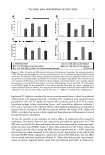
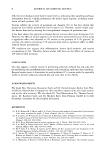
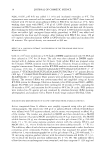
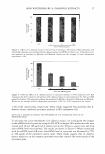
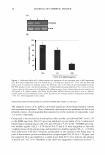
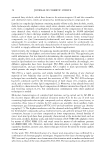
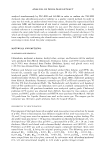
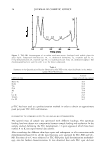
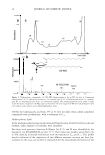
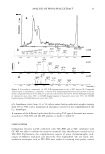
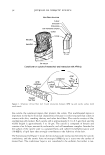
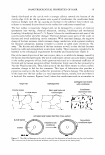
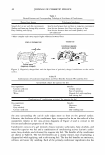
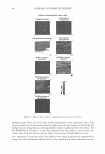
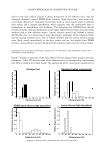
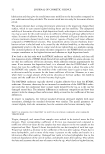
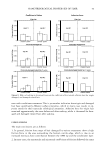
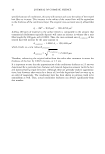
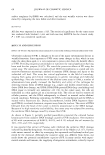
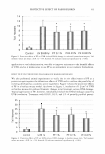
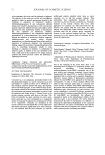
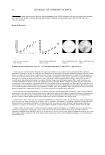
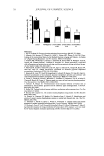
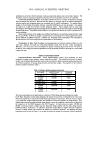
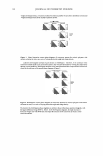
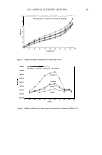
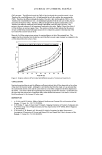
2005 ANNUAL SCIENTIFIC MEETING 30 -.------------------------------, 25 20 E 15 10 10 _._ Untreated -+- coconut _,.__ mineral ...... sunflower 20 30 40 so Target RH(%) 60 70 80 Figure 1. Sorption-desorption isothenns of oil-treated hair at 25°C 1.60E-09 1AbE-119 1.20E-09 1.00E-119 8.00E-1D 6.00E-10 4.00E-10 2.00E-10 O.OOE+-00 0 ---control -+-coconut ..,._mineral --sunflower 10 20 30 40 50 RH(%) 60 70 80 90 100 9D 100 Figure 2. Diffusion coefficients of water vapor in oil-treated hair as a function of RH at 25°C 89

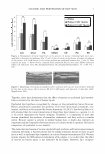
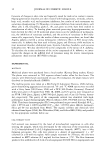
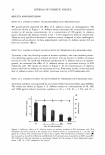
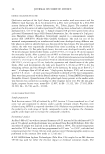
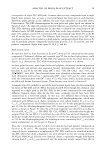
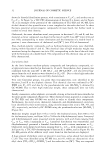
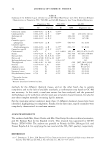
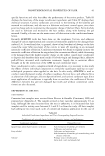
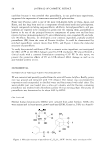
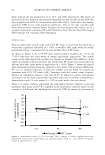
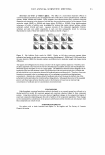
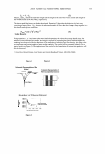
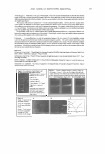
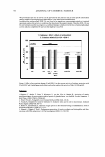
90 JOURNAL OF COSMETIC SCIENCE CMCs are open. The diffusion through the CMCs is fast, but through the unswollen matrix is slow. Therefore, the overall diffusion is slow. At high humidity the cells are swollen, thus narrowing the CMCs. Therefore, the diffusion through the matrix of the cells is fast, but through the CMCs is slow. Therefore, the overall diffusion is slow. At intermediate humidities both the cells are swollen, but not excessively to block the CMCs. Therefore, diffusion through both the matrix and the CMCs is fast. Therefore, the diffusion coefficient passes through a maximum in this RH range (40-60%). This pattern is observed in almost all the experiments conducted in this study. Figure 3 shows the effect of oil film thickness on moisture regain of hair. The sorption isothenns clearly indicate that the amount of water sorbed by hair treated with larger amount of oil is reduced to a greater extent than that of the hair treated with a smaller amount of oil. Removal of oil films using acetone restores the sorption behavior to that of the untreated hair. This suggests that the oil absorbed into the hair has very little effect on water vapor transport as compared to the oil films deposited on the surface of hair. 30 -,--------------------------, 1--contrnl ....-0.1 mVg coc --0.1 mVg min -+-1.2 ml/g coc �1.2 mVg mini 25 20 10 10 20 4D 50 60 70 80 so 100 Target RH (%) Figure 3. Sorption isotherms of hair treated with different amounts of coconut and mineral oils. CONCLUSIONS Sorption-desorption behavior and the diffusion coefficients indicate that oil films deposited on the surface of hair lower the moisture uptake. Although it is not entirely clear from this study, we can speculate that the oil penetrated into the cortex and the cuticle have less of an effect compared to the films deposited on the surface. They seem to block the oil molecules from entering into the fiber structure. Oil absorbed into the cortex does not seem to have a significant effect, either because the amount is too small or it does not block the pathways for the transport of water vapor. REFERENCES 1. A. S. Rele, and R. B. Mohile, Effect of Mineral, Sunflower and Coconut Oils on Prevention of Hair damage, J. Cosmet. Sci. 54, 175-192 (2003). 2. S. B. Hornby, Y. Appa, S. Ruetsch and Y. Karnath, Mapping Penetration of Cosmetic Compounds into Hair Fibers Using Time-of-Flight Secondary Ion Mass Spectrometry (TOF-SIMS), IFSCC Magazine, 8, 99-104 (2005). 3. S. B. Ruetsch, Y. K. Karnath, A.S. Rele and R. B. Mohile, Secondary Ion Mass Spectrometric Investigation of Penetration of Coconut and Mineral Oils into Human Hair Fibers: relevance to Hair Damage, J. Cosmet. Sci. 52, 169-184 (2001).
Purchased for the exclusive use of nofirst nolast (unknown)
From: SCC Media Library & Resource Center (library.scconline.org)