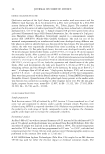
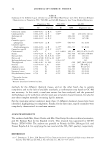
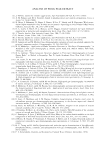
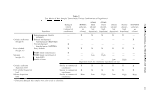
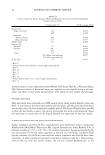
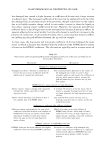
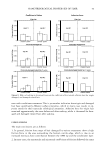
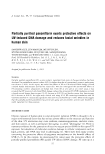
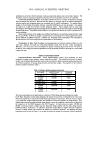
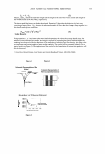
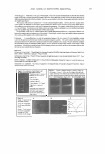
Table V Test Matrix of Hair Samples Treated with Various Combinations of Ingredients* (PDMS (PDMS Damaged (BTMAC blend blend (Amino treated surfactant, silicone, silicone, silicone, (commercial no low high low Ingredient conditioner) silicone) deposition) deposition) deposition) Behentrimonium chloride X X X X (BTMAC) Cationic surfactants Behenyl amidopropyl (weight %) dimethylamine (BAPDMA) Stearamidopropyl X dimethylamine (SAPDMA) Fatty alcohols Fatty alcohols X X X X X (weight%) PDMS blend (dimethicone) X Silicones PDMS blend (with blend of Low High (weight%) high MW) Amino silicone Low Deposition levels for conditioner ingredients on hair Cationic surfactant Similar to commercial X X X X deposition level conditioner Fatty alcohol deposition Similar to commercial X X X X level conditioner Silicone deposition Similar to commercial None Low High Low level conditioner * Untreated damaged hair samples were also tested as a baseline. (Amino silicone, high deposition) X X High X X High (BAPDMA surfactant, no silicone) X X X X None z 0 ?=' - 0 0 Q - r ""CJ ?=' 0 ""CJ trJ ?=' - trJ en 0 "TI ::r: - ?=' � vJ

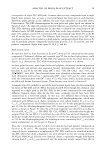
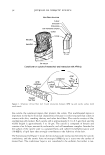
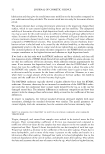
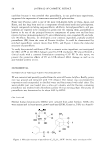
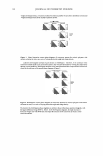
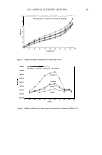
44 JOURNAL OF COSMETIC SCIENCE Table VI Contact Angle and Surface Energy of Relevant Materials Associated with Nanotribological Characterization of Hair Contact angle (0) Human hair Virgin untreated 103a 1006 Damaged Brown coloring 606 Blond coloring 556 PDMS (bulk) 105c Human skin Forehead 55e Forearm 88e 84f Finger 74f 58g (before soap-washing) 104g (after soap-washing) Si3N4 film 356 a Ref. 8. 6 Values obtained from dynamic contact angle measurements. c Ref. 9. d Ref. 10. "Ref. 11. r Ref. 12. g Ref. 13. 11 Values obtained from static contact angle measurements. 1 Ref. 14 Surface energy Q/m2) 0.024a 0.0286 0.0386 0.0476 0.020d 0.043e 0.038e 0.029f 0.024f 0.027g o.o4i method using a contact angle goniometer (Model 100, Rame-Hart Inc., Mountain Lakes, NJ). Five microliters of deionized water was applied on two samples using a micropi- pette, and three contact angle measurements were taken on each sample and averaged. SPECIMEN MOUNTING Hair specimens were mounted onto AFM sample pucks using Liquid Paper® correction fluid. A thin layer of the fluid was brushed onto the puck, and when the fluid hardened into a tacky state, the hair sample was carefully placed. The Liquid Paper® dries quickly to keep the hair firmly in place. An optical microscope was used to preliminarily image the specimen to ensure none of the Liquid Paper® was deposited on the hair surface. SURFACE ROUGHNESS AND FRICTION FORCE MEASUREMENTS Surface roughness and friction force measurements were performed using a commercial AFM system (MultiMode Nanoscope Illa, Digital Instruments, Santa Barbara CA) in ambient conditions (22 ° ± 1 ° C, 50 ± 5% relative humidity). Square pyramidal Si 3 N 4 tips of nominal 30-50-nm radius attached to the end of a soft Si 3 N 4 cantilever beam (spring constant of 0.06 Nim) were used for surface roughness and friction force mea- surements. A softer cantilever was used to minimize damage to the hair. After engage- ment of the tip with the cuticle surface, the tip was scanned perpendicular to the
Purchased for the exclusive use of nofirst nolast (unknown)
From: SCC Media Library & Resource Center (library.scconline.org)