SKIN WHITENING BY A. DAHURICA EXTRACTS 13 the optical density was read at 565 nm. Only cells with functional mitochondria are capable of cleaving MTT to generate the dark purple formazan. The results were ex- pressed in percentages relative to the control (12). EFFECT OF A. DAHURICA EXTRACT ON MELANOGENESIS IN Bl6 MELANOMA CELLS The A. dahurica extract was quantitatively evaluated regarding its inhibitory activity on melanogenesis in B16 melanoma cells. The inhibitory activity on melanogenesis of A. dahurica extract was demonstrated according to the procedure oflmokawa et al. (13) with minor modification. B16 melanoma cells were seeded into a 12-well microplate at a density of 8 x 10 5 cells, and incubated in 37°C in Dulbecco's Modified Eagle's Medium (DMEM) supplemented with 10% fetal calf serum (FCS). After 24 hours, the medium was exchanged with DMEM supplemented with 2% FCS and the plant extract at various concentrations, and cultured at 3 7°C. The intracellular melanin content and the cell number were measured after 72 hours. The melanin content of B16 melanoma cells was quantified by the following procedure. The cells were washed with phosphate buffer saline (PBS) and then collected by trypsinization and centrifugation. The cells were lysed with phosphate buffer (50 mM, pH 6.8) containing 1 % Triton-X, 2 mM phenyl methyl sulfonyl fluoride (PMSF) and collected by centrifugation. The pellets of the cells were solubilized in lN NaOH containing 10% DMSO to determine the melanin content. The melanin content was quantified with an absorbance at 405 nm. A standard curve for melanin determination was prepared using synthetic melanin (Sigma Chemical Co., St. Louis, MO). The cell number was determined with a Coulter counter. EFFECT OF A. DAHURICA EXTRACT ON THE ACTIVITY OF TYROSINASE IN B16 MELANOMA CELLS Cells (5 x 10 4 ) were seeded into a 96-well microplate in DMEM supplemented with 5% FCS and cultured at 3 7°C for 24 hours. After washing with PBS twice, the cells were lysed for 30 minutes at 3 7°C with 50 µl of phosphate buffer (50 mM, pH 6.8) con- taining 1 % Triton-X, 2 mM PMSF. Then 50 µl of phosphate buffer (50 mM, pH 6.8) containing 0.1 % L-3, 4-dihydroxyphenylanine (DOPA) and 50 µl of A. dahurica extract was added to the lysate and incubated at 3 7°C for three hours. When DOPA was used as a substrate of tyrosinase, melanin was yielded as a final product. Therefore, to evaluate tyrosinase activity, melanin content was determined by the method described in the previous section. A protein in the cells was quantified with the Bio-Rad protein assay kit (Pierce Co., Rockford, Illinois) according to the supplier's instruction. Tyrosinase ac- tivity was expressed as µg melanin/µg protein. EFFECT OF A. DAHURICA EXTRACT ON THE SYNTHESIS OF TYROSINASE IN Bl6 MELANOMA CELLS The synthesis of tyrosinase was assayed by enzyme-linked immunosorbent assay (ELISA) by Fuller et al. ( 14). Cells (5 x 10 4 ) were seeded into a 96-well microplate in DMEM supplemented with 5% FCS and cultured at 37°C for 24 hours. The cells were cultured in DMEM supplemented with A. dahurica extract for 24 hours. After washing with PBS, the cells were lysed at 37°C for 30 minutes with 75 µl of phosphate buffer (50 mM, pH 6.8) containing 1 % Triton-X and 2 mM PMSF. Then the supernatants were transferred into a 96-well microplate and the coating buffer (Na2CO3 0.159%, NaHCO 3 0.293%,

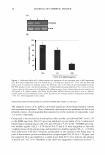
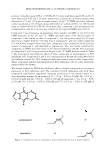
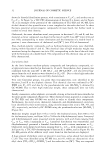
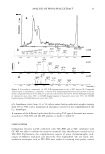
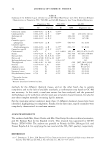
14 JOURNAL OF COSMETIC SCIENCE NaN 3 0.02%, pH 9.6) was added 1:1 (v/v) and incubated overnight at 4 ° C. The supernatants were removed and the coated well was washed with PBS-T three times and blocked with 3% bovine serum albumin (BSA) in PBS-T for two hours at 37°C. After washing three times with PBS-T, 150 µl of 1:2000 diluted primary antibody (anti- tyrosinase) in PBS-T was added to each well and incubated for one hour and 30 minutes. After washing the wells with PBS-T three times, 150 µl of 1:3000 diluted secondary Ab (Goat anti-rabbit IgG conjugated horse-radish peroxidase) in PBS-T was added and incubated for one hour and 30 minutes. After washing with PBS-T five times, 150 µl of 5 mg/ml o-phenylenediamine (OPD) in OPD solution was added and incubated for 40 minutes. The optical density was measured at 490 nm. EFFECT OF A. DAHURICA EXTRACT ON EXPRESSION OF THE TYROSINASE GENE IN Bl6 MELANOMA CELLS Cells (1 x 10⁶) were seeded into a T-75 flask in DMEM supplemented with 5% FCS and then cultured at 37 ° C for 24 hours. The cells were then cultured in DMEM supple- mented with A. dahurica extract for 24 hours. Total cellular RNA was prepared using the Ultraspec II RNA isolation system (Biotecx Lab., Houston, Texas) according to the supplier's instructions. Primers used for RT-PCR analysis in this study were as follows tyrosinase (716 bp), 5'-ACGCCCGAGGGACCTTTACGGCGTAATCCT-3' (5' primer), 5'-TTATAAATGGCTCTGATACAAGCTGTGGTAA-3' (3' primer) �-actin (400 bp), 5'-CGAGCTGCCTGACGGCCAGG-3' (5' primer) 5'-ATTTGCGGTGG- ACGATGGAG-3' (3' primer). These primers were synthesized by Bioneer Corporation (Korea). The extracted RNA was reverse-transcribed and amplified using an Access R T-PCR system kit (Promega, USA) on a thermal cycler (PCR system PCS0 1, ASTEC, Japan). The PCR cycle conditions were: melting for 30 seconds at 94°C, annealing for 30 seconds at 65°C, and extension for 90 seconds at 68 ° C for 28 cycles. PCR products were resolved on 2% agarose gel and visualized by ethidium bromide (EtBr) staining, photographed, and analyzed with a Fluoro S multi-image analyzer (Bio-Rad, USA). ISOLATION AND IDENTIFICATION OF ACTIVE COMPOUNDS FROM ANGELICA DAHURICA Active compounds from A. dahurica were roughly separated using silica gel column chromatography. The dried roots (100 g) of A. dahurica Benth et Hook (Umbelliferae) were refluxed with 70% aqueous ethanol, and the extract was evaporated to afford 30 g of the residue. The residue was dissolved in MeOH and then divided into a MeOH soluble fraction (14 g) and a MeOH unsoluble fraction (9.5 g), respectively. The MeOH soluble fraction (14 g) was chromatographed on a silica gel column (250 g, 230-400 mesh, 15 x 50 cm) using stepwise gradient elution with the solvents CH 2 Cl 2 and MeOH (50:1, 1:1, v/v) to divide the fraction into eleven subfractions (Fr. 1 - Fr. 11). The inhibitory effect of each elution on melanogenesis was examined to select the elution containing active compounds. Further, the fraction that possessed the greater effect, subfraction 3, was rechromatographed on a silica gel column (70 g, 230-400 mesh, 2 x 50 cm) using stepwise gradient elution with the solvents hexane and EtOAc (5:1, 3:1, v/v) to divide the fraction into four subfractions (Fr. I - Fr. IV). The inhibitory effects of four fractions on melanogenesis were examined, and then compound 1 (114 mg) and
Purchased for the exclusive use of nofirst nolast (unknown)
From: SCC Media Library & Resource Center (library.scconline.org)