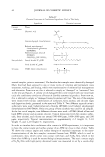
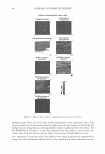
J. Cosmet. Sci.} 57, 37-56 CTanuary/February 2006) Nanotribological effects of silicone type, silicone deposition level, and surfactant type on human hair using atomic force microscopy CARMEN LA TORRE and BHARAT BHUSHAN, Nanotribology Laboratory for Information Storage and MEMS/NEMS (NLIM), The Ohio State University, 650 Ackerman Road, Columbus, OH 43202 ]IAN-ZHONG YANG, Procter & Gamble Far East} Beauty Care Products R & D Department, 17, Koyo-cho Naka 1-chome, Higashindada-ku, Kobe 658-0032} Japan and PETER M. TORGERSON, The Procter & Gamble Company, Sharon Woods Technical Center, 11511 Reed Hartman Highway, Cincinnati, OH 45241. Accepted for publication October 3, 2005. Synopsis The atomic/friction force microscope (AFM/FFM) has recently become an important tool for studying the micro/nanoscale structure and tribological properties of human hair. Of particular interest to hair and beauty care science is how common hair-care materials, such as conditioner, deposit onto and change hair's tribological properties, since these properties are closely tied to product performance. Since a conditioner is a complex network of many different ingredients (including silicones for lubrication and cationic surfactants for static control and gel network formulation), studying the effects of these individual components can give insight into the significance each has on hair properties. In this study, AFM/FFM is used to conduct nanotribological studies of surface roughness, friction force, and adhesive forces as a function of silicone type, silicone deposition level, and cationic surfactant type. Changes in the coefficient of friction as a result of soaking hair in de-ionized water are also discussed. INTRODUCTION The human hair structure has been extensively studied on the micro/nanoscale through methods such as scanning electron microscopy (SEM) and transmission electron micros- copy (TEM). More recently, AFM/FFM has been utilized to study hair because it allows for measurement of important micro/nanotribological properties such as surface rough- ness, friction force, and adhesive force (1--4). Figure 1 shows a schematic of a human hair fiber with its various layers of cellular structure. Of most importance to tribologists is Address all correspondence to Bharat Bhushan. 37

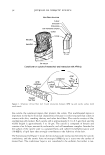
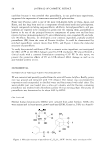
38 JOURNAL OF COSMETIC SCIENCE Hair fiber structure A-layer Exocuticle Endocuticle Cell membrane complex rtex Cuticle 50-100 µm Conditioner on cuticle of treated hair and interaction with AFM tip Treated hair fiber AFM cle e conditioner Figure 1. Schematic of hair fiber (ref. 5) and interaction between AFM tip and cuticle surface (with conditioner). the cuticle, the outermost region that protects the cortex. This multilayered region is important to the hair's frictional characteristics because it is this structure that comes in contact with skin, combing devices, and other hair fibers. The cuticle consists of flat, overlapping cells (scales). Each cuticle cell is approximately 0.3 to 0.5-µm thick and the visible length is approximately 5 to 10 µm. The cuticle is composed of keratin and consists of an A-fayer, exocuticle, endocuticle, and cell membrane complex. Attached to the surface of the cuticle scale is a saturated fatty acid called 18-methyleicosanoic acid (18-MEA), a lipid layer that strongly contributes to the lubricity of the hair. The bottom panel of Figure 1 shows the micro/nanoscale interaction between the cuticle, conditioner, and the atomic force microscope (AFM) tip as it scans over the surface of treated hair. The conditioner layer is not considered to be uniform, but rather is ran-
Purchased for the exclusive use of nofirst nolast (unknown)
From: SCC Media Library & Resource Center (library.scconline.org)