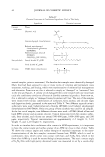
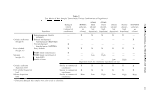
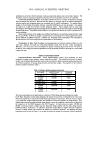
ABSTRACTS 67 surface texture with a high hydration of stratum corneum, a low melanin content and a low hemoglobin content. On the basis of these results, we developed an essence that can improve skin texture and blood flow, reduce melanin content, and increase the moisture in the stratum comeum. After eight weeks' usage of this product by consumer panels (u=30), it was confirmed that the skin transparency was improved by the increase of the intensity of the diffuse reflection light by gonio-spectrum photometer measurement and by consumers' self-assessment. Vol. 39, No. 4, 2005 Basic Knowledge on Cosmetic Dermatitis and Its Future Aspects Hideo Nakayama Nakayama Dermatology Clinic Common cosmetic dermatitis is composed of mainly chronic irritant contact dermatitis, allergic contact dermatitis and pigmented cosmetic dermatitis. Special types include atopic contact dermatitis due to cosmetics, complication of corticosteroid dermatosis, and eyelid dermatitis. Common cosmetic sensitizers are various liquid type oil. It was found that ( 1) using amphiphiles as the solid oil gave a spherical and visible sized particle and (2) behenyl alcohol was the most preferable amphiphile to make a large sized particle. DSC measurement and microscopic observation of the particle showed that the amphiphilic solid oil built a shell on the outer side of the particle and the shell protected the emulsion against aggregation and coalescence. It was found that the preparation of an extremely large emulsion could create innovative functions in the cosmetic field. The visible sized emulsion could provide a freshening feel in the early stages of the application and an emollient feel after rubbing into the skin. Furthermore, since this fragrances, pigments and base components. The best emulsion could protect an unstable lipophilic material from treatment to stop the recrudescence of cosmetic dermatitis is to perform patch testing to discover causative allergens for the patients, so that allergen control becomes possible later. It has been the only effective method to perfectly cure the disastrous pigmented cosmetic dermatitis with Mongoloids in the past. The avoidance of very allergenic fragrances (class A fragrances in the table) and two pigments, D&C Red No.31 and Yellow No.11 is essential to reduce cosmetic dermatitis of the consumers. The introduction of guidelines to avoid strong sensitizers is recommended. Recently, eyelid dermatitis due to allergy or irritation has been common and rubbing itchy eyelids has hydrolysis, it offers a suitable storage for useful cosmetic ingredients such as lipophilic drugs and hydrophobic powders. Polymerization of a Water-Swellable Microgel by a Novel Inverse Microemulsion Polymerization and Its Application as a Viscosity Thickener for Cosmetics Isamu Kaneda, Atsushi Sogabe, Hideo Nakajima led to blindness due to retinal abrasion. Adding various Material Science Research Center, Shiseido Co., Ltd. plant components seemed to have increased the irritation, and it is better to be avoided hereafter. A water-swellable micro gel was polymerized in the inverse The Preparation of Visible Emulsions and Its Applications to Cosmetics Tohru Okamoto* * , Yuji Matsushita* * , Eiko micelle of a nonionic surfactant, namely a confined space. The microgel was polymerized using 2-acrylamido-2- methylpropanesulfonic acid, dimethyl-acrylamide, and methylene-bis-acrylamide. To determine a suitable polymerization system that appeared W / 0 microemulsion at around 6S ° C, the phase diagram of the pseudo-ternary Matsuura * * * , Masaru Masuda * * * Shiseido system was studied. The microgel polymerized in the Material Science Research Center* *, Shiseido Product system was isolated by a reprecipitating method Development Center* * * consequently the samples were obtained as powder. The We developed a preparation method for visible emulsion droplets (0.05-3 mm) consisting of a solid type oil and a rheological properties of the microgel were studied after re- dispersing the powder sample in an aqueous medium. The viscosity-thickening effect of the crosslinked microgel was

68 JOURNAL OF COSMETIC SCIENCE higher than that of the non-crosslinked sample. Moreover, a suitable crosslinking ratio was confirmed. The viscosity thickening effects of the microgel under various pH, salt concentration, and alcohol concentration conditions were also investigated. The study revealed that the microgel can be considered as a multi-purpose viscosity thickener for cosmetics. Shear Viscosity of Concentrated Spherical Silica Suspension --Effect of Polymethylsiloxane Surface Treatment- Akio Hamamoto* * , Nobuhiro Nogami * * , Susan J. Muller* * * Daito Kasei Kogyo Co., Ltd. * *, Department of Chemical Engineering, University of California-Berkeley* * * In determining the formulation of cosmetics dispersed in powder, it is very important to discover the rheological behavior of the suspension. In the case of concentrated particle suspension, it is known that the remarkable behavior of the rheology, which is different from the dilution system, is shown in ways such as shear thickening. In this report, the rheological behaviors of a concentrated spherical silica particle system were investigated in terms of particle-particle and particle-medium interaction. In the case of an aqueous medium, shear thickening occurred under certain conditions. It is noteworthy that the pH of an aqueous medium far from the isoelectric point (pH=4) of silica particles resulted in a decrease in shear viscosity 71 due to an increase in the double-layer repulsion. In addition, the rheological behaviors of suspension using the silica particles, which were treated with polydimethylsiloxane and methylhydrogen polysiloxane as the solvent system, were investigated. Shear thickening disappeared in all of the solvent systems, and polydimethylsiloxane system showed lower viscosity than the methylhydrogen polysiloxane system. The surface treatment, which affects the shear viscosity, is changed not only by the particle-particle interaction but also the particle-medium interaction.
Purchased for the exclusive use of nofirst nolast (unknown)
From: SCC Media Library & Resource Center (library.scconline.org)