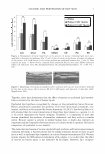
2005 ANNUAL SCIENTIFIC MEETING THE BIOLOGICAL CONSEQUENCE OF PEROXYNITRITE FORMATION IN INFLAMED SKIN Daniel Maes1, Ph.D., I. Sente2, D. Collins1, E. Pelle1 and Lieve Declercq2, Ph.D. 1 Estee Lauder Companies, Melville, NY 2 Estee Lauder Companies, Oevel, Belgium Introduction: Exposure to the environment (UV, smoke, pollution and Ozone), has been shown to initiate the release of inflammatory mediators in the skin, which ultimately will degrade the extra cellular matrix via the activation of metalloproteases. [ l] During this process of inflammation, specialized cells secrete reactive oxygen and nitrogen species that are intended to eliminate infectious agents from the skin. Activated macrophages and neutrophils concurrently generate high levels of superoxide (OZ-) and nitric oxide (NO ), which rapidly combine to form the highly reactive oxidant peroxynitrite (ONOO"). [2-3-4] Peroxynitrite can damage nucleic acids, lipids, and more importantly proteins with obvious consequences regarding the enzymatic activity in the skin leading to a significant reduction of some of the cells' most important defense mechanisms. [5] Interaction of peroxynitrite with proteins: Once formed, peroxynitrite interacts with proteins in many different fashions, from the non-specific fragmentation, reaction with suphydryl groups such as cysteine and methionine to reaction with aromatic amino acids such as tyrosine. Several in vitro assays were used to assess the effect of peroxynitrite. The Abel® antioxidant assay was used to measure peroxynitrite scavenging capacity of raw materials. A nitrotyrosine Elisa assay measures the nitrosylated end-products formed during the reaction between a protein's tyrosine moiety and peroxynitrite. An enzyme activity assay was used to assess the physiological impact of peroxynitrite damage to a protein. This allowed us to develop a model for measuring the extent of protein damage after reaction with peroxynitrite. In addition we were able to evaluate the effectiveness of known antioxidants in preventing protein damage as well as enzyme deactivation induced by peroxynitrite. Results: Peroxynitrite generated by SIN-I induced the nitrosylation of Bovine Serum Albumin (BSA) in a similar manner to a peroxynitrite salt, allowing us to use SIN-I as a peroxynitrite donor for the rest of our experiment. Similarly, ex vivo exposure of a Stratum Comeum extract to SIN-I induced the formation of nitrotyrosine residues indicating that the stratum comeum proteins are sensitive to this type of peroxynitrite damage. Antioxidant enzymes such as catalase and super oxide dismutase were exposed to SIN-I, but only the tyrosine containing enzyme catalase was found undergo nitrotyrosine formation, simultaneously a significant reduction of the antioxidant activity of this enzyme was detected. Another important enzyme transglutaminase, which plays an important role in the terminal differentiation process of the epidermis, was found to be equally susceptible to nitrosylation. Antioxidants such as Grape seed extract and N-Acetyl Cysteine were shown to protect BSA against nitrosylation by SIN-I. Similarly, these antioxidants protected catalase from being deactivated by SIN-I. Finally, the catalase mimic Euk-134, a manganese complex, was found to be insensitive to SIN-I damage as it kept its antioxidant activity regardless of the presence of peroxynitrite. Conclusions: The experiments described herein provide a clear evidence that peroxynitrite formation in the skin can cause nitrosylation of proteins and as a result can lead to a significant loss of enzyme activity ( catalase). 91

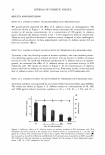
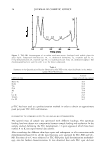
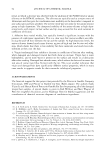
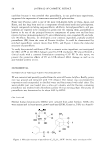
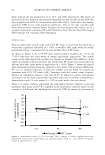
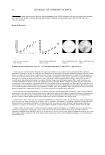
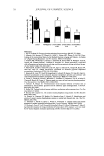
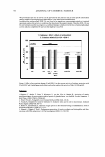
92 JOURNAL OF COSMETIC SCIENCE We proved that such loss of activity can be prevented by the judicious use of some specific antioxidants that are capable of scavenging peroxynitrite before it can induce protein modifications. In addition the catalase mimic EUK-134 was found to be impervious to peroxynitrite attack as it retained maximum catalase-like activity in conditions that deactivated the natural catalase. Therefore EUK-134 can be used with peroxynitrite scavengers in a combined strategy to both prevent the loss of natural antioxidant activity and also complement for any loss that might have occurred. 100 80 � ·= 60 0 no SIN-1 - cat 1. Catalase + SIN-1: effect of antioxidant 2. Catalase mimic Euk-134 + SIN-1 cat +SIN-1 cat + NAC cat+ grape ••d euk-134 euk-134 Figure 1. Effect of peroxynitrite damage (2 mM SIN-1) on the enzyme activity of catalase protection with 25 µM NAC and 4 µg/ml grape seed extract, and on the catalase-like activity ofEuk-134 (50 µg/ml). References I.Okamoto T, Akaike T, Sawa T, Miyamoto Y, van der Vliet A, Maeda H., Activation of matrix metalloproteinases by peroxynitrite-induced protein S-glutathiolation via disulfide S-oxide formation. J Biol Chem ( 2001) 276(31), 29596-602. 2. Elias P, Wood L, Feinglod K, Am J Contact Dermat (1999) 10(3), 119-26. 3. Trouba K, Hamadeh H, Amin R, Germolec D, Oxidative stress and its role in skin disease. Antioxid Redox Signal. (2002) 4(4), 665-73. 4. Dedon P., Tannenbaum S. , Reactive oxygen species in the chemical biology of inflammation. Arch of Biochem and Biophys. (2004) 423, 12-22. 5. Marnett L, Riggins J, West J, Endogeneous generation of reactive oxidants and electrophiles and their reactions with DNA and protein. J ofClin Investigation (2003) 111, 583-593.
Purchased for the exclusive use of nofirst nolast (unknown)
From: SCC Media Library & Resource Center (library.scconline.org)