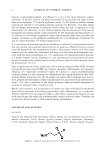
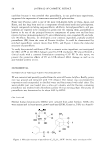
2005 ANNUAL SCIENTIFIC MEETING FRONTIERS OF SCIENCE AWARD LECTURE SPONSORED BY COSMETICS AND TOILETRIES® ACTIVE NANOSYSTEMS: TOWARD A BOTTOM-UP REVOLUTION IN ORGANIZING MATTER K. Eric Drexler, Ph.D. Nanorex, Inc. We live in a world made of atoms, and how they are arranged makes an enormous difference - the difference between coal and diamond, between sand and silicon chips, between aged and young tissues. Nanotechnologies are making progress at this fundamental level, giving us better control over the arrangement of atoms and thus of the properties of the matter that makes up our world. The most powerful of these emerging technologies will be based on machines that make things from the bottom up, with precise atomic control. We know that nanoscale machines guided by digital signals can make large quantities of complex, atomically precise structures cleanly and at low cost. Biology provides the existence proof. Artificial productive nanosystems will be able to make products that equal or exceed biological structures in their complexity and capabilities. The recently announced Technology Roadmap for Productive Nanosystems, a project led by an alliance of Battelle and the Foresight Nanotech Institute, will describe how these systems can be developed. Each stage of development will bring a new range of nanoscale products. Better control of the structure matter always makes possible better products. Sometimes better control can give ordinary molecular structures radically different properties: for example, by aligning molecular chains, polyethylene can be made into fibers stronger than steel. Similarly, combining familiar molecular building blocks in new patterns will make possible substances with new properties. Some of these products will be inexpensive, biocompatible, and able to protect and modify biological surfaces. Advanced products will include micron-scale systems that are active and reconfigurable, able to bind and unbind to surfaces, to become lighter or darker, and to protect surfaces or modify them, all in response to signals encoded in light or water-soluble molecules. 79

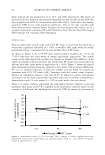
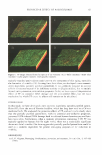
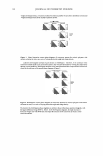
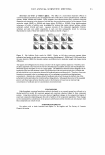
80 JOURNAL OF COSMETIC SCIENCE A COMBINATORIAL INVESTIGATION OF THE EFFECTS OF ORDER OF ADDITION IN THE INERACTION OF POLYELECTROLYTES WITH SURFACTANTS Robert Y. Lochhead, Ph.D., Lisa R. Huisinga, Christina Edwards and Anthony Hill The Institute for Formulation Science, School of Polymers and High Performance Materials, The University of Southern Mississippi, Hattiesburg, MS 39406-0076 INTRODUCTION Formulators of complex mixtures have long known that the characteristics of their final fonnulation and the position of "equilibrium" often depends critically upon the order of addition of ingredients and the precise processing conditions under which the fonnulation was made. The large variety of possible outcomes derive from the many eigenstates that are available to each composition of a complex mixture due to the fact that the bonds between the component molecules are weak physical bonds and therefore a potential multitude of nanostructures can be fonned. This is especially true of systems comprising polyelectrolytes and oppositely charged surfactants in the semi-dilute regime, because both polyelectrolyte conformation and surfactant micellar association structures are strongly influenced by the ionic environment of the polymer and surfactant molecules. This is especially important for 2-in-l shampoos that depend upon the spontaneous creation of a polyelectrolyte/surfactant coacervate to deposit active conditioning, styling or antidandruff ingredients during the shampoo process. The investigation of the effects of order of addition requires exanimation of a myriad of samples and it is virtually impossible by conventional techniques. This task is ideally suited to investigation by a combinatorial approach aimed at the generation of libraries of pseudo-phase diagrams. In this study we developed a high-throughput screening method to generate phase diagrams over a large range of concentrations for cationic polysaccharide interaction with anionic surfactant in the presence and absence of dissolved electrolyte. Using a liquid handling system for sample preparation, we are able to analyze nearly 1000 samples per day, making the above goals of understanding electrolyte effects and coacervate structure-property relationships attainable. EXPERIMENT AL Materials. Commercially available Polyquatemium-10 polymers of varying molecular weights and charge densities were obtained from Amerchol and used as received. The anionic surfactant sodium lauryl ether (3EO) sulfate, 28.82% actives, was obtained from Stepan Company. Sodium chloride (NaCl), A.C.S. certified grade, was used as received from Fisher Scientific. Distilled, deionized water was used in all samples. Sample Preparation. The liquid handler used for high-throughput fonnulation has a viscosity limitation of lOOOcps and cannot distribute solids. To overcome these constraints, pre-mixes of the polymer and surfactant were made. Polymer pre-mixes were made by slowly adding polymer powder to water under constant agitation and low heat. These pre-mixes were preserved by 0.003% actives Kathon CG. Surfactant was supplied as a viscous liquid and was diluted with water to make pre-mixes of a given % actives. Pre-mixes of sodium chloride were made by dissolving NaCl solids in water. Formulation samples were prepared using a Beckman Coulter Biomex FX Laboratory Automation Workstation. Programs were designed to create over 350 samples in less than one hour, with repetitions included to ensure accuracy. 96-well plates with glass vials are used for sample vessels. Once all materials are delivered to the 96-well plates, the samples are mixed using a 96-well plate attachment on a Scientific Industries Vortex Genie 2. Phase Separation Analysis. Phase separation is used to indicate the relative amount of coacervate fonned in each sample. UV-Vis absorbance measurements are taken on each well in the 96-well plate using a Tecan Satire Multifunction Multiplate Reader. When a new system is first subjected to this analysis, an absorbance scan from 230-990nm (20nm step) is performed on wells that show no, little and high amounts of visible phase separation in order to determine the most desirable fixed wavelength for absorbance readings. For cationic polymer systems, the desired wavelength is 410nm. Absorbance readings are
Purchased for the exclusive use of nofirst nolast (unknown)
From: SCC Media Library & Resource Center (library.scconline.org)