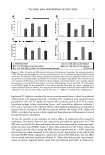
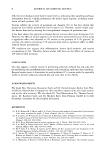
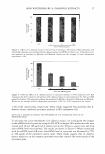
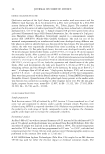
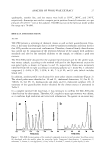
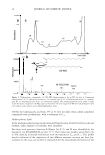
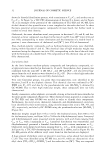
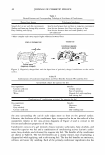
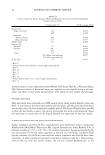
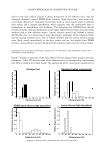
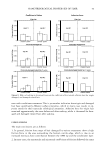
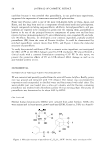
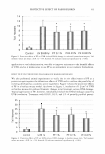
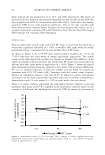
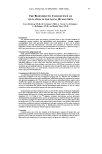
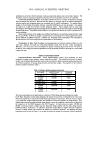
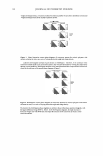
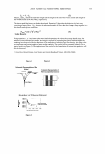
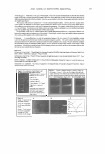
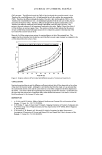
TAURINE AND PREVENTION OF DRY SKIN 5 A B 120 3�---------------� 100 � 80 i 60 40 20 0 C 600 =- 500 E J:400 1300 "! {200 iii J 100 □ untreated control ■ (i) 1h 0.18% SOS (ii) 24h Aqua demin. D � (i) 1 h 0.18% SDS (ii) 24h 0.1% Triamcinolone acetonide (i) 1 h 0.18% SOS (ii) 24h Vehicle ■ (i) 1h 0.18% SOS (ii) 24h Vehicle+ 1% Taurine Figure 2. Effect of taurine on SOS-induced irritation of reconstructed epidermis. An aqueous solution of 0.18% SDS was topically applied to reconstructed epidermis for 1 h. To evaluate the impact ofSDS, control tissues were left untreated. After rinsing, emulsions containing either no active ingredient (vehicle) or 0.1 % of a glucocorticoid (triamcinolone acetonide) or 1 % taurine were applied topically for 24 h. Control tissues were treated with SDS alone, with a further 24 h of incubation with demineralized water. Cellular viability was quantified using the MTT assay (panel A). Lactate dehydrogenase activity (panel B), ILl-alpha (panel C), and PEG2 (panel D) were quantified in the culture medium. Note that the vehicle containing 1 % taurine improved both cell viability and integrity and decreased levels of both IL-1 alpha and PGE2 when compared to the vehicle control. Data represent the mean +/- SEM (n=3). LDH, lactate dehydrogenase. Epidermal IL-lalpha is stimulated by various environmental factors related to epidermal inflammation and hyperproliferation, including UV irradiation and repeated barrier perturbation (16-18). 11-lalpha can induce other cytokines such as 11-6, 11-8, granu- locyte/macrophage colony-stimulating factor, and intercellular adhesion molecule-I ( 19), and is expressed in the whole epidermis when epidermal hyperplasia is induced by repeated barrier disruption (20). Because taurine inhibits the release of 11-lalpha and PGE2, it is likely that taurine inhibits epidermal hyperplasia and inflammation induced by repeated barrier disruption. To test the possible in vivo relevance of taurine effects on epidermal cells stressed by surfactants, skin barrier function was repetitively perturbed by application of 0. 75% SDS over a period of five days and barrier function was monitored by measuring trans- epidermal water loss (TEWL). Figure 3 shows that application of the vehicle containing 1 % taurine directly after rinsing the SDS solution significantly (p 0.05) improved barrier function when compared to the vehicle control. Application of the vehicle also decreased TEWL when compared to control sites treated with SDS alone, but this effect did not reach statistical significance (Figure 3). These data indicate that topical appli- cation of taurine improves barrier repair after perturbation with SDS. It remains un-

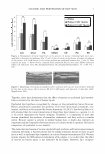
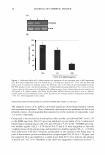
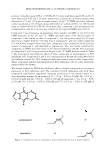
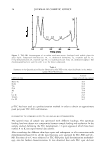
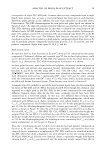
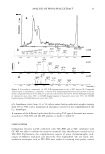
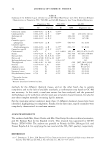
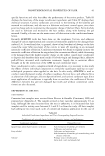
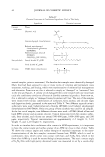
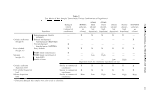
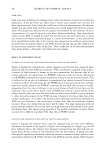
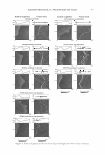
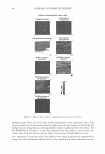
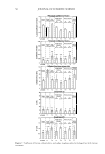
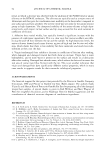
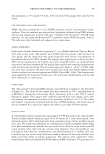
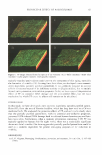
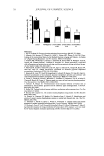
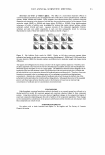
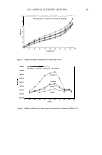
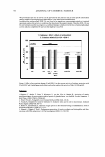
6 JOURNAL OF COSMETIC SCIENCE 45 �--------------------� 40 35 � 30 I! :S 25 � 20 � 15 10 5 0 1. SDS 2. untreated p0.05 c-7 1. SDS 2. Vehicle 1.SDS 2. Vehicle+ 1% Taurine Figure 3. Effect of taurine on skin barrier function to water loss challenged by repeated exposure to SDS. Skin barrier function was repetitively perturbed by occlusive application of 0.75% SDS for 30 min twice daily for a total of five days. After removal of occlusive patches, the skin sites were either left open or treated with the vehicle or the vehicle containing 1 % taurine. The rate of transepidermal water loss (TEWL) was measured immediately before each application of SDS. All data were normalized to the starting value, and an integrated TEWL was calculated including the data from a total of ten measurements. Data represent the mean +/- SEM (n= 18). known whether taurine also affects epidermal barrier integrity in the absence of an exogenous challenge. It is interesting to note that taurine regulates osmotic water transport in renal inner medullary cells (3,4). Together with recently published evidence for an epidermal tau- rine transporter (6,7) our data indicate that taurine has similar functions in the kidney and the skin. Skin barrier homeostasis requires several metabolic steps culminating in the synthesis and secretion of barrier lipids (i.e., ceramides, cholesterol, and free fatty acids) by the outermost granular keratinocytes (13,14,25). Exposure to a dry environment increases keratinocyte uptake of taurine (6) and barrier lipid deposition to the stratum corneum (12). Because taurine significantly improves skin barrier function in vivo, taurine accu- mulation might trigger barrier lipid synthesis. To test this hypothesis, reconstructed epidermis was incubated in the presence of 0.3 mM taurine, and epidermal lipids were extracted and quantified after five days. Taurine was supplemented to the culture medium because topical application of an emulsion results in a contamination of epi- dermal lipids with various exogenous esters of fatty acids that co-migrated with specific ceramide fractions on thin-layer chromatography (data not shown). With the exception of a decrease in colesterol sulfate levels (p 0.01), lipid levels remained unchanged between day 0 and day 5 in the absence of taurine (Figure 4). In contrast, incubation of reconstructed epidermis with 0.3 mM taurine for five days significantly increased the levels of all three classes of barrier lipids (ceramide, cholesterol, and fatty acids) when compared to the untreated control (Figure 4). Increased epidermal availability of cho- lesterol also extended the pool of cholesterol sulfate and cholesterol esters. In contrast, the levels of phosphatidylcholine and phosphatidylethanolamine did not change signifi- cantly (Figure 4). In the epidermis, phospholipids are restricted to the viable cell layers. In accordance with the lipid results, the number of viable cell layers did not change after incubation of reconstructed epidermis with 0.3 mM taurine for five days (Figure 5).
Purchased for the exclusive use of nofirst nolast (unknown)
From: SCC Media Library & Resource Center (library.scconline.org)