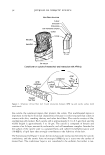
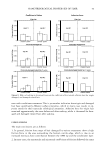
2005 ANNUAL SCIENTIFIC MEETING CHROMOPHORE MAPPING: A NEW TECHNIQUE TO EXPLAIN THE APPEARANCE OF AGING HUMAN SKIN, IN VIVO Introduction Paul J. Matts, Ph.D.', Robert Morse2 and Symon D. Cotton2 1 P&G Beauty, Egham, UK 2 Astron Clinica, Cambridge, UK 75 It is simple fact that we judge one other, consciously or unconsciously, based in part on the aesthetic appearance of our outer integument, "skin". As the human retina responds to a narrow bandwidth of the electromagnetic spectrum (so-called "visible light", a nominal 400-700nm), the interaction of these wavelengths with skin, therefore, is of primary importance in our understanding of the way we perceive others and are ourselves perceived. A modem understanding of cutaneous optics is based largely on the development of increasingly-sophisticated mathematical models to explain the interaction of light with skin. This understanding of cutaneous light transport highlights the surprising fact that normal human skin appearance is driven primarily by surface topography and only three internal chromophore components, that is, the concentration and spatial distribution of melanin, haemoglobin and collagen. Whereas there are a plethora of methods to characterise and quantify skin surface topography, chromophore mapping remains a remarkably on-researched area. A new technique "Spectrophotometric Intracutaneous Analysis" ("SIA") has been developed, commercialised and shown to have excellent sensitivity and specificity in the early identification of malignant melanoma in human skin. The technique is based upon a unique combination of dermatoscopy and contact remittance spectrophotometry. The SIA hardware comprises a hand-held imaging probe, attached by umbilical to a laptop computer, which is placed in contact with the skin surface. High-intensity LEDs illuminate the skin surface with four consecutive discreet wavebands between 400nm and I 000nm, spanning the visible spectrum and a small range of near infrared radiation. A digital image is captured for each waveband. Custom SIA algorithms then solve the complex relationship that exists between R-G-8-NiR "colour-space" and melanin- haemoglobin-collagen "histology-space", using a sophisticated model of cutaneous light-transport. Since there is a proven one-to-one mapping between colour-space and chromophore parameters, individual chromophore parameter values can be retrieved from the model, given the colour vector obtained from each point in a colour skin image. The magnitude of each chromophorc parameter is displayed at each pixel location in a separate image, giving three parametric maps: epidermal melanin, dermal haemoglobin and collagen (a dermal melanin map is also provided as a diagnostic criterion for melanoma). In short, the SIA technique is able to obtain a high-resolution white-light image of the skin over a 12xl2mm area and four additional maps that display the concentration of epidermal melanin and haemoglobin, collagen and melanin in the papillary dermis, pixel by pixel. Whilst the SIA technique has proven highly valuable in the measurement of diseased skin, namely the early diagnosis of malignant melanoma, it was not known whether it could be used to successfully map chromophores in normal skin in order to explain changes in human cutaneous colouration with age. This presentation, therefore, describes a study to evaluate the utility of the SIA technique for this purpose: Methods Subjects: 400 Caucasian female subjects (Fitzpatrick skin types I-III) aged I 0-70 with normal, on-diseased skin were recruited in Reading, UK. Subjects were recruited so that they fell equally across the 10-70 age range into 12 cohorts of 5 years each, containing approximately 33 subjects per cohort (i.e., Group I, 10-15 years Group 2, 15-20 years, etc.). Measurement Site: The skin between the thumb and the first finger of each subject's right hand was used as the measurement site for this study. The dorsal hand was chosen as it has been shown to receive approximately one half of the dose of erythemally-effective solar UV radiation relative to vertex (the face receives only one third). The dorsal hand, therefore, represented a site where we had confidence that both chronological eITects and actinic damage to the chromophorcs of interest in this study should be well-expressed. Measurements: Subjects were equilibrated for 20 minutes in a controlled atmosphere (20+ loC 50+ 10%RH). The measurement site on the subject's right dorsal hand was then lightly sprayed with a 20% (v/v) aqueous ethanol solution (to act as an optical "matching fluid"). SIA measurements were then taken each lasted approx 6 seconds. Image analysis: The SIA parametric maps ("SIAgraphs") constituted 8-bit 1024xl024 256 level greyscale maps of chromophorc concentration in PNG image file format and, as such were readily amenable to sophisticated image analysis techniques for calculation of a variety of relevant endpoints. The following analyses were undertaken: (a) mean global grey-scale (corresponding to mean chromophore concentration) (b) internal image standard deviation (corresponding to chromophore homogeneity) and (c) for melanin SIAgraphs, contiguous cluster analysis and subsequent spot count / area calculations.

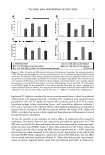
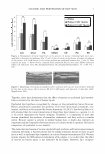
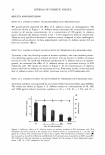
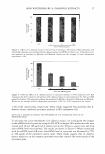
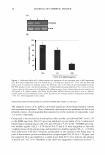
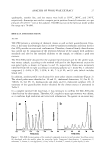
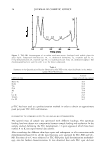
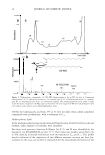
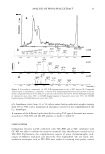
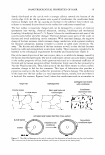
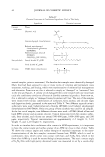
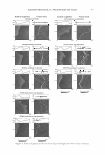
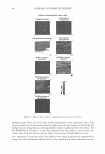
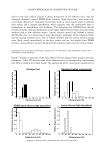
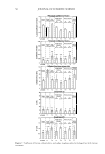
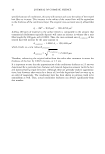
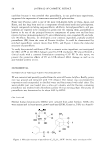
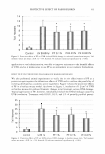
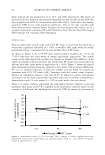
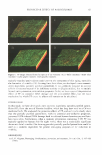
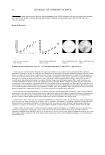
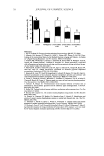
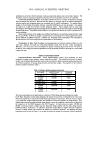
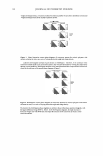
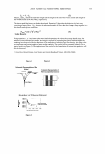
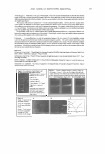
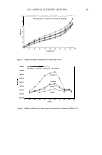
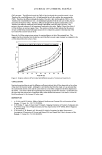
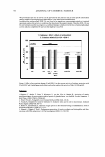
76 JOURNAL OF COSMETIC SCIENCE Data analysis: Image analysis interval data were treated using multi-factor ANOVA techniques with age as the main factor (grouped per 5-year cohort). Results constituted the SlAgraphs themselves and plots of image analysis means and 95% LSD intervals vs respective age group. Results & Discussion II 33 qII }2 !1 I I I I 10 II l 9 1 2 3 4 5 6 $ 9 1011 12 Figure I: melanin concentration (mean+95%LSD) Figure 2: melanin inhomogeneity (mean+95%LSD) fl Figure 3: sample melanin map, young skin Figure 4: sample melanin map, old skin Examples of data from the study note 1-12 = 12 5-year age groups, where 1 = ages 10-15, 2 = ages 15-20, etc. Visual inspection of the chromophore SIAgraphs of young and aged subjects reveal a dramatic contrast, particularly for the melanin and haemoglobin chromophores. In short, in young skin, these chromophores are distributed in an extremely homogeneous manner, consistent with the delicate, even palette of youth. With age, a significant increase in both total concentration and inhomogeneity is evident for both chromophores. This is wholly consistent with the known changes in these chromophores as a function of actinic ageing -· namely the accumulation of damaged melanogenic units (producing hypcr-melanotic lesions such as solar lentigos, diffuse hypcrpigmentation and hypo-melanotic lesions such as idiopathic guttate hypomelanosis) and damaged vasculature (including telangiectasia and low-grade purpura). These visual observations were confirmed emphatically by objective analysis of the S!Agraphs by custom algorithms. Results confirmed an apparent "lag'' phase for total skin concentrations of both chromophores (lasting until approx age 30 for melanin and 40 for haemoglobin), after which there was a steady increase in each chromophore total concentration. There was also a concurrent progressive increase in inhomogeneity of each pigment. More detailed analysis of the melanin S!Agraphs revealed a progressive accumulation of melanin "spots" across a lifetime, with a linear increase in total spot area and an apparent merging of spots at approximately age 50-55 (continued area increase with parallel drop in spot count). Visual inspection of the collagen S!Agraphs reveal an apparent overall loss with age both of density and the fine "egg-box" lattice attributed to dermal papillae. Once again, these subjective observations are supported by analysis of the SlAgraphs. A progressive decrease in collagen density was noted across the entire age span, accompanied by a progressive decrease in homogeneity. These trends fit extremely well with the known progressive atrophy of dermal papillae and total demial collagen bnlk, consistent with intrinsic and extrinsic ageing. The observations of this current study were predicted and modelled by one of the present authors. A model was proposed that described human skin texture and color changes with age in the unorthodox terms of·'amplitude" and "frequency". The principle components of human skin color, namely melanin and haemoglobin, both display overall increases in total concentration (increased "amplitude") and heterogeneity (decreased "frequency") as a ftmction of chronological / actinic ageing. Effective treatments to improve appearance, therefore, need to reverse this effect. Overall, therefore, these data appear to confirm chromophore mapping using the SIA technique as a remarkable new tool to characterize and explain the visual appearance of ageing skin. Finally, recent results will also be presented demonstrating (a) the successful translation of chromophore mapping from the hand-held contact device described herein, to a non-contact system capable of mapping chromophores across large areas of skin, including a human face and (b) the inherent utility and advantages of non-contact chromophore mapping as a new documentation and measurement tool.
Purchased for the exclusive use of nofirst nolast (unknown)
From: SCC Media Library & Resource Center (library.scconline.org)