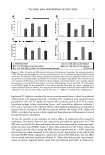
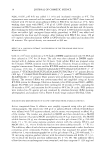
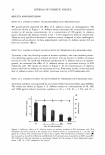
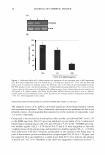
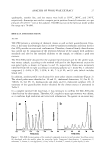
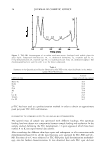
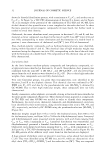
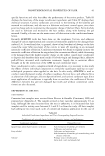
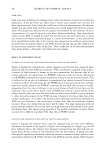
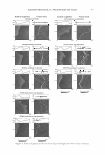
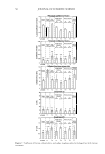
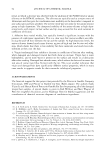
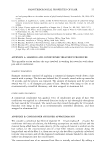
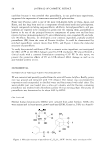
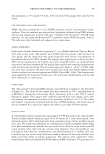
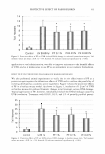
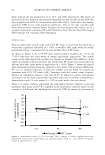
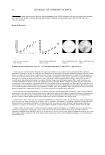
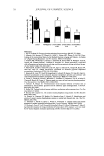
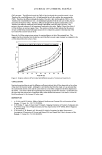
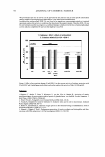
14 12 +-' 1 0 E 0 � 8 6 I- 4 2 0 PROTECTIVE EFFECT OF P AEONIFLORIN 61 * * * Control UV B 60 mJ PF 0 .1 % PF0.01 % PF 0.001 % Figure 2. Protective effects of PF on DVB-induced DNA damage in cultured human keratinocytes. Tail moment values are mean ± S.D. (n = 50). Asterisk (*) indicates statistical significance (p 0.01). application or oral administration, was able to improve resistance to the harmful effects of UVR, and so it makes sense to use PF as an antioxidant in our cosmetic formulation. EFFECT OF PF ON UVB-INDUCED DNA DAMAGE IN HAIRLESS MOUSE SKIN We also performed animal experiments to verify the in vivo effectiveness of PF as a protective agent against the deleterious effects of UVR and to confirm the possibility of its being developed as a cosmetic active ingredient. Figure 3 shows the protective effects of PF in a hairless mouse model. As shown in Figure 3, irradiation of 1 J/cm2 of UVB on hairless mouse skin induced dramatic changes in tail moment, serious DNA damage. Topical application of PF, however, remarkably blocked the DNA breakage caused by UVB irradiation. Treatment with 0.01%, 0.1%, and 1% of partially purified paeoni- 35 30 +-' 25 C E 20 0 � 15 co I- 10 5 0 control UVB 1J * * PF 1% PF 0.1 % PF 0.01 % Figure 3. Protective effects of PF on DVB-induced DNA damage in hairless mouse skin. Tail moment values are mean ± S.D. (n = 50). Asterisk (*) indicates statistical significance (p 0.01).

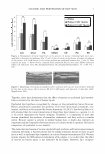
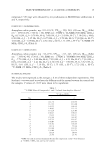
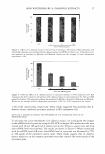
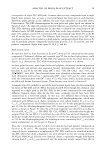
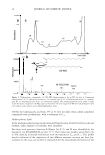
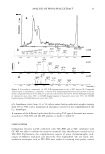
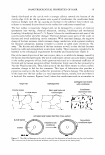
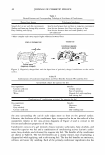
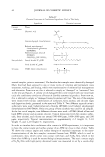
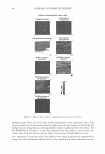
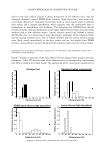
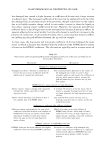
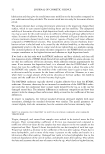
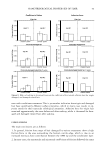
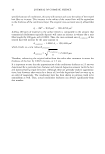
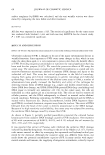
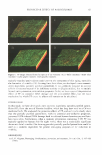
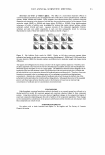
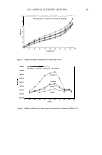
62 JOURNAL OF COSMETIC SCIENCE florin reduced the tail moment by 41 %, 25%, and 28%, respectively. The degree of prevention did not show any concentration dependencies, but our data clearly show that topical application of PF in concentrations more than 0.01 % could reduce the damage caused by UVR in vivo, with statistical significance. This in vivo data coincides with those obtained from cultured human keratinocytes and suggests that topical use of a cosmetic preparation containing PF could efficiently protect the skin from UV-induced DNA damage and eventually from photoaging. CLINICAL TRIAL From an eight-week clinical study with 0.5% PF cream, it was found that there was a statistically significant reduction (p 0.05) in wrinkles after eight weeks of sample application. Figure 3 demonstrates the anti-wrinkle effect of PF cream. As shown in Figure 4, the 0.5% PF cream reduced surface roughness by 7 .51 % and 17 .65% after four and eight weeks of sample application, respectively. The control cream, on the other hand, did not effect any changes in wrinkles. The difference in the degree of wrinkle reduction between the control and PF creams was statistically sig- nificant only after eight weeks of application (p 0.05 ). Figure 5 shows the typical three-dimensional images from one volunteer's skin, before (A,C) and after (B,D) trial. We can see marked reductions in both the number and the depth of wrinkles by treatment with 0.5% PF cream (A,B). Treatment with the control cream, however, effected no remarkable changes in the skin (C,D). In addition to theses instrumental assessments, we also had a statistically significant reduction in wrinkles, evaluated by a dermatologist with 13-scale grades (p 0.05 at eight weeks, data not shown). There is so much evidence concerning the relationship between oxidative stress and premature skin aging, and UVR is regarded as the most potent causative agent. In this context, it is believed that blocking the action of UVR by means of sunscreens or 40 (]) 30 () 20 -- !..... cr 10 :::, (f) Cl) ._ C Cl) ·- � 0 Cl) C (]) ..c -10 Cl) Cl) :::, -20 CO 0 !..... -30 � -40 -50 _______________ Q Ow 3.09 4w -+-Placebo �PF Cream -0.23 -17 .65 Bw Figure 4. Anti-wrinkle activity of 0.5% PF cream. The % changes in surface roughness with time, measured by low-coherence interferometry, are indicated as mean ± S.D. (n = 20). Asterisk (*) indicates statistical significance (p 0.05).
Purchased for the exclusive use of nofirst nolast (unknown)
From: SCC Media Library & Resource Center (library.scconline.org)