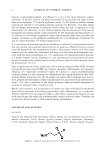
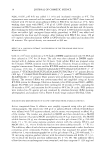
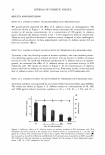
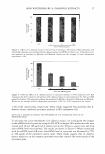
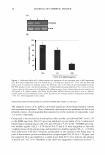
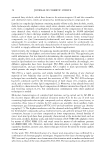
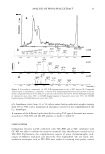
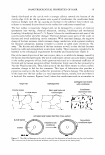
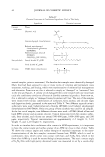
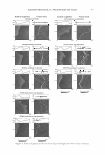
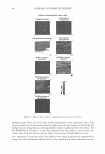
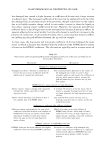
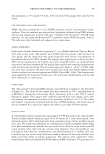
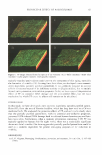
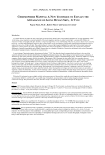
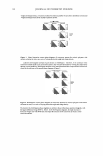
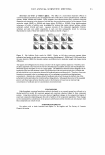
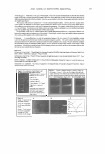
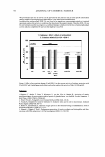
NANOTRIBOLOGICAL PROPERTIES OF HAIR 39 domly distributed on the cuticle with a stronger affinity towards the bottom of the cuticle edge (3,4). As the tip rasters over a pool of conditioner, the conditioner forms meniscus bridges with the tip, causing an increase in the adhesive force (which con- tributes to increased friction force) on the surface for conditioner-treated hair. The hair surface is negatively charged and can be damaged by a variety of chemical (permanent hair waving, chemical relaxation, coloring, bleaching) and mechanical (combing, blowdrying) factors (5-7). Figure 2 shows the transformation and wear of the cuticles scales before and after damage. Chemical damage causes parts of the scales to fracture and reveal underlying cuticle remnants. With continual damage, the negative charge of the hair increases, which increases charge conduction, with a greater tendency for moisture adsorption, making it harder to control so-called static electricity "fly- away." The friction and adhesion of the hair increases as well, so that the hair becomes harder to comb and entanglement occurs more readily. These issues are considered to be harmful to the tribological requirements for healthy and beautiful hair (Table I). One of the main objectives of hair care science, then, is to inhibit the damage caused by the factors described previously. The use of conditioners on hair can cause drastic changes in the surface properties of hair, both quantitatively (such as in decreased coefficient of friction) and by human perception of feel. Conditioner thinly coats the hair primarily by Van der Waals attractions. Thus, lubrication of the hair fibers ensues to create a softer, smoother change in feel for the consumer. This layer of lubrication also provides a protective coating to the hair surface for prevention of future damage. The uniformity of this layer over the hair surface is a very important feature, namely, how and where it is localized. For instance, Figures 2 and 3 show that conditioner tends to accumulate in Virgin hair Cuticle scales Damaged hair Worn and fractured cuticle edges Untreated and treated hair fiber cross-section Treatment with conditioner Damaged hair treated with conditioner Conditioner deposition sites Nonuniform conditioner layer Figure 2. The effect of damage to the cuticle scales and the deposition of conditioner on the cuticle surface. The cross section of the hair with and without conditioner is shown in the lower panel.

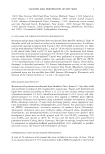
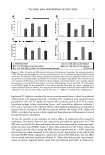
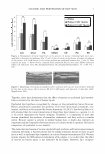
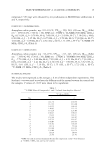
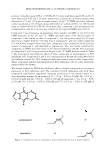
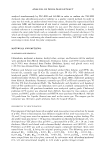
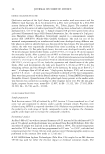
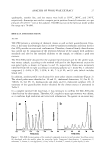
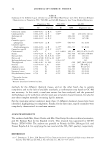
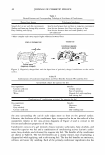
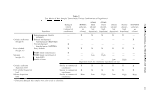
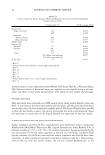
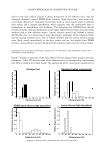
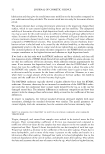
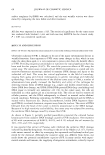
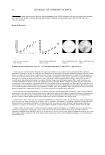
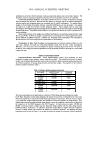
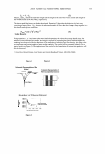
40 JOURNAL OF COSMETIC SCIENCE Table I Desired Features and Corresponding Tribological Attributes of Conditioners Desired hair feature Smooth feel in wet and dry environments Shaking and bouncing during daily activities Easy combing and styling Tribological attributes Low friction between hair and skin in respective environment Low friction between hair fibers and groups of hair Low friction between hair and comb (plastic) and low adhesion* * More complex styles may require higher adhesion between fibers. Virgin or damaged hair 'cuticle layers ...,,- (negatively charged) Treated hair Conditioner deposits (positively charged) Figure 3. Negatively charged hair and the deposition of positively charged conditioner on the cuticle surface. Table II Combinations of Conditioner Ingredients and Their Benefits Towards Wet and Dry Feel Key ingredients Cationic surfactant Fatty alcohols Water Key ingredients Silicones Fatty alcohols Cationic surfactant Gel network chassis for superior wet feel Benefits Creamy texture Ease of spreading Slippery feel while applying Soft-rinsing feel Combination of "conditioning activities" for superior dry feel Benefits Moistness Softness Dry-combing ease the area surrounding the cuticle scale edges more so than on the general surface. Likewise, the thickness of the conditioner layer is expected to be on the order of a few nanometers (shown in the cross-section diagrams of Figure 2) and is critical to the friction and adhesion properties of the hair. Conditioner consists of a gel network chassis (cationic surfactants, fatty alcohols, and water) for superior wet feel and a combination of conditioning actives (cationic surfac- tants, fatty alcohols, and silicones) for superior dry feel. The benefits of the conditioner are shown in Table II. The wet-feel benefits are a creamy texture, ease of spreading, a slippery feel while applying, and a soft-rinsing feel. The dry-feel benefits are moistness, softness, and easier dry combing. Each of the primary conditioner ingredients also has
Purchased for the exclusive use of nofirst nolast (unknown)
From: SCC Media Library & Resource Center (library.scconline.org)