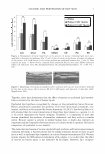
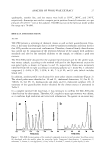
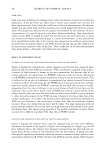
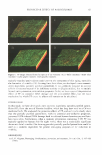
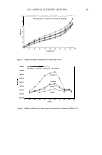
PROTECTIVE EFFECT OF P AEONIFLORIN 59 fied incubator at 3 7°C under 5% CO2. Cells less than fifth passage were used for this study. CELL TREATMENT AND UV IRRADIATION NHK cells were cultured for 12 h in KGM containing various concentrations of pae- oniflorin. Then the medium was replaced with phosphate-buffered saline (PBS) without calcium and magnesium, and the cells were irradiated with 60 mJ/cm2 of UVB (peak emission 312 nm) using the Biotronin UV irradiation system (Vilber Lourmat, France). The cells were then harvested and subjected to a comet assay. ANIMAL EXPERIMENT Eight-week-old male hairless mice weighing 27-33 g (DaeHan Biolink, Taejeon, Korea) were used in this study. The animals were divided into five groups, with two mice in each group, and the dorsal skin was treated topically with various concentrations of paeoniflorin dissolved in 80% ethanol. The samples were applied twice a day for six days. After the last application, the hairless mice were anaesthetized by an intraperitoneal injection of sodium pentobarbital (50 mg/kg body weight) and remained anaesthetized until the mice were sacrificed. The mice were exposed to sham or 1 J/cm2 of UVB. After the mice were sacrificed, the skins were excised and rinsed with Hanks Balanced Salt Solution without calcium and magnesium (HBSS, Gibco BRL, USA). The keratinocytes were isolated by the method ofYendle et al. (10), with some modifications, and the cells were subjected to a comet assay. COMET ASSAY The comet assay for detecting DNA damage was performed according to the procedure of Singh (11). The slides for the comet assay were observed at 250 x magnification in a Metallux-3 fluorescence microscope (Leitz, Germany) with a color CCTV camera (Panasonic, Japan). Fifty images were randomly selected from each sample, and comet tail moment was measured according to the procedure of Konca et al. (12). The comet tail moment is positively correlated with the level of DNA breakage. The mean value of the tail moment for a particular sample was taken as an index of DNA damage. CLINICAL TRIAL A conventional cosmetic preparation containing 0.5% PF was used in the clinical study. Twenty healthy female volunteers aged 30 to 56 (mean 42.5 years) participated, with informed consent. All of them had more than a moderate degree of fine wrinkles around their eyes. The study was performed in a randomized, placebo-controlled double-blind trial. After randomization, half the face was treated twice daily for eight weeks with PF cream and the other half with the control cream (placebo). The clinical efficacy was evaluated by low-coherence interferometry, described elsewhere (13). Briefly, skin rep- licas of the eye rim region (crow's feet) were made at the start of the study and after four weeks and eight weeks of sample application. The replicas were scanned for three- dimensional profiles and analyzed with Microfocus (UBM, Germany). The parameter for

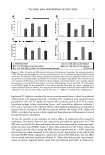
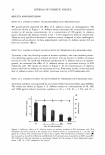
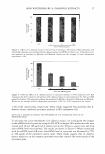
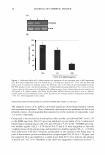
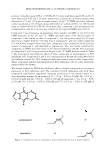
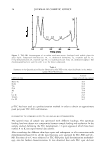
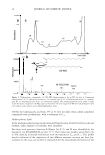
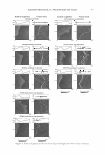
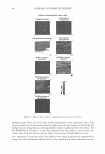
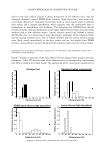
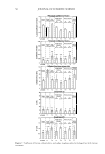
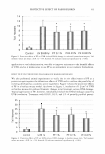
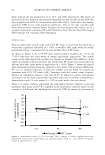
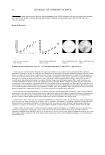
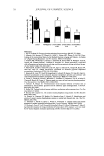
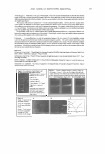
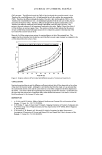
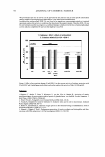
60 JOURNAL OF COSMETIC SCIENCE surface roughness Sq (RMS) was calculated, and the anti-wrinkle activity was deter- mined by comparing the data before and after treatment. STATISTICS All data were expressed as means ± S.D. The statistical significance for the comet assay was evaluated with Student's t-test and with one-way ANOVA for the clinical study. P 0.05 was considered significant. RES UL TS AND DISCUSSION EFFECT OF PF ON DVB-INDUCED DNA DAMAGE IN CULTURED NORMAL HUMAN KERATINOCYTES Ultraviolet radiation (UVR) is thought to be one of the major environmental factors in wrinkle formation. Since exposure to UVR causes many changes in skin, which in turn make the skin photo-aged, it is very important to protect skin from the harmful effects of UVR. Providing exogenous antioxidants or sunscreens by topical application has long been used for this purpose (14, 15 ). We tested the protective effects of PF using the comet assay. The comet assay or single-cell gel (SCG) electrophoresis is a rapid and very sensitive fluorescent microscopic method to examine DNA damage and repair at the individual cell level. This assay has critical applications in the field of toxicology, ranging from aging and clinical investigations to genetic toxicology and molecular epidemiology. Since the introduction of the alkaline comet assay in 1988, a number of advancements have greatly increased the flexibility and utility of this technique for detecting various forms of DNA damage (e.g., single- and double-strand breaks, oxi- dative DNA base damage, and DNA-DNA/DNA-protein/DNA-drug crosslinking) and DNA repair in virtually any eukaryotic cell (16). In the comet assay, the cells are embedded in a thin agarose gel on a microscope slide. The cells are lysed to remove all cellular proteins, and the DNA subsequently is allowed to unwind under alkaline/ neutral conditions. Following unwinding, the DNA is electrophoresed and the DNA is stained with a fluorescent dye. During electrophoresis, broken DNA fragments (dam- aged DNA), or relaxed chromatin, migrates away from the nucleus. The extent of DNA liberated from the head of the comet is directly proportional to the DNA damage. Because of its high sensitivity and reliability, the comet assay was adopted for assessing the oxidative DNA damage caused by stresses like UVR. As shown in Figure 2, partially purified paeoniflorin protected the cultured human keratinocytes from oxidative DNA breakage caused by UVB irradiation. The treatment of PF with concentrations of 0.001%, 0.01%, and 0.1% reduced the tail moment by 19%, 22%, and 23%, respectively. It was reported that extract of Paeoniae radix inhibited the oxidative DNA cleavage induced by phenylhydroquinone. According to the article by Okubo et al. (17), Paeoniae radix extract exerted its effect by scavenging the superoxide and hydroxyl radical gen- erated by the chemical. Although the causative agent was different from theirs, our result shows the potential antioxidative capacity of PF. In many articles with experi- mental animals and humans, the supplying of exogenous antioxidants, either by topical
Purchased for the exclusive use of nofirst nolast (unknown)
From: SCC Media Library & Resource Center (library.scconline.org)