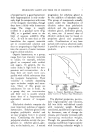
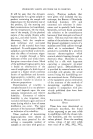
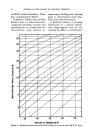
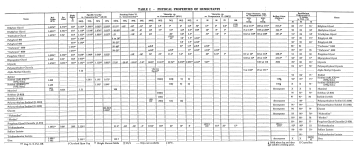
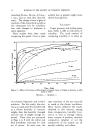
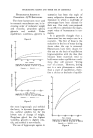
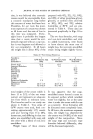
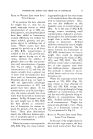
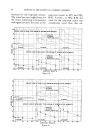
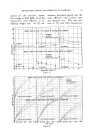
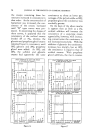
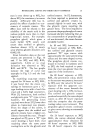
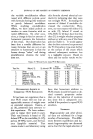
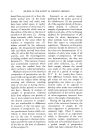
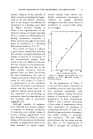
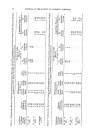
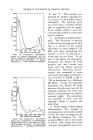
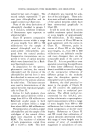
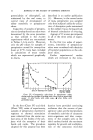
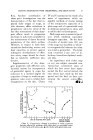
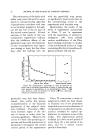
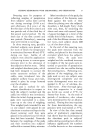
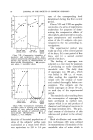
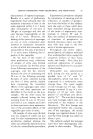
HYGROSCOPIC AGENTS AND THEIR USE IN COSMETICS 13 HYGROSCOPIC AGENTS IN COSMETICS•/W EMULSIONS The three humectants most used in cosmetic manufacture are, in in- creasing order of molecular weight and viscosity, propylene glycol, glycerin and sorbitol. Under equilibrium conditions, glycerin is Figure 4 o /-/•, d0 ½ 1•0 3O Tlme- Minutes ¾el•t Q&la by Solutions when •ansf•rred fromanatl. off• R,H. toanatl. of3• n.H. 61ycer• .... $orbltol -- Figure 5 the most hygroscopic and sorbitol the least in dynamic hygroscopic- ity, sorbitol exhibits by far the lowest rate of change of weight. Propylene glycol has the highest volatility, glycerin is slightly vola- tile, and sorbitol is non-volatile. The use of hygroscopic agents in cosmetics has been the topic of many subjective discussions in the literature in which a multitude of advantages have been claimed for their use. Our study was proposed as an effort to determine the hygro- scopic value of humectants in cos- metics. It is generally thought that a humectant has two major uses in a cosmetic. The first of these is the reduction in the loss of water during times when the cap is removed. Humectants have been chosen for this use on the basis of equilibrium hygroscopicities with the idea that because these materials tend to hold water under equilibrium condi- tions they will prevent "drying out" of a cream. However, drying out is a rate phenomenon rather than a state of equilibrium, there- fore a choice on the basis of equilib- 30- i////• /I/ T•.ma o !•nutee Weight Gain by Soluteoho when Tl-ausferred from •tn •tm. of 5• R.H. to am arm. of 7• R.•. Glycerin .... Sorbi•l FlOr= 6

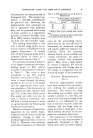
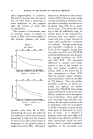
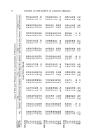
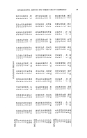
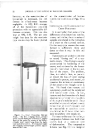
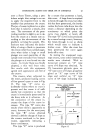
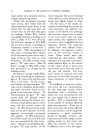
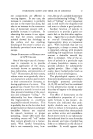
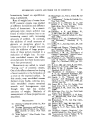
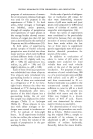
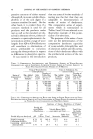
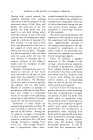
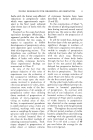
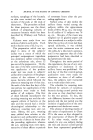
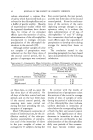
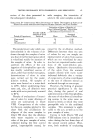
14 JOURNAL OF THE SOCIETY OF COSMETIC CHEMISTS rium hygroscopicity is incorrect. We will try to show how the rate of loss of water from a humectant is more important for this purpose than the amount of water held at equilibrium. The amount of humectant used in cosmetic creams is seldom as much as 10% of the total weight of the formula, whereas, the water Figure 7 Time - linu•ee ! ¾eigh• Lose l'ro• S_olutione When •enefer•.e.d rro• an arm. of •8• U.H. to an eta. of • U•H. Glycerin .... Serbitel -- 0 o -10 o -15 \\\\\• MoiSt Loss from •olutl• when •anoforrod from an arm. of 7• R.H. •o an atto. of 6• R.H. 6lyeoran .... SerbStel Fibre 8 content varies from 4:0 to 80%. Considering the most favorable set of conditions in which the amount of humectant is high and the amount of water is low, the concentration of humectant in the aqueous phase is seldom more than 20%. All organic humectant solutions at this concen- tration (20%) will lose water under normal atmospheric conditions since the relative humidity would have to be greater than 95% for no water loss to occur. This means that if the cap is left off sufficiently long, no matter which of the standard hu- mectants that you employ, your cream will lose a major amount of water until equilibrium conditions are attained. Average temperature and humidity conditions in New York (2) for example, during June and July, are 74øF. and 70% R.H. while during December and January the average conditions are 33øF. and 70% R.H. The important difference in summer and winter seasons is that in the summer in- door and outdoor conditions are similar, while in the winter the in- door temperature is about 74øF. (like the summer outdoor tempera- ture) resulting in a relative humidity of 17% indoors. Thus, the relative humidity conditions to which cos- metics are exposed are seldom greater than 70% R.H. and average a great deal less for most of the year. Similar conditions exist throughout most of the East. Even under the most favorable high humidity con- ditions, for the aqueous phase to be in equilibrium with the atmosphere it would of necessity contain almost three parts of humectant to every part of water. It is doubtful if products made with such high con- centrations of polyhydric alcohols or other humectants would be satis- factory from a cosmetic standpoint regardless of the increased cost.
Purchased for the exclusive use of nofirst nolast (unknown)
From: SCC Media Library & Resource Center (library.scconline.org)