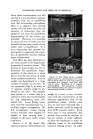
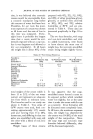
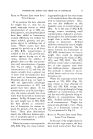
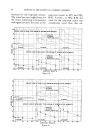
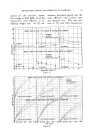
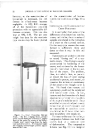
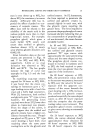
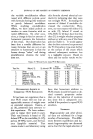
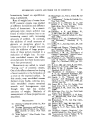
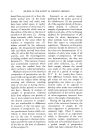
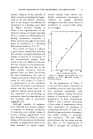
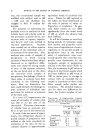
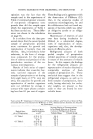
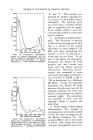
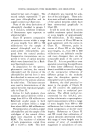
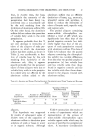
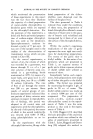
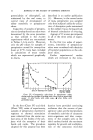
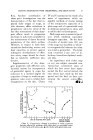
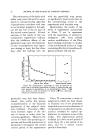
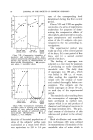
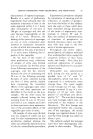
HYGROSCOPIC AGENTS AND THEIR USE IN COSMETICS 15 From these considerations you will see that it is not practical to prepare cosmetics that are in equilibrium with the surrounding atmosphere. Also, it is apparent that existing creams will lose water and that the amounts of humectant that are added do not alter the equilibrium hygroscopicity of the creams ap- preciably. However, it is desirable to retard the loss of water and this immediately becomes a study of rate rather than of equilibrium. It is most interesting that dynamic hy- groscopicity is apparently not a func- tion of equilibrium moisture holding power of humectants. This effect has been illustrated in our recent study of the hygroscopic properties of cosmetic creams. The purpose in these studies was not to determine the equilibrium hygro- scopicity of the cream as a whole but to note the rate of loss of water under standard conditions. Loss in weight was determined on a large number of samples at one time. In our equipment, Fig. 9, as many as 77 separate samples could be ob- served at one time. The samples were placed on a screen tray in a cabinet in which the relative humid- ity and temperature were con- trolled (11). Loose fitting covers were removed simultaneously by a multiple magnet arrangement. By this arrangement creams having various formulas were exposed for lengths of time varying from 5 minutes to 48 hours under chosen conditions. Cessna, et al. (6), found that aqueous solutions of humectants lost Figure 9.--Cap lifting device---multiple magnet frame in raised position over tray. Picture shows three jars with caps removed, suspended from magnets, and three with caps in place. Maximum of 77 samples accommodated. The equipment is shown here installed inside the constant tempera- ture-constant humidity cabinet. weight at a more or less constant rate until the concentration of the solutions approached that of the equilibrium values. Earlier work that we had done indicated that a similar behavior could be expected from O/W cosmetic creams. From these data it was estimated that several days would be required to lose an amount of water sufficient to allow the humectant to exert an influence based on its equilibrium moisture holding power. In 'addi-

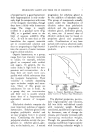
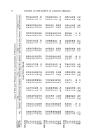
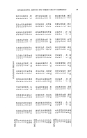
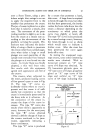
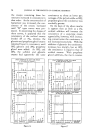
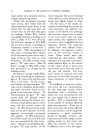
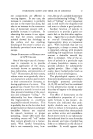
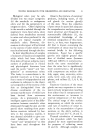
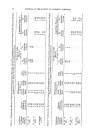
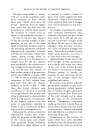
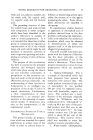
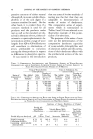
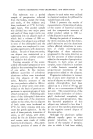
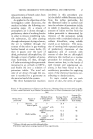
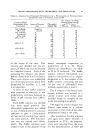
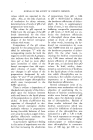
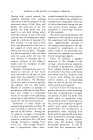
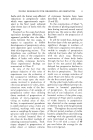
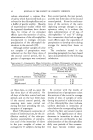
16 JOURNAL OF THE SOCIETY OF COSMETIC CHEMISTS tion, it was believed that cosmetic creams would be unacceptable from a cosmetic standpoint long before this amount of water had been lost. Therefore, for our tests the maxi- mum exposure of a cream was chosen as 48 hours and the rate of loss in this time was compared. Forty- eight hours is probably the longest time that a cream would be acci- dentally exposed without a cap (un- less it was forgotten and allowed to dry out completely). In 48 hours the weight loss is about 10% of the prepared with 0%, 2%, 5%, 10%, and 20% of either propylene glycol, glycerin, or sorbitol were observed at 30%, 50%, and 70% relative humidities at 80øF. and are pre- sented in Table 4. These data are presented graphically in Figs. 10 to 13. The two base formulas, with soap and non-ionic emulsifiers and with no added humectants, were found to have almost the same rate of weight loss, the non-ionic emulsified cream losing weight slightly faster. CREAM FORMULAS Number--• Type--• Emulsifier--• 1 2 3 o/w Stearic Acid O/W Stearic Acid W/O Emollient Soap Non-ionic Non-ionic Stearic Acid Isopropyl Palmirate Paraffin Petrolatum Mineral Oil Lanolin Arlacel 60 Tween 60 G-1500 Potassium Hydroxide Magnesium Sulfate Humectant Water 15.0 2.0 1'.0 20.62 '0.0 62.0-82.0 15.0 ... 1.0 ... 516 ß.. 40.0 oo. 5.0 4.0 1.5 ... i16 '" 61i 2o .6-'o .o -o .o 60.5-80.5 --34.8 total weight of the cream which is from 15 to 25% of the net water content and represents an adequate loss from which to estimate rates. The formulas used in our study are shown in Table 3. Two series of O/W creams were used, both con- taining approximately 15% stearic acid and varying from 0 to 20% humectant, and differing in that one series was emulsified with soap and the other with a blend of non-ionic emulsifiers. Weight losses of these creams It was apparent that the soap- emulsified cream formed a crust on its exposed surface which retarded water loss slightly, but at the same time it made the cream unfit for use as a cosmetic. Crust formation will be discussed more completely later. In 48 hours, the maximum exposure time, the weight loss observed for the creams was 10-20% of the total weight of the composition. Since the soap type and non-ionic type formulas behaved differently, they will be discussed separately.
Purchased for the exclusive use of nofirst nolast (unknown)
From: SCC Media Library & Resource Center (library.scconline.org)