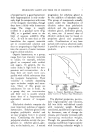
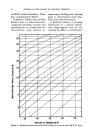
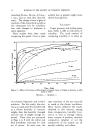
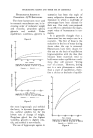
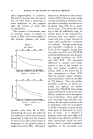
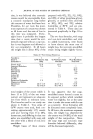
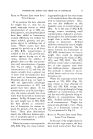
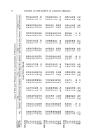
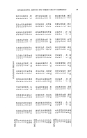
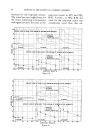
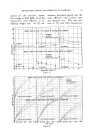
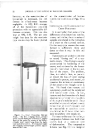
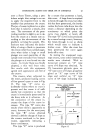
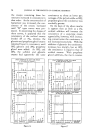
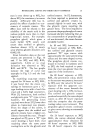
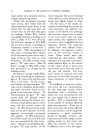
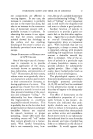
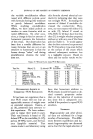
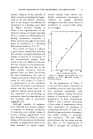
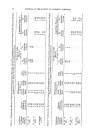
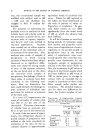
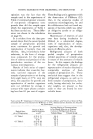
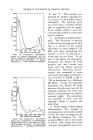
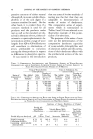
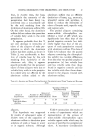
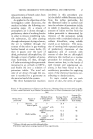
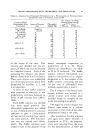
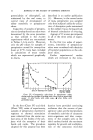
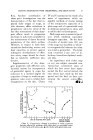
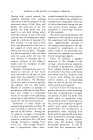
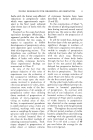
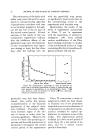
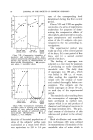
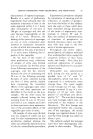
HYGROSCOPIC AGENTS AND THEIR USE IN COSMETICS 25 ency is even slower up to 10%, but above 10% the consistency increases sharply. deNavarre (22) has re- ported the effect of polyol on con- sistency of cosmetic creams. This effect may well be related to the solubility of the stearic acid in the various polyols more than to their hygroscopic nature. For example: propylene glycol, which gives a much harder O/W stearic acid cream than sorbitol or glycerin, dissolves almost 1.1% of stearic acid, whereas glycerin dissolves only 0.04% (4). Crust formation data on the test creams are presented in Figs. 16 and 17 for 30% and 50% R.H., respectively. Little or no crust formation was observed at 70% R.H. and 80øF. The bar graphs indicate the type of curve (see examples in Fig. 15) and the load applied. In examining soap-type creams exposed for 24 hours at 50% R.H., it was found that the cream con- taining no humectant gave a "C" type loading curve with a hard thin crust and a fairly high consistency. With 2% humectant, both sorbitol and glycerin gave "C" type curves however, the penetrating forces required were about 25% lower than where no humectant was present. From the shape of the curves, it would appear that the sorbitol and glycerin creams have a higher con- sistency beneath the crust. Propyl- ene glycol at 2% gave a "D" type curve showing a hard thick crust requiring about the same pene- trating force as for the glycerin and sorbitol creams. At 5% humectant, the force required to penetrate the sorbitol and glycerin creams in- creased slightly in each case, with the glycerin cream requiring the greater force. The force required to penetrate the propylene glycol cream increased sharply indicating that, as the concentration of propylene gly- col was increased, the cream became decidedly harder. At 10 and 20% humectant on 24 hours' exposure at 50% R.H., the sorbitol and glycerin creams produced "D" type curves with approximately the same penetrating values and the same shaped curves. The propylene glycol creams con- tinued to increase in hardness until at 20% the load required to pene- trate the crust was greater than the capacity of the instrument. On 48 hours' exposure at $0% R.H., the penetration value, where no humectant was present, increased by 28% over the value for 24 hours' exposure with the apparent con- sistency of the cream beneath the crust showing only a 10% increase. The sorbitol and glycerin creams produced essentially the same shaped curves as after 24 hours' exposure with the exception that the pene- trating values were increased. The propylene glycol creams continued to give curves showing an extremely hard crust. On 24 hours' exposure at 30% R.H., the curves obtained closely approximated those obtained for 48 hours' exposure at 50% R.H. On 48 hours' exposure the same

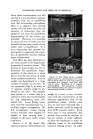
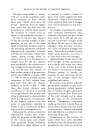
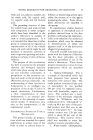
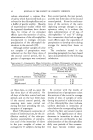
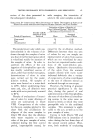
26 JOURNAL OF THE SOCIETY OF COSMETIC CHEMISTS type curves were obtained with in- creased penetrating values. Where the unexposed non-ionic type creams were tested with the improvised Scott type tester, it was found that for the most part the creams were so soft that they gave no reading. Where 20% sorbitol was added, however, a loading curve with a slope of 0.7 was obtained. On 24 hours' storage at 50% R.H. the non-ionic creams containing no humectant showed a curve with a slope of 0.1. With the exception of the cream containing 20% sorbitol, all of the creams gave curves with a slope of 0.3 or less with no crust formation. The 20% sorbitol cream gave a "B" type curve. After 48 hours' storage at 50% R.H., there was practically no change in the loading curves. On 24 hours' storage at 30% R.H., the cream containing no humectant gave a "B" type curve which leveled off at a low value. At 2% humec- tant sorbitol and glycerin gave "D" type curves however, the penetrat- ing values were only slight as com- pared to the soap-type creams. At 5% humectant all gave "B" type curves with the glycerin cream apparently having the firmest con- sistency, the propylene glycol cream next, and the sorbitol cream the least. At 10% humectant the same type curves were obtained with the apparent consistencies increasing only slightly. At 20% humectant, the sorbitol cream was very firm and was not penetrated by the instru- ment. Glycerin and propylene gly- col gave "D" type curves. At 48 hours' exposure the curves obtained were similar to those obtained at 24 hours, but slightly higher in value. On the basis of the results ob- tained on examining the creams for crust formation one definite con- clusion can be drawn, that although the non-ionic creams lose as much, if not more, water than the soap- type creams, they apparently form no crust or only a negligible crust on exposure, whereas the soap-type creams form very definite crusts. In addition, the apparent consist- ency of the non-ionic creams is lower. These results were sub- stantiated by observations. After exposure, the soap-type creams pos- sessed definite films on the surface of the creams which in most cases had shrunk away from the sides of the jars and cracked. The non- ionic creams on exposure were still quite soft to the touch and gave no visual indication of lateral shrink- age. It is difficult to draw any conclu- sions from the crust measurements for the soap-type creams within themselves and a correlation be- tween the crust measurements and per cent weight loss is almost im- possible. This is undoubtedly due to the number of variables affecting these measurements. If the loss of water alone from the creams affected the crust hardness and the apparent consistency, a good correlation should be possible however, the humectants probably supply a plas- ticizing action to the crusts and affect the tackiness of the creams in different ways so that the appar-
Purchased for the exclusive use of nofirst nolast (unknown)
From: SCC Media Library & Resource Center (library.scconline.org)