HYGROSCOPIC AGENTS AND THEIR USE IN COSMETICS 27 ent consistencies are affected to varying degrees. In any case, the increase in consistency is probably not due to the water loss alone, but also to an increase in the concentra- tion of humectant present with a probable increase in tackiness. In observing the creams it was appar- ent that the creams containing sorbitol showed less shrinkage at the surface and less cracking. Cracking of the cream's surface un- doubtedly permitted more water to escape. OTHER FUNCTIONS OF HUMECTANTS iN O/W CREAMS One of the major uses of a humec- rant in cosmetics is to provide smooth application of the cream, variously known as spreading ac- tion, lubrication, and prevention of "roll." Humectants,by their nature, release water more gradually than a non-humectant solution particularly as their concentration increases, as during application of a cream. This gradual loss of water from the emul- sion permits a smooth inversion and thus prevents breaking of the emul- sion and subsequent "rolling." No relationship has been observed in the hygroscopicity vs. conditions required for smooth inversion. This is probably due to the fact that both proper humectant balance and proper emulsifier balance are required for smooth inversion or proper spreading. Lesser (20) states that vanishing creams will "roll" unless they contain glycerin (or a humec- rant). With careful formulation, this is not necessarily true how- ever, the use of a suitable humectant assists in eliminating "rolling." This lack of "rolling" is very important and is well worth the required trial and error to obtain a good product. Another function of polyols in cosmetics is to provide a good cos- metic feel on the skin after applica- tion. Again this is no doubt related to over-all formulation, though hygroscopicity plays an important part. With materials that are too hygroscopic, a damp or sweaty feel is imparted, whereas with products exhibiting low equilibrium moisture content a desirable smooth dry effect is obtained. One of the ac- tions of polyols in a particular type of cream, foundation creams, is to provide adhesion for subsequently applied powder. Here a high vis- cosity, heavy bodied polyol such as sorbitol is most advantageous. The physiological aspects of the three principalhumectants have been thoroughly presented previously (4, 19, 20) and will not be considered in this presentation except to state that they all appear to be adequately innocuous. The effect of humectants on the emulsification properties of a cos- metic formula is less known. de- Navarre also indicated that poly- hydric alcohols are a factor with which to reckon in formulation, and some have stated that these polyols are surface active and emulsifiers. Some recent work in our laboratory has indicated that for some formulas the amount and type of polyol has little or no influence on the choice of emulsifier. It would appear that

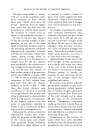
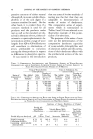
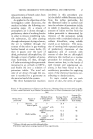
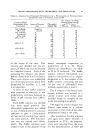
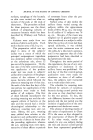
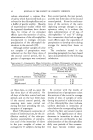
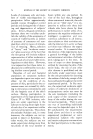
28 JOURNAL OF THE SOCIETY OF COSMETIC CHEMISTS the variable emulsification effects noted with different polyols occur with formulas•having only mediocre or poorly balanced emulsifiers. While studying emulsification effects, we have added polyols at random to some formulas with no noted differences. On other occa- sions, a change in kind or amount of humectant prevents the formation of the cream. Our observation has been that a notable difference be- tween formulas that are not or are sensitive to humectants is that the former always "takes" well during emulsification whereas the latter does not. this formula showed electrical con- ductivity indicating that they were not strongly W/O. Increasing the amount of Arlacel C emulsifier de- creased the conductivity. How- ever, our test creams with either 1% or with 5% Arlacel C stored at 50% R.H. for 20 days have lost less than 2% in weight whether prepared without or with any one of the three polyols (Table 5). It would appear that the first moisture loss promoted the W/O emulsion type even further at the surface of the cream which reduced subsequent moisture loss to a negligible amount. Based on these and our earlier results we be- Tau•.E 5--WEmav Loss trow W/O Evlul•sIo/qs Test No. Polyol, % Type % Arlacel C© Emulsion % Wt. Lost from ---•4-Oz. Sample 15 Days 12 Days 1 None 1% 2 Sorbitol, 10% 1% 3 Glycerin, 10% 1% 4 Propylene Glycol, 10% 1% 5 None 5% 6 Sorbitol, 10% 5% 7 Glycerin, 10% 5% 8 Propylene Glycol, 10% 5% Dual ? 0.8% 1 ._1% Dual ? 0.4% 1.5% Dual ? 1.6% 2.3% Dual ? 1.2% 3.2% W/O 0.6% 0.9% w/o o. 3% •. 5% W/O 1.3% 1.9% W/O O. 5% 1.9% HYoltoscovle AGIgNTS IN COSMETICS--W/O EMULSIONS It has been our experience that a true W/O cream will not lose an appreciable amount of weight even on extended exposure. Cessna, et al. (6), presented data contrary to this experience. We have endeav- ored to repeat their work in part. Their test • formula is based on 1% Arlacel C© as the emulsifier, 0-15% polyol, 34-49% water, and the bal- ance lipophilic material. Test creams made in our laboratory using lieve that humectant addition to W/O creams should be based on de- sired cosmetic properties rather than on the reduction of moisture loss since this is adequately con- trolled if the product is a good W/O emulsion. SUMMA RY Hygroscopicity and other physi- cal data are tabulated for a large number ofhumectants. The differ- ences between equilibrium and dy- namic hygroscopicity are discussed and a chart for the rapid selection of
Purchased for the exclusive use of nofirst nolast (unknown)
From: SCC Media Library & Resource Center (library.scconline.org)