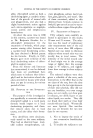
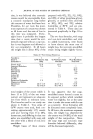
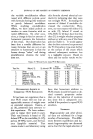
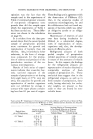
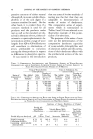
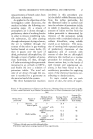
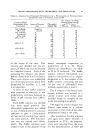
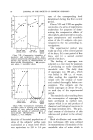
TESTING DEODORANTS WITH CHLOROPHYLL AND DERIVATIVES 45 that, in in-vitro tests, the base, particularly the ammonia of the perspiration had been fixed, i.e., converted into a non-volatile salt by the acid resulting from the hydrolysis of aluminum sulfate (18). On the other hand, the aluminum sulfate did not reduce the quantities of volatile fatty acids in the stale perspiration. It appears probable that the 75 per cent decrease in intensities of odors of the aliquots of stale per- spiration to which the aluminum sulfate had been added, as shown in Table 3, was attributable to fixa- tion of volatile base by the acid resulting from hydrolysis of the aluminum salt. Also, it appears equally probable that the persistent odors of these aliquots were due to volatile fatty acids in stale perspira- tion which were not affected by the aluminum sulfate added to the aluminum sulfate was an efficient deodorizer of bases, e.g., ammonia, trimethyl amine and pyridine, it failed to reduce the intensities of odors of butyric acid, caprylic acid, and caproic acid. The pooled aliquots containing water-soluble chlorophyllins ex- hibited a level of pH which was significantly less than that of the pooled negative controls but defi- nitely higher than that of the ali- quots of stale perspiration treated with aluminum sulfate. The data of Table 3-A indicate that the pooled aliquots containing the chlorophyl- lins exhibit two notable differences from the other two pooled samples of perspiration: (a) less volatile base and less volatile acids than those found in negative controls and (b) less volatile acids than those deter- nilned in the aliquots treated with aluminum sulfate. TABLE 4--Ac'rxoNs or DBIED WATER-SoLuBLE CttLOKOPIIYLLINS UPON VAPORS OF BUTYr. IC Acw Series of Experiments Quantity of Butyric Acid Recovered •-- .... --. Percentage Amount of Standard Reduction Number of Water-Soluble Error of in Butyric Experiments Chlorophyllins Mean Mean Acid Controls 12 0 11.29 0.04 Tests with chloro- phyllins 15 50 5.41 0.01 52 aliquots. This hypothesis was supported by results of subsequent series of in-vitro tests of the capacities of aluminum sulfate to deodorize pure solutions of acids or bases in water or in organic solvents. Although Table •, summarizes the results of a series of experiments which are representative of the actions of water-soluble chlorophyllins upon volatile organic acids which may be sources of putrefactive perspiratory odors. A secondary consideration

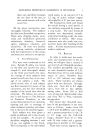
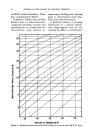
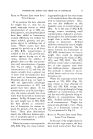
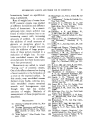
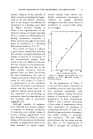
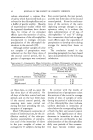
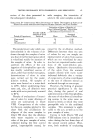
46 JOURNAL OF THE SOCIETY OF COSMETIC CHEMISTS which motivated the presentation of these experiments in this report was the fact that•,they illustrate the capacity of a dried preparation of water-soluble chlorophyllins to deodorize gases which are exposed to the chlorophyll derivative. For the purposes of this experiment, a dried and finely pulverized prepara- tion of sodium-copper chlorophyl- lins was used as the deodorant. Spectrophotometric analyses in- dicated a purity of 77 per cent. It was one of the samples used in the studies of the characteristics of transmission curves which are pre- sented in Chart III. In the control experiments, a current of air, the volume of which was recorded by a gasometer, was drawn through 25 c.c. of a 5 per cent solution of burytic acid, con- tained in a gas-washing bottle maintained at 50øC. by means of a water bath, over glass wool in a U tube and, then, into 50 c.c. of 0.005 _/V sodium hydroxide. The rate of flow of air through the system was 200 c.c. per minute. Since results of several groups of pre- liminary experiments indicated that test periods of thirty minutes were optimum in respect to reproducibili- ties of findings, this period was adopted in all control tests and experiments with the chlorophyllins. At the end of this period, the excess of alkali in the second wash-bottle was titrated with 0.005 N HC1, using phenolphthalein as an in- dicator. In the experiments with the chlorpphyll derivative, 50 mg. of the dried preparation of the chloro- phyllins were dispersed over the surface of the glass wool. The data presented in Table 4 indicate that, under the conditions of these tests, the preparation of dried chlorophyllins effected a mean reduction of 52 per cent in the quan- tity of butyric acid volatilized and transported by 6 liters of air over the surface of the chlorophyll deriva- tive. Within the author's experience, eradications of the odor of garlic represent the most rigid test condi- tions for deodorizing preparations. The source of the garlic odor is diallyl sulfide. In the series of ex- periments which are presented in Table 5, an aqueous extract of garlic and a dilute aqueous solution of diallyl sulfide were utilized as sources of odors. Immediately before each experi- ment, fresh preparations were made up of either the garlic or the diallyl sulfide. The former was prepared by macerating thoroughly 1 gm. of garlic in 20 c.c. of water. The diallyl sulfide solution was made up to contain 0.004 per cent of this compound. The preparation of water-soluble, sodium-copper chlorophyllins tested in the experi- ments of Table 5 was the same product as that used in the experi- ments of Table 4. In 1923, Haggard (19) described the basic principles of the analytical procedure which was utilized in the series of experiments presented in Table 5. Later, Haggard and Green- berg (20) adapted this method to
Purchased for the exclusive use of nofirst nolast (unknown)
From: SCC Media Library & Resource Center (library.scconline.org)