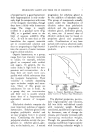
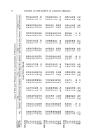
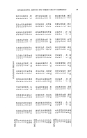
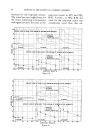
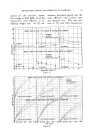
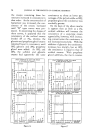
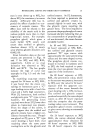
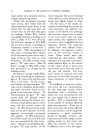
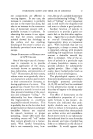
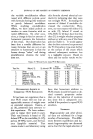
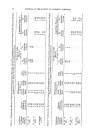
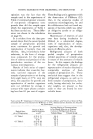
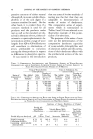
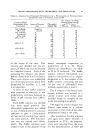
TESTING DEODORANTS WITH CHLOROPHYLL AND DERIVATIVES 43 The substrate was a pooled sample of perspiration collected from the bodies, except the heads and necks, of five subjects and, then, incubated at 37øC. for forty- eight hours. The pooled sample was divided into two major parts and each of these major parts was subdivided into six aliquots each of which had a volume of 100 c.c. One series of six aliquots was utilized in tests of the chlorophyll and the other series was employed in com- parable experiments with aluminum sulfate. In each of.these two series, one aliquot was maintained as a negative control neither product was added to this aliquot. Varying amounts of the water- soluble chlorophyll preparation were added to the remaining five aliquots of one series. In like manner, different quantities of anhydrous aluminum sulfate were introduced into five aliquots of the other series. Relative amounts of the two test products added to 100-c.c. aliquots in either series were deter- mined on the basis of previous ex- periences in separate groups of tests of each compound. Following addi- tions of the chlorophyll derivative to one series and of the aluminum sulfate to the other, the six aliquots of both series were incubated at 37øC. for thirty minutes with con- stant but gentle agitation. At the ends of these periods, intensities of odors, as pO values, were deter- mined by the air dilution method, and counts were made of viable bacteria in all aliquots. Also, repre- sentative portions of some of the aliquots in each series were utilized in chemical analyses for pH and for volatile bases and acids. Table 3 presents the results of measurements of intensities of odors, of the counts of bacterial colonies and the comparative amounts of either product added to 100 c.c. of the aliquots in each series. During the periods of incubation for thirty minutes, both the chloro- phyll derivative and the almninum sulfate effected reductions in num- bers of viable micr6organisms. Magnitudes of these reductions progressed in the same direction as did the amounts of either product added to the samples of perspiration. However, in both series of test samples, rates of decline in numbers of viable bacteria exceeded the proportionate increments of the preparations added to the aliquots. Progressive reductions in intensi- ties of odors were observed in the series of aliquots to which the water- soluble chlorophyllins had been added up to a level of 50 rag. per 100 c.c. or a concentration of 0.050 per cent. This concentration of the water-soluble derivative of chloro- phyll deodorized completely the malodorous, stale perspiration. Also the bacterial population of this aliquot was reduced to less than 1 per cent of the nmnbers determined in the negative control aliquot of the same series. Although the aluminum sulfate effected equally great or even greater reductions in bacterial counts of the samples of perspira- tion to which it had been added,

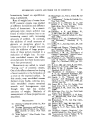
44 JOURNAL OF THE SOCIETY OF COSMETIC CHEMISTS it failed to deodorize the samples. At a level of 1.50 per cent of the aluminum salt, the intensity of odor of the perspiration was re- duced to 25 per cent of that of the negative control aliquot in the same series. Despite this 75 per cent reduction in odor values, the aliquot containing 1.50 per cent of alumi- num sulfate was offensively odorous. Moreover, additions of greater amounts of the aluminum salt to bring the concentrations up to 2.0 and 3.0 per cent did not augment the reductions in intensities of odor although they did cut down the bacterial populations of the samples of perspiration. From the data presented in Table 3, it is evident that deodorizations of the samples of stale perspiration were not dependent solely upon the bactericidal actions of either of the two products under test. In order to obtain volumes ade- quate for chemical analyses, it was found necessary to combine two aliquots in each of three groups of samples which are listed in Table 3-A. These groups were made up as follows: (1) the negative con- tr91s included the negative control aliquots of both series, (2) aliquots 5 and 6 in the experiments with the aluminum sulfate of Table 3 were pooled to give the composite sample containing the aluminum salt, and (3) the corresponding aliquots in the experiments with water-soluble chlorophyllins were pooled to yield the sample containing this deriva- tive of chlorophyll. Volumes of 150 c.c. of the pooled aliquots were distilled with steam for about twenty-five minutes in order to obtain 150 c.c. of distillates. The total volume of a distillate was divided into three equal portions of which two were utilized in analyses for base. However, one of these two portions was treated with Per- mutit prior to acidification and concentration as described on page 35 as the initial steps in determina- tions of total volatile base. Treat- ment with Permutit was omitted in the analysis of the second portion. Hence, analysis of the second por- tions yielded data for total volatile base whereas analysis of the first portions gave values for volatile base other than 'ammonia. The third portion was utilized in analyses for total volatile acids by the pro- cedure which has been described on page 35. Analytical data presented in Table 3-A indicate that the-stale perspiration which had a pH = 8.74 contained an excess of volatile base over volatile acids and, also, about 89 per cent of the total base was in the form of ammonia. The addition of 2.5 per cent of anhydrous aluminum sulfate re- duced the pH of the perspiration from a theoretical level of 8.74 to 2.92. The steam distillate from the aliquot to which the aluminum salt had been added yielded significantly less base but definitely more vola- tile acids than did the negative control aliquots. Decreases in am- monia accounted for the greater part of this reduction in total vola- tile base. These findings indicate
Purchased for the exclusive use of nofirst nolast (unknown)
From: SCC Media Library & Resource Center (library.scconline.org)