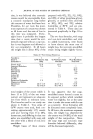
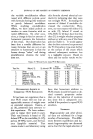
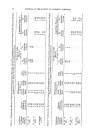
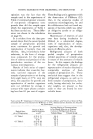
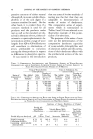
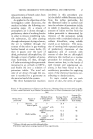
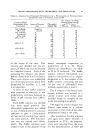
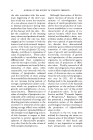
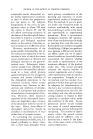
TESTING DEODORANTS WITH CHLOROPHYLL AND DERIVATIVES 49 Ta•L• 6--CoMvaRaTXVE DEODO}ta•T EVVXC•E•CXES OVa P}tEva}taxIO• ov SODXuM-CovvE}t CHLOKOPHYLLINS AT VAKYINO LEVELS or pH Levels of pH of Preparations After Series of Prepara- Chlorophyll Incubation tions Added, Mg. pO Values of Prep- arations After Storage •--at 37 ø C. for:--. 5 Minutes 30 Minutes Not buffered, Negative pH = 6.14 control 0 32 64 Not buffered. A• 0 32 64 In water at Aa 200 16 16 pH = 6.50 Aa 500 8 4 pH = 2.20 B• 0 32 64 B2 200 32 32 Ba 500 32 16 pH = 5.29 C• 0 32 64 Ca 200 16 16 Ca 500 16 8 pH = 8.04 D• 0 32 64 D2 200 16 4 D• 500 4 0 pH = 10.50 E• 0 32 64 Ea 200 16 4 E• 500 4 0 as the source of the odor. This mixture was divided into six ali- quots, of which one was maintained as a negative control. Each of the remaining five aliquots was identi- fied by a letter from A to E inclusive. Then, each aliquot was subdivided into three equal portions which were designated by numbers 1, 2, and 3 as subscripts. A series of four buffer solutions were prepared to maintain in test preparations acid-base balances at levels of pH varying from 2.00 to 12.00. Each buffer solution was divided into three equal portions. The chlorophyll preparation was added to two of these portions in amounts sufficient to give a concentration of 2 per cent in one and 5 per cent in the other portion. The third por- tion was not treated with chloro- phyll. The buffer solutions were added to four of the aliquots of the benzyl mercaptan suspension in proportions of 1 to 10. These aliquots are identified in the table as B to E inclusive. The buffer solution without chlorophyll was added to the portion of an aliquot designated as 1 the samples of the buffer solution containing 2.0 and 5.0 per cent of chlorophyll were marked, respectively, 2 and 3. The A aliquot of the benzyl mer- captan mixture was treated in a similar manner with either plain distilled water or samples of the water containing chlorophyll. The negative control aliquot was diluted with water to a volume equivalent to that of all of the other preparations listed in the table. After incubation for five minutes and again after thirty minutes of incubation at 37øC., the prepara- tions were removed from the oven for the determinations of their pO

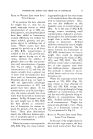
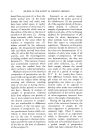
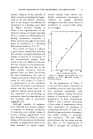
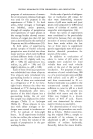
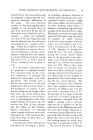
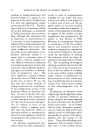
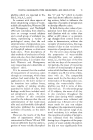
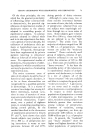
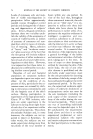
5O JOURNAL OF THE SOCIETY values which are reported in the table. Also, at the ends of periods of incubation for thirty minutes, determinations of levels of pH of all preparations were made. The values for pH reported in Table 6 are the averages of the pH levels determined for the three preparations made up from any one aliquot of the benzyl mercaptan mixture with water. Comparisons of the pO values reported for the preparations iden- tified by subscripts "1" with the corresponding results for both the negative control and the A• prepara- tion indicate that the buffer solu- tions per se had no more effect upon intensities of odors of the benzyl mercaptan than did equiv- alent volumes of water. Hence, any changes in pO values of the preparations designated by sub- scripts "2" and "3" are attributable to the sodium-copper chlorophyllins which were incorporated in the buffer solutions. There is evident a dependence of the deodorant capacity of the chloro- phyll upon the balances between acids and bases in the liquid phases of the preparations to which it was added. At levels of pH below 6.0, capacities of chlorophyll to deo- dorize benzyl mercaptan decline markedly whereas in preparations having favorable balances of base over acid, the sodium-copper chloro- phyllins effectively eradicate the odor of benzyl mercaptan. A particularly significant finding in this series of experiments was the fact that increasing the alkalinities OF COSMETIC CHEMISTS of preparations from pH = 8.04 to pH = 10.50 failed to influence the deodorant efficiericies of chloro- phyll. In fact, in supplementary series of tests, it was observed that buffering comparable preparations at pH levels of 12.50 did not en- hance the deodorant efficiencies of chlorophyll above those deter- mined at levels of pH = 8.00. In other words, increasing the hy- droxyl ion concentration by more than 10,000 times did not augment the deodorant properties of chloro- phyll. On the other hand, in- creasing the hydrion concentration only 1500 times reduced the deo- dorant efficiency of chlorophyll by 50 per cent, as calculated from pO values. In brief, acidity, deter- mined as concentrations of hydrions in the liquid phase of the medium into which chlorophyllins are in- troduced, is the variable of primary importance as a determinant of their deodorant efficiencies. Several subsequent series of ex- periments were undertaken with the objective of ascertaining the in- fluences of hydrion concentrations, within more limited ranges of pH levels, upon the deodorant proper- ties of chlorophyllins. Results of these studies indicated that the hydrion concentration which was critical for inhibitions of deodorant actions of the chlorophyllins was indicated by a pH = 5.30 4- 0.30. This result represents an average of tests• of combinations of either sodium-copper or sodium-magne- sium chlorophyllins in concentra- tions of 500 rag. per 100 c.c. in
Purchased for the exclusive use of nofirst nolast (unknown)
From: SCC Media Library & Resource Center (library.scconline.org)