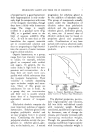
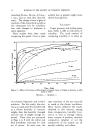
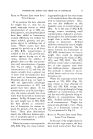
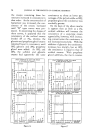
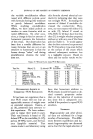
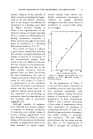
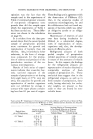
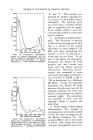
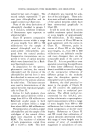
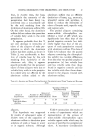
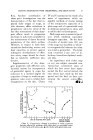
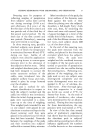
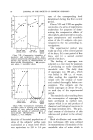
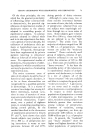
6 JOURNAL OF THE SOCIETY OF COSMETIC CHEMISTS area at a given temperature. Vola- tility is usually of importance under practical conditions of use, usually room temperature, and is propor- tional to the vapor pressure at room temperature. It will be seen that these three properties are directly related to the determination of water retention of humectants either when tested as such or when added to a cosmetic, etc., and evaluation methods must take these factors into account. HYGROSCOPIC AGENTS--GENERAL The properties of an ideal humec- tant are briefly summarized below: 1. High hygroscopicity--The product should hold an appreciable amount of water. 2. Narrow humectant range-- For a given change of relative humidity there should be a mini- mum change in water content. 3. Desired viscosity--The lower the viscosity of the humectant the more easily it may be mixed with the materials to be conditioned. (Mixing is usually done in aqueous solution so that the actual viscosity of the humectant may be of secondary importance.) For some applications high viscosity is desirable. 4. Low viscosity index--The usual terminology for viscosity in- dex refers to change of viscosity with temperature. In this case a low viscosity change with both ternpe.rature and water content is desirable. 5. Good compatibility--The product must be compatible with a wide variety of materials. 6. Low volatility--Complete lack of volatility is desirable. 7. Low cost. 8. Lack of toxicity. 9. Good color, odor, and taste. 10. Lackof corrosive action. 11. Low freezing point. In general, humectants are di- vided into three classes: inorganic, organic, and metal-organic. The inorganic type, of which calcium chloride is an example, finds only limited use because of their corrosive nature and lack of compatibility. Organic humectants, the most widely used type, are usually poly- hydric alcohols and their ethers or esters. The metal-organic type, such as sodium lactate, is not too generally employed. Considering inorganic humectants in view of the above list of qualities, we find that their hygroscopicity and viscosity characteristics are favorable, since they hold large quantities of water and the viscos- ities of the aqueous solutions change little with wide changes in water content (until a solid state is at- tained). Salts and their hydrates generally have hygroscopicity curves that progress in a stepwise fashion until complete solution is attained (Fig. l-A). For the most part they are highly corrosive and they exert a "salting out" effect on organic colloids. They are non- volatile and--the major reason for their use--they are low in cost. Most organic humectants have the following relationship to our list

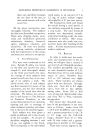
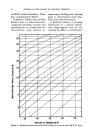
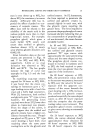
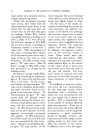
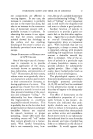
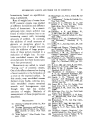
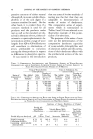
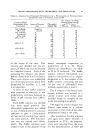
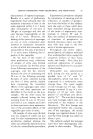
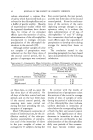
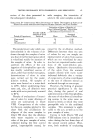
HYGROSCOPIC AGENTS AND THEIR USE IN COSMETICS 7 of properties for a good humectant: their hygroscopicity is only moder- ately high (in comparison with some of the inorganic materials), though they have a fairly wide humectant range. The range is usually covered in a gradual curve (Fig. I-B), or a gradual curve to the limit of aqueous solubility (Fig. l-C). It will be seen that at low humidities the organic materials are in concentrated solution and that on progressing to high humid- ities the amount of water increases to give a dilute solution. Organic humectants, as a group, range from low viscosity materials to solids for example, ethylene glycol as compared with sorbitol and sugars. In general, the vis- cosity index is high both for tem- perature and concentration. .As a class they are much more com- patible with colloid substances than the inorganic humectants. Their volatility is variable depending upon molecular weight and struc- ture. Many of this group are satisfactory for use in foods. As a group they are non-corrosive and their cost is usually several times that of a hygrometrically equivalent amount of inorganic salt. Polyhydric alcohols comprise the most important subclass of organic humectants. Ethylene glycol is the simplest polyhydric alcohol and we may progress from it in several ways. Considering the family of polyhydric alcohols strictly the pro- gression is: ethylene glycol, glyc- erin, to the hexitols, etc. A second progression for ethylene glycol is by the addition of ethylene oxide. This group of compounds actually comes under the classification of dihydric rather than polyhydric alcohols and the progression is ethylene glycol, diethylene glycol, tri, tetra, etc. A second class of dihydric alcohols may be based on propylene glycol and propylene oxide. Combinations of any base polyols with various alkylene oxides is possible to give a vast number of products. 100 0 D $ollds 100 Curve • Comoound A Inorganic Calcium Chloride cB Organle Sorbl•ol Orgenle Uroa D Metal-Organic $odltta Laceate Figure 1.--Typical Equilibrium Hygrosco- picity Curves of Various Type Humectants The physical properties, particu- larly hygroscopicity and viscosity, fall into fairly well-defined trends with molecular weight. Broadly considered, equilibrium hygroscopic- ity decreases, rate of change de- creases, and viscosity increases with increasing molecular weight. Though the generalization of de- creasing equilibrium hygroscopicity with increasing molecular weight is
Purchased for the exclusive use of nofirst nolast (unknown)
From: SCC Media Library & Resource Center (library.scconline.org)