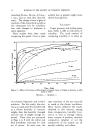
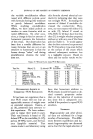
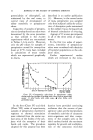
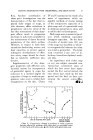
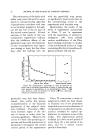
8 JOURNAL OF THE SOCIETY OF COSMETIC CHEMISTS true, this property of the various classes of polyols progresses dif- ferently with different classes. Di- hydric alcohols (formed by the addition of ethylene oxide) show a sharp reduction of humectant value with the first additions of ethylene oxide and then gradually level out at a low value. The initial reduc- tion is even sharper when pro- pylene oxide is used. In contrast, the polyhydric alcohol series, ethyl- ene glycol, glycerin, xylitol, sorbitol, etc., does not show as sharp a re- duction at first, but the decrease becomes more and more rapid with increasing molecular weight. This would indicate that similar mem- bers of eight and higher carbon chain length would have exceedingly low equilibrium hygroscopicities. Although, in most cases, vis- cosity increases with molecular weight, it is interesting that though dry sorbitol is a solid, with the chem- ical addition of ethylene oxide, the resulting product is a liquid. How- ever, with further increasing molec- ular weight by reaction with more ethylene oxide the viscosity in- creases and the ultimate product is a solid. DETERMINATION OF HYGROSCOPICITY Care must be exercised in the de- termination of hygroscopicity so as to differentiate between equilibrium hygroscopicity, dynamic hygro• scopicity• and volatility. For non- volatile materials equilibrium hygro- scopicity may be determined with comparative ease. The basic prin- ciple in determining equilibrium moisture content is that of bringing a thin film of the sample into equilib- rium with thd desired conditions. For non-volatile liquid materials, a modification of the official A.O.A.C. method (15) may be used. In this method, approximately one gram of the test sample is thoroughly dispersed on Ottawa sand in an aluminum dish equipped with a small glass stirring rod and a close fitting cover. The initial weight of the sample, concentration of the initial sample, and observed weight after attaining equilibrium permits calculation of the per cent solids or per cent water at equilibrium. The hygroscopicity of volatile materials cannot be determined by this modified official procedure be- cause the samples lose weight con- tinually. Our method employs similar equipment and differs in that the initial weight of the sample is not observed. The weight is noted and the sample is analyzed for moisture content when equilibrium is attained. This method is only suitable for pure or single component materials. If only a part of the product is volatile, the sample will change in composition of solids as well as moisture content during ex- posure. Under these circumstances, further analyses must be carried out to indicate the complete composi- tion at the time of equilibrium and moisture analysis. Rate of attaining the final mois- ture content or dynamic hygro- scopicity is usually expressed as a comparison with another material.

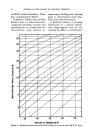
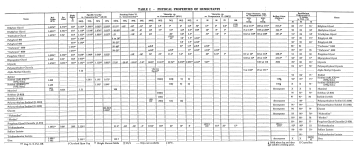
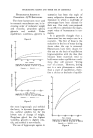
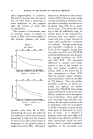
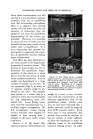
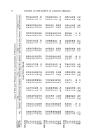
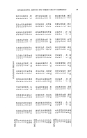
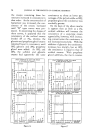
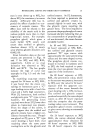
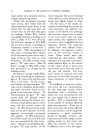
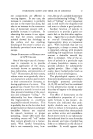
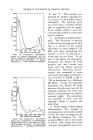
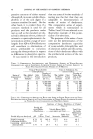
HYGROSCO?IC AGENTS AND THEIR USE IN COSMETICS 9 It will be seen that the dynamic hygroscopicity for a given sample or product containing the sample will depend upon (1) the inherent rate of the product, (2) the starting and final concentrations (or humidities), (3) the temperature, (4) the thick- ness of the sample, (5) the physical nature of the sample (liquid, solid, gel, etc.), and other factors. In our laboratory, both the sample-on- sand technique and uncovered beakers of the material have been employed. It would appear that the sample-on-sand method would mini- mize the effect of moisture migra- tion or transfer through a finite thickness of film and would there- fore give a truer value of rate. Much of the published hygroscopicity data is based on observations of the rate of weight gain of a thick layer of sample in a beaker which combines factors of equilibrium and dynamic hygroscopicity, volatility, and rate of moisture transfer in solution in unknown proportions. Determination of volatility is complex because it is a rate phenom- enon and depends upon the area exposed, temperature, and relative humidity. Constancy of relative humidity is also important since variation will lead to gain and loss of water during which a form of steam distillation can occur. The vapor pressure of the humectant (100%) is an indication of its volatility. These methods of determining hygroscopicities were chosen as being the most practical for ob- serving a reasonable number of samples at one time with good ac- curacy. Previous methods that were given trial included the iso- teniscope, the Bureau of Standards individual humidors (17) and saturated salt solutions in desic- cators and in specially built boxes. Generally, we have found saturated salt solutions to be unsatisfactory because of their slow gain and loss of water. This was true even when the surface of the solution was agitated. Our present equipment consists of a stainless steel lined cabinet through which air is recirculated. Tem- perature is controlled by a sensitive mercury thermo-regulator which controls electric heating through an electronic relay. Humidity is con- trolled by a silk wick hygrostat operating a pneumatic air-water aspirator spray. Dehumidification is provided by external means and is controlled only grossly, the actual control being the humidifying sys- tem mentioned above. Performance of the equipment and an estimation of the accuracy of the methods of determining equilibrium hygro- scopicity in comparison with pre- viously published data have been described (11). EQUILIBRIUM HYGROSCOPICITY DATA These data were determined as previously described, the found values expressed as per cent solids in equilibrium •ith the chosen rela- tive humidity, and the successive values plotted. From the resulting curves, values of per cent solids were read off at 30%, 50%, 70%,
Purchased for the exclusive use of nofirst nolast (unknown)
From: SCC Media Library & Resource Center (library.scconline.org)