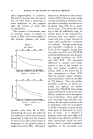
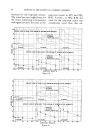
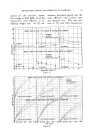
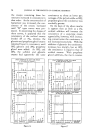
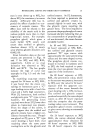
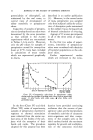
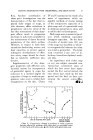
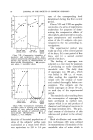
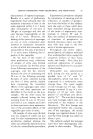
TESTING DEODORANTS WITH CHLOROPHYLL AND DERIVATIVES 69 bacteria from the same surface area for purposes of appraising the com- parative deodorant efficiencies of the soaps. The most practical method of obtaining representative samples of the bacterial flora of skin from more than 90 per cent of the surface area of the body and in a medium to which the metabolic activities of the micro6rganisms had become adjusted was the utilization of perspiration as a medium of lav- age. Under the conditions of ther- mal stimulation, as used in this se- ries of experiments, volumes of per- spiration collected from the subjects in a total of 540 sweating tests varied from 256 to 375 c.c. with a mean of 276 c.c. (standard error of mean = 5.1). It is the author's conviction that, for purposes of sampling bacteria from extensive areas of skin, ther- mal stimulation of sweating has distinctive advantages over other procedures, One notable asset is the fact that elevation of the skin temperature (33) not only results in the production of volumes of per- spiration adequate for lavage of bac- teria from the skin's surface but, also, it contributes to the mobiliza- tion of micro/Srganisms from their deeper habitats in the skin, e.g., the crevices and folds of the corneum and the orifices of hair follicles. Hence, stimulation of sweating yields samples which are more truly representative of the cutaneous bac- terial flora than do other direct or indirect procedures. A second asset of the technique of stimulation of sweating as a means of sampling cutaneous bacteria is the fact that it maintains day to day variations within narrower ranges than those which are characteristic of other methods, either direct or indirect, of obtaining representative samples of the bacterial flora of skin. During the control period preceding tests with the plain soap, the mean of numbers of viable bacteria counted in stored samples of perspi- ration was 9.73 millions per 1 c.c. with a standard error of the mean of 1.30. Samples of perspiration collected from the same subjects, during the control period before tests of the germicidal soap, had a mean count of 10.12 millions of bac- teria per 1 c.c. of which the standard error was 1.95. Day to day varia- tions in counts of cutaneous bac- teria have been calculated as per- centage variations from the mean re- sult determined for all samples of perspiration from each subject dur- ing the two control periods. The average of all day to day variations from their respective means deter- mined for 15 subjects was q-15 per cent with a standard error of 3.5. In the light of the range of diurnal variations in bacterial populations of perspiration collected from the subjects during control periods, there can be no question of the sig- nificances of the differences between the mean percentage reductions in cutaneous bacteria effected by wash- ings with either the plain soap or the germicidal soap on the nine days of the bathing period for which data have been summarized in Chart V. The second limitation of in-vitro

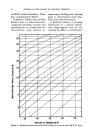
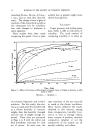
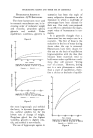
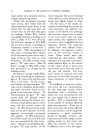
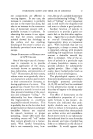
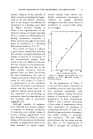
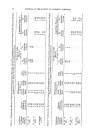
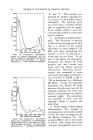
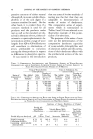
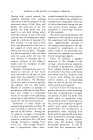
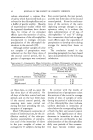
70 JOURNAL OF THE SOCIETY OF COSMETIC CHEMISTS methods of testing deodorants will become evident as a result of com- parisons of the data in Tables 3 and 3-A with the experimental results summarized in Chart VI. The find- ings in the tests of aluminum sulfate by in-vitro techniques, as presented in Table 3, pointed to the conclusion that, although this anhydrous salt of aluminum, in concentrations of 1.5 per cent or more in perspiration, reduced the bacterial populations by more than 99 per cent, it was a rela- tively ineffective deodorant. On the other hand, applications of an- hydrous aluminum sulfate in a cream base to cutaneous areas of the axillas of human subjects not only effected substantial reductions in bacterial populations of skins but it proved to be an efficient deodoriz- ing agent and inhibitor of develop- ment of' perspiratory odors. The most significant variable between the in-vitro tests of Table 3 and the in-vivo tests of Chart VI was the fact that the former methods of testing eliminated the contribution of the antipirspirant actions of the deodorant effects of aluminum sul- fate. In view of the fact that topi- cal applications of this compound in a cream base gave a mean reduction of 75 per cent in amounts of perspira- tion on surfaces of skins of the subjects' axillas it appears prob- able that the deodorant effects of aluminum sulfate, as represented in Chart VI, were resultants of both its antiperspirant and antibacterial ac- tions on skin. An alternate experimental pro- cedure which has been adopted pri- marily in tests of antiperspi•'ants, intended for use under the arms, utilizes one axilla of each subject as a control area of skin and the op- posite axilla as a test area to which the product under test is applied. A review of the experimental evidence in support of the validity of these comparisons was presented by the author to this Society in 1950. However, in investigations directed to evaluations of both the antiper- spirant and deodorant actions of underarm preparations, experiences in the author's laboratory have indi- cated the advisability of utilizing the technique which has been de- scribed for the experiments of Chart VI. The outstanding advantage of the latter method is the fact that the use of the sum of the cutaneous sur- faces of the two axillas of a subject, as test areas of skin, makes available larger volumes of perspiration for determinations of odor values and, also, it doubles the area of cutaneous surfaces from which direct cultures of skin micro-•rganisms may be made. Eradications of obnoxious odors originating in pathological processes, notably in purulent infections in human subjects, have been reported by several clinicians (35, 36, and 37) within recent years. In all of these clinical trials, therapeutic prepara- tions of relatively high purity were applied locally by techniques which assured direct contacts of the chloro- phyllins with the sources of the odors. These clinical findings are in agreement with the results of the in- vitro tests of water-soluble chloro-
Purchased for the exclusive use of nofirst nolast (unknown)
From: SCC Media Library & Resource Center (library.scconline.org)