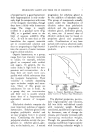
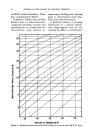
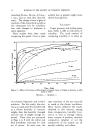
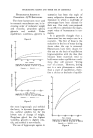
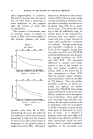
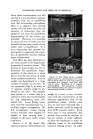
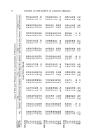
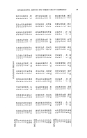
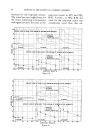
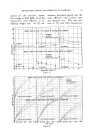
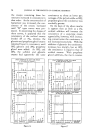
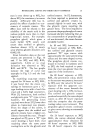
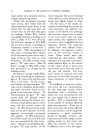
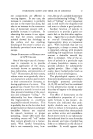
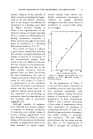
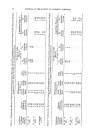
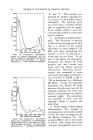
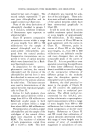
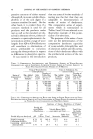
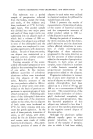
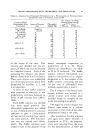
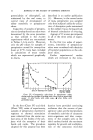
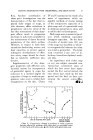
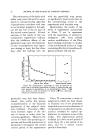
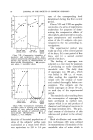
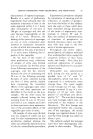
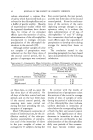
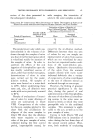
TESTING DEODORANTS WITH CHLOROPHYLL AND DERIVATIVES 71 phyllins which are reported in Ta- bles 3, 3-A, 4, 5, and 6. In contrast with these reports of direct deodorizing actions of water- solublk chlorophyllins, Westcott (38) and Montgomery and Nachtigall (39) have concluded, from observa- tions on average normal subjects and a small group of ambulant pa- tients, representing a variety of pathological states, that the oral administration of preparations con- taining a water-insoluble acid digest of chlorophyll reduces or eliminates body odors. From descriptions of their methods of evaluations of body odors and, also, from their tabulated and charted data, it is evident that both Westcott and Montgomery were measuring odors detectable on subjects' skins.' If it be assumed that the method of measurement of cutaneous odors through an osmoscope, which these authors had used either by direct applications to the skin's surface or by insertions into axillary fossas, were capable of yielding reliable, quantitative indices of odors, their findings would have included resid- ual perspiratory odors. An obvi- ous corollary of this conclusion would be the inference that the oral administration of the water-insol- uble and acid-insoluble chlorophyll derivative inhibited the metabolic activities of bacteria on the skin's surface. However, the results of the final series of experiments which are summarized in Charts VII and VIII indicate definitely that the daily in- gestion of water-soluble chlorophyl- lins "a" and "b," which in in-vitro tests had shown effective deodoriz- ing actions, failed to influence the capacities of samples of perspiration to develop offensive odors. In both charts, odor values of per- spiration have been plotted as ac- tual dilutions with air rather than either as pO values or as percent- age changes from control levels in order to demonstrate, without the necessity of recalculations, the mag- nitudes of day to day variations in intensities of perspiratory odors. For the seven days during which the preparation of water-soluble chlorophyllins were not adminis- tered, i.e., the five days of the first and the two days of the second con- trol periods, the mean of intensities of odors of stored samples of perspi- ration which had been collected from 15 subjects was 50.l in terms of dilu- tions with air. The comparable mean result for the five days of ad- ministration of the preparation con- taining the water-soluble chloro- phyllins was 52.8 in terms of dilu- tions with air. For the entire group of 15 subjects, the mean of all day to day variations throughout the twelve days during which samples of perspiration were collected and analyzed was 4-8.6 per cent of the mean result for any one subject throughout the experimental period. In view of this narrow range of di- urnal variations, it is evident that the capacities of samples of perspira- tion collected from the subjects during days of ingestion of the prep- aration of water-soluble chlorophyl- lins did not vary significantly from

72 JOURNAL OF THE SOCIETY OF COSMETIC CHEMISTS comparable results determined un- der similar experimental conditions .on days on which this preparation was not given to the subjects. Comparisons of the curve for per- spiratory odors in Chart VII with the curves in Charts IV and VI will afford convincing evidences of the failure of the chlorophyll deriva- tive either to retard or to inhibit the chemical and biological reactions which, on. the surface of the skin, re- sult in production of offensive odors. However, administration of the water-soluble chlorophyllins did ef- fect substantial reductions in the in- tensities of odor of which the source was an end product of chemical and biological reactions in the gastroin- testinal tract. Subsequent experi- mental studies have afforded indi- cations that chlorophyllins adminis- tered in a form which protects against precipitation by acid gastric contents and assures solubility of the chlorophyll derivatives in the intestinal contents, within certain limitations, may function as deo- dorizers and inhibitors of develop- ments of malodorous end products of metabolism of some species of bac- teria. However, these deodorant capacities of the chlorophyll deriva- tives are dependent upon contacts of the deodorizer with the sources of the odors. Hence, these effects of chlorophyll derivatives should be classified as manifestations of local rather than of systemic actions. In concluding this summary, it has been deemed advisable, and, it is hoped, profitable, to direct atten- tion to three basic principles which merit primary consideration in the planning and execution of in-vivo experimental studies of deodorants. First, the methods of use of a prod- uct under test should be made to conform qualitatively with actual use-conditions, in so far as the latter are reproducible in experimental procedures. From a quantitative standpoint, however, the reproduc- tions of use-conditions must be made so exacting that even the most ef- ficient deodorant would be incapable of exhibiting a 100 per cent perform- ance because a 100 per cent deodor- ant effect, under any set of experi- mental conditions, invariably leaves unanswered the question whether this result is representative of the maximum efficiency of the product under test. The second principle concerns the relative number of control experiments and of compa- rable experimental trials of a deodor- ant preparation. Lengths of con- trol periods and the number of ex- periments within these periods must be adequate for determinations of the day to day variations in develop- ments of perspiratory odors by any one subject and, also, the variations among subjects in respect to their capacities to produce odors under the conditions of the tests. An ex- perimental period should include two series of control experiments, one preceding and one following the test period. The number of experi- ments within the second control period need be sufficient only to demonstrate a return in the direc- tion of the mean result of the first control experiments.
Purchased for the exclusive use of nofirst nolast (unknown)
From: SCC Media Library & Resource Center (library.scconline.org)