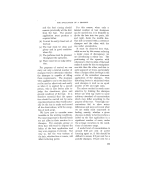
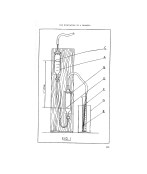
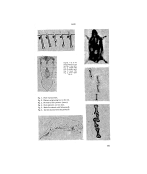
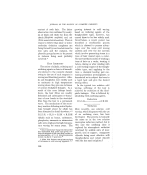
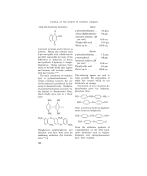
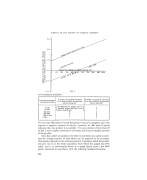
JOURNAL OF THE SOCIETY OF COSMETIC CHEMISTS has appeared elsewhere. • Figure 1 illustrates the process of hair replace- ment. Animal experiments have shown an interesting relation between hair growth and blood supply to a given skin area. It was found s that hair growth on the rat takes place in a series of waves symmetrically dis- posed about the longitudinal axis. This result was obtained from a study of the disposition of a flavin dye (9-phenyl-5: 6-benzoisoalloxazine), wkich after injection colours the hair of albino rats in a pattern corre- sponding to the most rapidly growing hair (Figure 2). The areas of regen- eration of depilated hair were also recorded and the blood capillaries were found to be most dense in the areas of rapid growth. It was con- cluded that the dye probably enters growing areas because these are the only ones in sufficiently active inter- change with the general circulation. Hale' has stated that hair growth on the rabbit appears to follow a similar course to that reported for the rat. In the rabbit it is probable that both rapid •rowth and natural pigmentation of the hair shaft are associated with local increased blood supply to the hair follicles. The possible significance of these findings for the cosmetic chemist need not be stressed. Impoverished scalp circu- lation has long been suggested as one of the causes of hair fall, and where this is the case, the beneficial effect of massage or chemical stimula- tion of the skin is readily understood. The possibilities and limitations of overcoming the results of inadequate blood supply by local topical applica- tion of protein hydrolysates, methion- ine or colloidal sulphur, have been discussed in an earlier communica- tion.* Genetic, as well as nutritional factors, are involved in the develop- ment of male baldness, however, and in many cases it must be admitted that the utmost that can be achieved is to delay the inevitable. General measures of scalp hygiene, such as frequent shampooing, and massage in association with the use of anti- septic and stimulating lotions will keep the scalp healthy and free from dandruff. Three typical lotions are: 1 per cent quinine «-2 per cent [3 in 30 per cent naphthol in 50 per alcohol. cent alcohol. 5 per cent resorcinol 5 per cent tinct. capsicum. 5 per cent castor oil 85 per cent ethyl alcohol (90 per cent). The role of cholesterol in hair preparations has been the subject of some debate it is undoubtedly of value, however, as a check against irritation liable to arise from con- tinuous use of alcoholic solutions. An aqueous alcoholic solution of 2-ethyl- hexane diol 1: 3 salicylate has been claimed to remove dandruff and im- prove scalp. conditions generally? while alkyl-dimethyl benzyl ammon- ium chloride is the basis of a germi- cidal hair rinse for use after a normal shampoo. Products are also avail- able in which a germicide, e.g. hexachlorophene, is present in the shampoo. An interesting biological relation 158

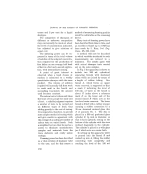
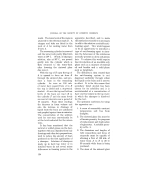
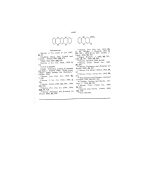
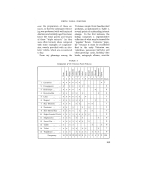
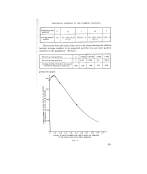
HAIR between habits of hair toilet and direction of hair growth has been observed in certain animals. In primitive marsupials such as the Banded Anteater and Tasmanian Devil, hair is directed from head to tail on the back and from spine to belly over the flanks. On the limbs hair growth is directed distally and post axially. This primitive hair pattern also occurs in a large number of less specialised higher mammals (Figure 3). It is well known, how- ever, that many animals show partings, whorls and reversals in certain areas of their bodies (Figure 4). Many factors have been invoked to explain these deviations from the primitive hair pattern. Kidd and Wood Jones 6 have shown that the direction of hair tracts is closely related to habits of posture, move- ment and toilet of the skin, and in many cases coincides with the direc- tion in which an animal combs or scratches its fur. While these appear to be simple functional causes, biologically it is interesting to note that the arrangement of the' hair tracts characteristic of any mam- malian species is definitely estab- lished in the fittus before birth, a condition which these two investiga- tors believe to be an example of the transmission of an acquired charac- teristic. HAIR STRUCTURE Two and sometimes three types of cell may be recognised in hair fibres. These are those of cuticle, cortex and medulla, the last of which is not always present. The overlapping cells which constitute the cuticle are arranged with their major axes along the length of the fibre. X-ray and optical stud/es show that the protein crystallites in the cuticle are not orientated parallel to the fibre direction and are in all probability randomly dispersed in the cuticle cell. Examination of wool in the electron microscope corifirmed this conclusion by showing that over a wide range of magnifications cortical cells exhibit a fibrous structure, whereas the cuticle cells are non- fibrous and amorphous. In all hairs the cortex consists of a mass of fibrillar cells which are fused together by an "intercellular medium." Meas- urements of birefringence, X-ray examination and special histochemi- cal tests carried out on single hairs plucked from the human head have confirmed and extended earlier micro- studies and point to the following zones in the formation of the cortex? (a) The bulb region. The protein is soft, isotropic, digestible by enzymes and dispersed by urea. It thus resembles the soluble proteins. Con- siderable amounts of protein appear to be present in the upper part of the bulb, but the X-ray pattern is diffuse. (b) The fibrillation zone at the constriction of the follicle. The protein becomes birefringent to the same degree as the final hair in a single stage. X-rays show that subsequent to this level the a-keratin (folded polypeptide) structure of the final hair is present. (c) The uncon- solidated, pre-keratinous zone. This zone and the next are characterised by a positive thiol reaction. The 159
Purchased for the exclusive use of nofirst nolast (unknown)
From: SCC Media Library & Resource Center (library.scconline.org)