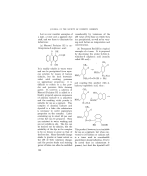
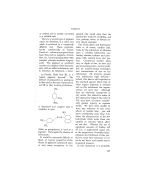
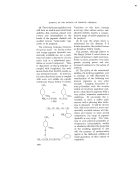
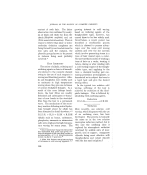
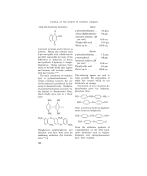
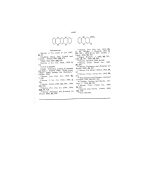
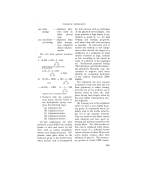
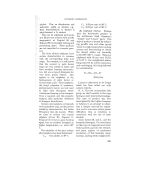
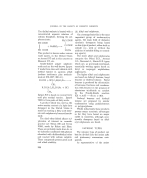
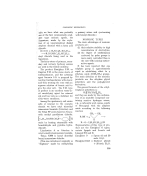
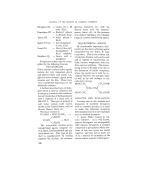
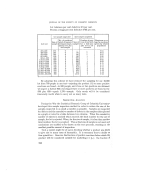
JOURNAL OF THE SOCIETY OF COSMETIC CHEMISTS Emulphor EL = Castor oil d- 40 mols. Et•O. Dismulgan III = Dodecyl phenol + 30 mols. Et •0. Triton NE = Alkyl phenol Et•O. Igepal B Conc. = Iso-octylphenol 3 tools. Et•.O. Leonil LS = Hexyl/heptyl/ betanaphthol 4 Et•O sulphate. Empilan AQ = Laufic acid polyglycol. Polyglycerol ethers may be exem- plified by the following formula R(OC2HsOH)nOH Other nonionic surface-active agents include the very important glycol and glycerol fatty acid esters, e.g., glycerol mono stearate, glycol mono stearate and the like. These have very considerable importance in the foodstuffs industry. A further important type of deter- gent which is used in cosmetics and in industry is made by the condensa- tion of 2 molecules of diethanolamine with 1 molecule of a fatty acid, at 150-170 ø C. This type of product is sold under various trade names, chiefly in the United States, such Alrosol, Dianol, Ninol, etc. The main reaction is R.COOH d- HN(C•H•OH)• fC•H,OH R.CON X d- H•O C•H,OH The oil-soluble surface-active (emulsifying) agents comprise cer- tain Spans, pentaerythritol and gly- cerol esters, etc. This type of pro- duct is manufactured by heating together the alcohols, for instance, glycerol, mannitol, etc., with the desired fatty acid, for instance, stearic, lauric, etc., in the presence of a catalyst yielding a very valuable range of cosmetic emulsifying agents. SEQUESTERING AGENTS Of considerable importance tech- nically are the water softening agents exemplified by the Trilon B. type of product. This is the sodium salt of ethylene diamine tetra acetic acid and is capable of sequestering cal- cium, barium, magnesium, iron ions from aqueous solutions. The seques- tering action is thought to be due to the formation of stable complexes, where the metal ion is held by co- ordinate bonds to the nitrogen atom as well as by salt linkages to the carboxylic groups. HOOC.CH•. CH•.COOH 'x / NCH•.CH•N HOOC.CH• CH•.COOH ANALYSIS AND EVALUATION Turning now to the analysis and evaluation of synthetic detergents used in cosmetic practice, it is usual to make the following analytical determinations both on raw materiMs and on finished shampoos: 1. Active Matter Content by Cat- ionic Titration. As is well known, anionic detergents are incompatible with cationic detergents, a complex compound is precipitated when solu- tions of the two types are mixed together, and this fact is made use of in a method of estimation of the active matter content of detergent-- 210

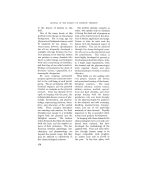
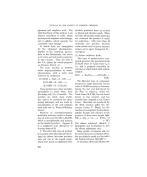
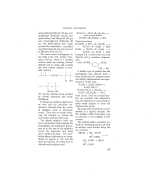
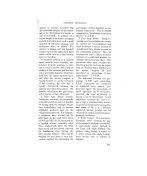
ß :i"•'i anionic or cationic, provided that ?: the molecular weights of the mater- "ials to be determined are known or ' can be assumed. A solution of a '• known weight of an anionic detergent ß :• is made and chloroform and a small ? quantity of indicator solution, acid :11..: methylene blue, is added. The !:•. mixture is shaken and the dyestuff is taken up into the chloroform layer which settles out as a blue bottom layer on standing. ß A standard solution of a cationic agent, usually cetyl trimethyl am- monium bromide solution, is then run in from a burette with constant shaking of the container and the blue colour gradually begins to distribute •' itself into the upper aqueous layer and when the anionic complex is exactly formed, i.e., at the end point of the titration, the blue dye is equally distributed between the 'i:: aqueous and chloroform phase. By • suitable calculation the percentage ß active matter is then calculated. 2. Total Fatty Matter Content. Sulphation reactions are essentially reversible reactions and it is possible by boiling with, for example, 50 per cent hydrochloric acid to convert sulphated products back to the original fatty material. For example, a sulphated fatty alcohol can be split back to its constituent fatty alcohol and this can be extracted by a suitable solvent, normally ethyl ether, washed with water, the ether layer dried and the solvent removed by distillation, thus leaving the fatty alcohol behind. This can be weighed off and gives a very con- yenlent method for calculating the DETERGENTS percentage of fatty material in sul- phate. d compounds. This is usually expressed as "percentage total fatty matter" or T.F.M. 3. Free Fatty Matter. Being re- versible reactions sulphations cannot be carried out to completion and there is always a certain amount of unsulphated fatty matter present in the commercial products. This can be extracted from a dilute alcoholic solution of a sulphated product by shaking with petroleum ether. The petroleum ether layer contains the free fatty matter and can be separ- ated off, washed, dried, distilled and the residue weighed off and calculated as "percentage of free fatty matter," or F.F.M. The difference between the per~ centage T.F.M. and percentage F.F.M. represents the combined or sulphated fatty matter, and from this figure the percentage of active ingredient can be calculated, provided the type of alcohol is known or can be determined. In all sulphation reactions the aim is to get as high a combined fatty matter or as low free fatty matter as possible, and ratios of 58:1 in a finished sulphated alcohol powder can be obtained by careful control of manu- facturing conditions. 4. Water Content. It is normal to determine water contents by any of the standard methods of analysis. A particularly useful method is the Dean and Stark method--the product being tested is added to a water immiscible high boiling- point solvent such as toluene or heptane. 211
Purchased for the exclusive use of nofirst nolast (unknown)
From: SCC Media Library & Resource Center (library.scconline.org)