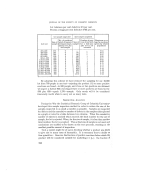
JOURNAL OF THE SOCIETY OF COSMETIC CHEMISTS ture" have received judicial inter- pretation many times since the passing of the Statute of Monopolies, and in general one of the marks of a manner of new manufacture is the production of a vendible product. At one time the Patent Office took the view that hair dyeing or hair waving, if carried out on hair still attached to the human body, was not a manner of new manufacture because there was no vendible product, although patents were granted for the treatment of human hair if it had been previously re- moved from the body, presumably because the hair so treated could be sold. During the past few years, however, the Patent Office practice has apparently changed, because in recent years a number of patents have been granted for methods of permanent waving. As far as I am aware there is no decided case on this point and it may well be that the Courts would hold such patents to be invalid as not referring to a manner of new manufacture. Suct• claims, of course, have, in any case, only a limited value, because in this country there is no offence in aiding and abetting infringement, so that the person who sold the hair-waving preparation would not infringe a claim which was restricted to a process of permanent waving the infringer would be the person who actually carried out the permanent waving operation, who might, of course, be a hairdresser, or, in the case of home waving, the person whose hair was treated, and it would obviously be a very difficult task to proceed against all such infringers. Nevertheless, such claims may have a certain value because they will have a deterrent effect upon poten- tial infringers who will obviously not desire to be involved in expensive proceedings in the High Court. Patents relating to small cosmetic devices are in effect in the same position as any patent relating to a mechanical device. The claims will be directed to the device itself and in general will depend for novelty upon the the novelty of a combina- tion of known elements. Similar considerations will apply to patents for containers and other packages. Since some cosmetic preparations may have a medical effect, reference may perhaps also be made to special provisions concerning medical and surgical inventions. Briefly, Section 41 of the Act provides that in the case of a substance capable of being used as food or medicine or in the production of food or medicine or processes for the production of such substances, and also in the case of inventions capable of being used as, or as part of, a surgical or curative device, the Comptrollef •vill, unless he sees good reason to the contrary, grant to any applicant a compulsory licence on such terms as will, as far as possible, enable the products to be made available to the public at the lowest prices consistent with the patentee deriving a reasonable ad- vantage from his patent rights. A similar provision was present in the old law and its object is to see that the prevention and cure of disease is not hampered by the existence of patents. 224

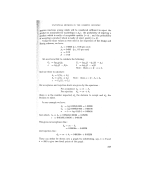
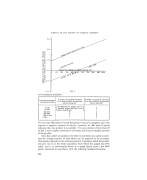
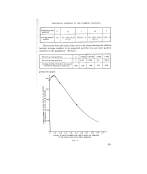
STATISTICAL METHODS IN THE COSMETIC INDUSTRY' PART II By A. W. MIDDLETON, B.Sc., Ph.D., F.R.I.C.* IT I$ proposed in this article to study sampling systems which deal with the presence or absence of an attribute of the individhals comprising the popula- tion. For this purpose an analysis of the prophetic patch test is a good example of the use of the Poisson distribution, of the sampling system developed by Dodge and Romig, of sequential analysis and of the probit method of analysis. At the same time, some useful discussion might result. Various aspects of the identification of the cause of a contact dermatitis, with particular application to cosmetics, have been described by L. Schwartz, • J. L. Morse/H. A. Shelanski" and E. J. Moynahan 4 in earlier issues of this Journal. Schwartz • has also described a prophetic patch test in which 200 subjects are given a patch and/or a use test, to enable an opinion to be formed of the likelihood of the product under test being a sensitising or secondary irritant. If there are no positive reactions among the 200 subjects, the product is considered safe for a more extensive use test among 1,000 more subjects. Moynahan 4 describes a similar test when 200 subjects are patch tested' should there be no positives--or should there be one positive, in which case a further 200 are tested, and should there then be no further positives--the product is considered safe for commercial development. Should there be 2 or more positives in the first 200, or one or more in the second 200, the product is rejected. These techniques are sampling techniques in which a sample ,is taken representing (we hope) the whole of the population likely to use the product, and the suitability of the product for use by this population is judged from the reactions of the sample. POISSON DISTRIBUTION Where a small number of reactions is expected from a large population, the expectation "e" of any given number of reactions is given by the appro- priate term of the Poisson Series. 6 Thus, if the average number of positives to be expected in any given sample is "m," the expectation of obtaining no positives is e7 m, of obtaining one positive me-m/1 !, two positives m•e-m/2!.. * Chesebrough Manufacturing Co., Ltd., London. 225
Purchased for the exclusive use of nofirst nolast (unknown)
From: SCC Media Library & Resource Center (library.scconline.org)