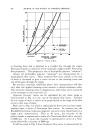
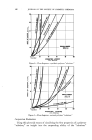
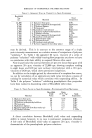
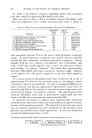
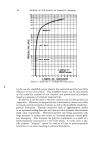
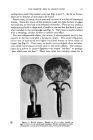
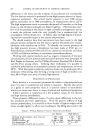
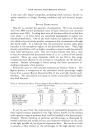
156 JOURNAL OF THE SOCIETY OF COSMETIC CHEMISTS In our own work we extracted callus and psoriatic scales with water and determined the glucosamine content of the extracts before and after hydrolysis (15). Both callus and psoriatic horny layer yielded significant amounts of glucosamine in extracts of psoriatic scales the amounts were often higher than in callus. After hydrolysis the glucosamine content of extracts of callus remained constant or rose slightly, while hydrolyzed extracts ofpsoriatic scales showed a large increase in glucosamine (Fig. 1). 120_ 100_ 0- Non-hydrolyzed extract I Hydrolsrzed extract i 2 3 4 5 6 CALLUS PSORIASlS EXFOL. DERM. Figure 1.--Glucosamine in aqueous extracts of pulverized callus and scales of patients with psoriasis and exfoliative derrnatitis before and after acid hydrolysis. Glucosamine has also been detected in sweat, a finding which requires confirmation (16). In summary, it may be stated that mucopolysaccharides are regular components of many growing epidermal structures. The exact localiza- tion, distribution and nature of this material still remains to be elucidated. Montagna's suggestion that it is chondroitin sulfate B fits in well with the available evidence (9). POSSIBLE ROLE OF EPIDERMAL MUCOPOLYSACCHARIDES What is the function of these substances in epidermal tissues? We can only speculate at present. In other tissues some of their functions are to bind water and to hold the cells together in a cementing matrix (17). The maintenance of cementing and waterbinding properties is also essential for the normal appearance and functioning of the horny layer (1, 18).

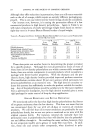
MUCOPOLYSACCHARIDES IN HUMAN EPIDERMIS 157 However, at present there is no evidence that mucopolysaccharides per- form such functions in the horny layer our own preliminary experiments have not yielded conclusive data. A much more likely role has been suggested by Sylvgn (19). He noted that metachromasia in the rat skin fluctuated with the skin cycle. The greatest concentrations occurred during periods of intensive growth, the lowest amounts in the resting stage. Sylvgn believed that the metachro- matic substance may act as a sulfate donor and help in building keratinous material. Recently, this theory received further support when it was found that sheep could synthesize cystine in the hair follicles from sulfate (20). In rat follicles the uptake of labeled sulfate coincided with metachromasia (21). None of these studies conclusively prove that mucopolysaccharides are essential for the synthesis of keratin. However, in the past few years evidence has also been obtained from clinical observations of hair loss in which a disturbed mucopolysaccharide metabolism may play a role. HAIR Loss AND MUCOPOLYSACCHARIDES There are three recently discovered types of hair loss which may be caused by anomalous mucopolysaccharide metabolism. Two of these conditions, baldness in hypervitaminosis A and from anticoagulants, are man-made, iatrogenic the third, alopecia mucinosa, is of unknown origin. 1. •11opecia frorn Chronic l•itamin oentoxication About half of the patients suffering from the effects of prolonged excessive intake of vitamin A, lost their hair to varying extents (22). The hair loss was always reversible after discontinuation of vitamin A. Unfortunately, in these cases no histochemical studies for mucous material have been car- ried out not even biopsies were performed, and therefore the histologic features of this condition are unknown. Nevertheless, it is not far-fetched to assume that a disturbance in the hypothetical mucopolysaccharide- keratin metabolic chain may be responsible for this hair loss. In tissue cultures excess vitamin A causes mucinous transformation of the keratiniz- ing cells of the chick epidermis as shown in the classic studies of Fell and Mellanby (23) and confirmed by Weiss and James (24) and by Lasnitzki and Greenerg (24a). Local application of excessive vitamin A to the rat skin also induces changes suggestive of mucinous degeneration (25). Vitamin A also increases the uptake of sulfur from labeled sulfate in the mucopolysaccharides of rat skin (26) and in rabbit hair (27). 2. •llopecia from Heparin and Heparinoids Administration of heparin and of a variety of synthetic anticoagulants leads to reversible hair loss in a high percentage of cases (28, 29 30). All these compounds are sulfated derivatives of various polysaccharides.
Purchased for the exclusive use of nofirst nolast (unknown)
From: SCC Media Library & Resource Center (library.scconline.org)