THE COSMETIC ARTS IN ANCIENT EGYPT 159 (8) Sylvan, B., ,4cta Radiol., 32, 11 (1949). (9) Montagna, W., Chase, H. B., and Melaragno, H. P., 7. Nat. CancerInst., 12, 591 (1951). (9a) Goltz, R. W., Fusaro, R. M., and Jarvis, j., 7. Invest. Dermatol., 31, 183 (1958). See also: Cawley, E. P., Lupton, C. H., Wheeler, C. E., and McManus, C., ,4. M. ,4. drch. Dermatol., 76, 537 (1957). (10) Braun-Falco, O., and Weber, G., `4rch. klin. u. exptl. Dermatol., 207, 459 (1958). (11) Weber, G., and Braun-Falco, O., Dermatol. 14/ochschr., 138, 789 (1958). (12) Allegra, F., drch. ital. dermatol. siftlog. e venereol., 28, 36 (1956). (13) Roe, D. A.,dnn. N.Y. ,4cad. Sci., 73, 977 (1958). (14) Roe, D. A., personal communication. (15) Flesch, P., and Esoda, E. C. J., to be published. (16) Jirka, M., and Kotas, J., Clin. Chim. ,4cta, 2, 292 (1957). (17) Meyer, K., Physiol. Revs., 27, 335 (1947). (18) Flesch, P., Proc. Sci. Sect. Toilet Goods dssoc., No. 29, 27, June (1958). (19) Sylvbn, B., Exptl. Cell Research, 1, 582 (1950). (20) Hale, W. H., and Garrigus, U.S., 5•. ,4nimal Sci., 12, 492 (1953). Quoted by Ryder, M. L., in Montagna, W., and Ellis, R. A., "The Biology of Hair Growth," New York Academic Press, Inc. (1958), p. 324. (21) Montagna, W., and Hill, C. R., ,4nat. Record, 127, 163 (1957). (22) Oliver, T. K., ,4. M. ,4. 7. Diseases Children, 95, 57 (1958). (23) Fell, H. B., and Mellanby, E., 7. Physiol., 119, 470 (1953). Fell, H. B., Proc. Roy. Soc. (London), B146, 242 (1957). (24) Weiss, P., and James, R., Exptl. Cell Research, Suppl., 3, 381 (1955). (24a) Lasnitzki, I., and Greenberg, R., personal communication. (25) Studer, A., and Frey, J. R., Schweiz. med. 14/ochschr., 79, 382 (1949). (26) Dziewiatkowski, D. D., 7. Exptl. Med., 100, 11 (1954). (27) Sanz, F., Astudillo, M.D., Alonso, M. E., and Valdecantos, A., drch. inst. farmacol. exptl., 8, 49 (1955). Quoted by Chem. `4bstr., 50, 17055 (1956). (2•) Flesch, P., in Rothman, S., "Physiolcgy and Biochemistry of the Skin," Chicago, Uni- versity of Chicago Press (1954), p. 634. (29) Thomaschek, G., Deut. med. 14/ochschr., 79, 41 (1954). (30) Tudhope, G. R., Cohen, H., and Meikle, R. W., Brit. Med. 7., No. 5078, 1034 (1958). (31) Pinkus, H., `4. M. ,4. ,4rch. Dermatol., 76, 419 (1957). (32) Braun-Falco, O., Dermatol. 14/ochschr., 136, 1289 (1957). (33) Lipmann, F., Scier•ce, 128, 575 (1958). THE COSMETIC ARTS IN ANCIENT EGYPT By GEORGE R. HUGHES* Presented ]une 72, 7956, Chicago Chapter SINCE I DO NOT know very much about cosmetics either ancient or modern, I was initially somewhat appalled at the prospect of learning enough to impart anything of interest and value to you, a group of special- ists in cosmetic chemistry. To find out what confines the words "cosmetic" and "chemistry" when put together placed upon me in view of the material available from ancient Egypt, I looked up the words in the dictionary. They are interesting words with a long and honorable history. "Cosmetic" derives from the Greek kosm^tikos meaning "having power to arrange, skilled in decorating," and the adjective in turn derives from * Associate Professor of Egyptology, University of Chicago, Chicago, Ill., Field Director of Epigraphic Survey, Luxor, Egypt.

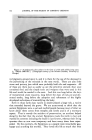
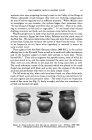
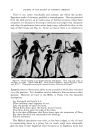
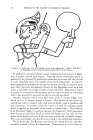
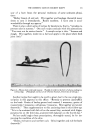
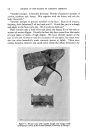
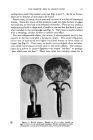
160 JOURNAL OF THE SOCIETY OF COSMETIC CHEMISTS kosmein, "to arrange, adorn," and kosmos, "order, harmony." The noun by extension means "the world" from its perfect order and harmony. We still use "cosmos" in the same sense today for the universe conceived as an orderly and harmonious system. But to come up to the present, I wonder whether the dictionary definition of "cosmetic" in modern usage gives me the necessary latitude for the things I intend to say anyway. "Cosmetic," the adjective, means apparently "beautifying or improving beauty, espe- cially the beauty of the complexion," and "cosmetic," the noun means "any external application intended to improve the complexion, skin or hair." As for "chemist" I had some idea of what it meant as the result of a course in elementary chemistry long years ago. Again the word was one the Greeks had first, for it derives apparently from chumaia, "infusion, mingling, the art of alloying metals," from chuma, "that which is poured or flows." Chemistry had to do originally with fluids, for example, the extracting of juices from plants for medicinal purposes. As you know, "chemist" and "alchemist" are originally the same word. "Alchemist" is simply the word "chemist" which went from Greek into Arabic and came out again with the Arabic definite article "the" (aL) in front of it. We have the same Arabic article in such words as "algebra, .... alkali" and "alcohol." It would have been romantic to say what I believe some dictionaries do say: that "alchemy," the Arabic al-kimiya, and therefore "chemist" and "chemistry" as well, derive ultimately from the ancient Egyptian word Kemet or Kemi meaning "Egypt," literally "the black (land)" in contrast to the red deserts on both sides of the black, alluvial Nile valley itself. This name, Kemi, was used well down into the times of the Greek and Roman travelers and writers who were impressed with everything Egyptian including the--to the Greeks and Romans--esoteric knowledge and sci- ences of the Egyptians. However, I am afraid that there is no evidence at all to support this delightful and intriguing etymology. I have wondered in passing whether you as cosmetic chemists dedicated to producing order and harmony out of the human figure, especially out of some examples of it, may not feel on occasion that you ought really to be alchemists of the old order who tried to find the means of transmuting baser metals into gold and the universal cure for all diseases. There is a rather large amount of material of all sorts from the three millennia or more of ancient Egyptian history bearing in one way or another on cosmetics and the cosmetic arts. It has been said that "vanity is older than the pyramids," and that is true. In prehistoric times (before 3000 B.C.), before the beginning of the royal dynasties and before the appear- ance of the hieroglyphic system of writing, the mute evidence of the simple graves in the sand on the desert's edge is present to prove the truth of the saying (see Fig. 1). There are the small bags of green and black eye-paint,
Purchased for the exclusive use of nofirst nolast (unknown)
From: SCC Media Library & Resource Center (library.scconline.org)