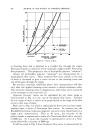
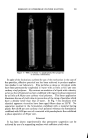
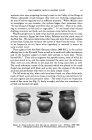
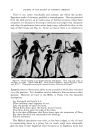
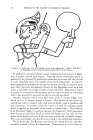
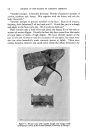
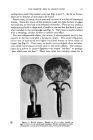
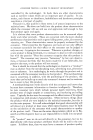
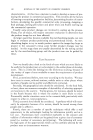
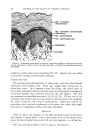
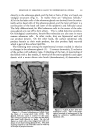
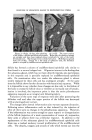
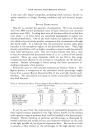
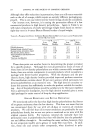
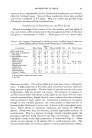
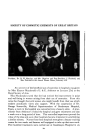
THE COSMETIC ARTS IN ANCIENT EGYPT 161 or rather of the powdered malachite and galena for making them, and bags of red ochre perhaps for painting the face. There is also in the primitive grave, close to the hand of the deceased, the palette, a simple undecorated slab of slate with a large pebble lying upon it. Sometimes these palettes are in the shape of birds or fish (see Fig. 2). The palette frequently shows the marks of much use in this life and even traces of the green, black and Figure 1.--A predynastic burial with jars for food, drink and oil. Slate palette and pebble between knee and shoulder. (Before 3000 B.C.) (Paotograph courtesy of tZe Oriental Institute, University of CMcago.)

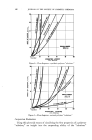
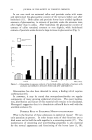
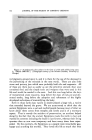
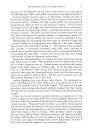
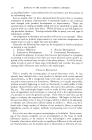
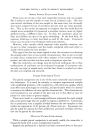
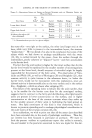
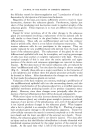
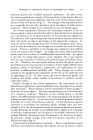
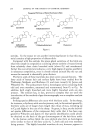
162 JOURNAL OF THE SOCIETY OF COSMETIC CHEMISTS Figure 2.--A predynastic slate palette in the form of a fish with pebble lying upon it. (Before 3000 B.C.) (Photograph courtesy of the Oriental Institute, University of Chicago.) red pigments ground upon it, and it is there for the use of the deceased in the pulverizing of the minerals in the next world. There are also little stone and pottery jars which once probably held oils and unguents. All of these are there just as surely as are the primitive utensils that once contained food and the simple tools and weapons that were used in this life and would be needed in the next. And this was long before the days of monumental stone masonry, long before the days of rock-cut and dec- orated tombs, long before the adoption and refinement of the highly developed techniques of mummifying the body. Even in those early days vanity no doubt played a large role, a vanity that extended beyond the grave. We are accustomed to think that the ancient Egyptians were a sad and morbid people because most of what we know about them comes from temples and tombs and is of a mortuary aspect. That is merely the accident of preservation, an accident helped along by the fact that the ancient Egyptians made the tomb to last and wanted its contents including the body to last forever, whereas their living quarters then as now were temporary and have many times been super- seded. On the contrary, the Egyptians as a people were remarkably gay, happy and anything but morbid. They loved this life so much that they
Purchased for the exclusive use of nofirst nolast (unknown)
From: SCC Media Library & Resource Center (library.scconline.org)