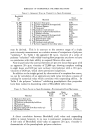
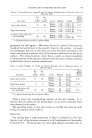
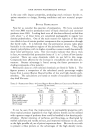
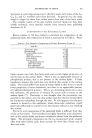
BIOCHEMISTRY OF SEBUM 211 or whether each series of compounds is built up separately with its own specific enzyme system. It is, however, obvious that the acid is not con- verted directly into an alcohol of the same chain length if a direct conver- sion does take place it appears to involve the introduction of a four carbon unit onto the end of the fatty acid. The detailed pathways of synthesis of all these compound groups have still to be worked out for the sebaceous glands. The experimental work involved in such an elucidation will re- quire considerable ingenuity. The Free Fatty/lcids. The finding of the presence of a high proportion of free fatty acids in the surface lipids has aroused considerable interest. Sebaceous-like materials secreted into enclosed cysts such as steatocystom as (14) and ovarian dermoid cysts (15) contain very little fatty acids. Ni- colaides and Wells (14) were able to demonstrate the presence of esterases in the mouths of the sebaceous glands. They were not, however, able to show whether these were definitely localized enzymes or were in fact due to the presence of bacteria in the mouths of the ducts. Further work at the University of Chicago has shown that on the sterile skin surface the amounts of free fatty acids produced in the surface lipids are appreciably less than on unsterile skin. We can conclude, therefore, that a fair propor- tion of the free acids are produced by bacterial action. This raises some interesting problems of skin bacterial symbiosis and antagonism. Certain of the free fatty acids are able to inhibit the growth of some types of bac- teria (16) and fungi (17) yet it appears that these acids are in fact produced by the action of other bacteria. The whole problem appears to be one of maintaining a balanced bacterial flora on the skin surface. Site of Sterol Synthesis in thb Skin. This problem can be approached in several ways. Using radioactive acetate Nicolaides and Rothman (18) found that the site of squalene synthesis was the sebaceous glands while sterols appeared to be formed both in the epidermis and in the sebaceous glands. By studying the effect of sebaceous gland activity on the composi- tion of the skin surface lipids Boughton, MacKenna, Wheatley and Wormall (19) were able to show that on areas of skin with high sebaceous activity the concentration of squalene reached a steady average value of about 10 per cent and the cholesterol a value of 3 per cent. When, however, the sebaceous activity fell below a certain critical level dilution by epidermal TABLE 3--THE DISTRIBUTION OF STEROLS IN HUMA•r S•cI•r Origin of Lipids . Cholesterol - 7-Dehydrocholesterol Free Ester (% Total lipids) (% Total lipids) Esterified Surface 0.001 1.0 1.4 58.4 Epidermis 0.36 7.9 1.7 17.2 Dermis 0.03 1.8 0.27 13.1 Subcu tis 0.005 0.2 0.02 9.0

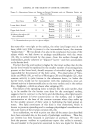
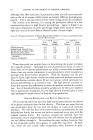
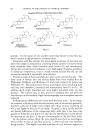
212 JOURNAL OF THE SOCIETY OF COSMETIC CHEMISTS lipids caused the squalene content of the surface lipids to fall and the choles- terol content to increase. These results are in agreement with those of Nicolaides and Rothman indicating that the squalene originates from the sebaceous glands and the cholesterol from the epidermis. Analysis of the distribution of sterois in the skin also gives useful infor- mation. Such studies have been made by Wheatley and Reinertson (t0) and their results summarized in Table 3. This shows the predominantly epidermal origin of 7-dehydrocholesterol and the free cholesterol. It also shows the much higher proportion of esterified cholesterol in the surface lipids as opposed to the epidermis. This suggests that most of the esterified cholesterol is of sebaceous origin though some esterification may occur in the stratum corneum or on the skin surface. Evaluating the available evidence we can conclude that the sebaceous glands are the active site of squalene synthesis and that the epidermis is a more active site of sterol synthesis than the sebaceous glands. Pure sebum appears to contain about 3 per cent cholesterol, a large proportion of which is esterified, and about t0 per cent of squalene. 7-Dehydrocholesterol appears to be formed entirely in the epidermis, very little, if any, being formed in the sebaceous glands. Mechanism of Stero/Synthesis. Much recent work has studied the de- tailed mechanism of sterol synthesis in living tissues. Popilk (20) has proposed the following scheme for the complete pathway: Acetate --• X --• Mevalonic acid --• Y (?Famesol) --• Squalene --• Lanosterol --• Dimethyl- sterol -,- Zymosterol -,- Desomsterol -,- Cholesterol. There is evidence that this pathway is taken in the skin up to the stage of squalene (21), but evidence is accumulating that from this step the pathway may be different in the skin from that proposed by PoPilk. An alternative pathway is therefore proposed for the final stages in the synthesis as set out in Fig. 1. All the intermediates of this synthesis, with the exception of zXS-cholestenol, have been isolated from skin lipids. The scheme involves a new idea, namely that 7-dehydrocholesterol is the last intermediate in the synthesis--already there is some evidence for this (22). If the proposed scheme is applied to the sebaceous glands, it would appear that the pathway of sterol synthesis can go rapidly up to a certain stage, then due to the deficiencies of certain specific enzymes, it reaches a slow stage which results in the accumulation of certain intermediates and differs in various species of animal according to the enzyme systems present in the sebaceous glands. In man the slow stage involves the cyclization of squalene to form lanosterol, hence there is accumulation of squalene. In the sheep the slow stage involves the demethylation of lanosterol, hence the latter accumulates. For similar reasons lathosterol accumulates in rodent sebum. It is possible that all intermediates occur in the sebum of
Purchased for the exclusive use of nofirst nolast (unknown)
From: SCC Media Library & Resource Center (library.scconline.org)