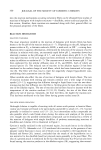
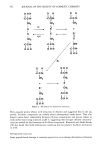
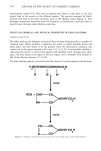
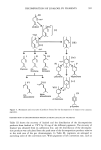
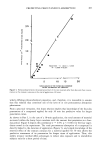
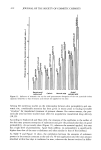
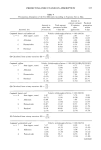
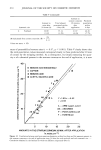
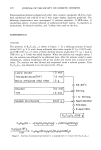
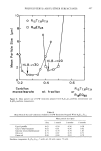
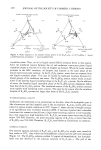
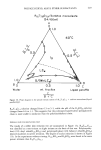
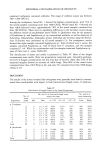
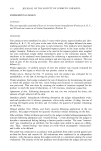
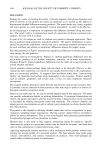
364 JOURNAL OF THE SOCIETY OF COSMETIC CHEMISTS bromotyrosyl residue (VI). This reaction appears more likely to take place in the acid region than in the neutral or the alkaline regions. The reaction proposed by Gold- schmidt (44) may be the more prevalent route in the alkaline region (Figure 4). The hydrogen abstraction associated with the formation of lanthionine could also lead to peptide bond cleavage under alkaline conditions. EFFECT ON CHEMICAL AND PHYSICAL PROPERTIES OF KERATIN FIBERS CHEMICAL REACTIVITY The effect produced by halogens on keratin fibers has been characterized by a number of chemical tests. Alkali solubility, indicating the extent to which disulfide fission has taken place, has been found to be the greatest when the chlorination treatment was carried out in the region between pH 4 and 7 (2, 13,22,45). Urea-bisulfite solubility, indicating the extent to which both peptide and disulfide bond cleavage have taken place, has been found to be higher in the acid region, and it decreases with increase in pH of the chlorine solution (13,22,46). The base binding capacity of wool has also been found to increase greatly with chlorina- H NCHCONHCCONHCHCO H R R' R" NaOBr I .CH."CO=H NH , NaOBr Figure 4. Oxidative degradauon of peprides at the N-terminal amino acid by hypobromite.

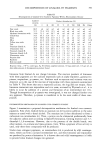
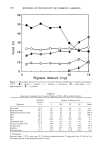
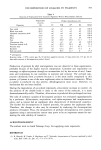
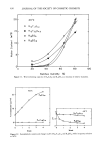
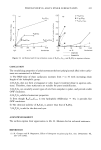
REVIEW OF CHLORINE-HAIR INTERACTION 365 tion (9, 13,18,22). The increased capacity is most likely due to the formation of sulfonic acid groups which result from disulfide bond scission and carboxyl groups which result from the cleavage of peptide bonds. The acid binding capacity of chlorinated wool has been found to be lower than that of unreacted wool. This reduction has been attributed to the loss of amino groups in the formation of chloramines and to the possibility of bonds forming between existing amino groups and sulfonic acid groups (13). Chlorination has been shown to enhance the affinity of wool for all types of commercial dyes, although the dye retention generally has not been improved (16,47-57). The increased affinity has been attributed to the damage imparted by chlorine to the fiber surface layers, enabling greater dye penetration into the interior of the fibers (16,55). SURFACE PROPERTIES Shrinkage of woolen goods when wetted (and agitated) has been shown to arise from the directional character of the fiber's cuticular structure. In particular, shrinkage has been linked to the difference in the values of the coefficients of friction measured with the fibers sliding "against" the scales and the fibers sliding "with" the scales (pba-pbw). This difference is known as the differential friction effect, or DFE. Frictional studies on keratin fibers subjected to chlorine treatment show that this treatment leads to a reduc- tion in the value of DFE and, consequently, to a decrease in the tendency of the fabric to shrink upon wetting. This reduction in DFE results from the "with" scale coefficient of friction increasing more than the "against" scale coefficient of friction with treatment (58-63). Makinson (64) proposed that chlorination degrades the keratin material within the cuticle, which softens the scales and gives rise to an increase in the values of the coefficient of friction and a decrease in the value of DFE. Changes in friction have been found to occur more rapidly with chlorination in the acid region than in the neutral or alkaline regions (63,65,66). Postchlorination microscopical studies of keratin fibers show a change in the surface structure (2,9,49,59,62,63,67-72). Acid chlorination appears to react in a more sur- face-specific manner than the neutral or the alkaline chlorination surface detail after acid chlorination often is barely distinguishable (2,9, 55,63). Fiber surfaces appear to be less affected as the pH of the chlorination treatment is increased, and the scale structure appears to remain intact longer (2,9,63). Degradation of the fiber surface probably proceeds by a reaction first noted by All- w/Srden (72). The reaction can be observed through microscopy during treatment of the fibers with chlorine water and involves the formation of bubbles or sacs on the surface of the scales. The Allw/Srden reaction has been shown to occur under a variety of condi- tions and over a wide range of pH (16,55,56,73-75). The formation of a jelly layer between the unattacked cortex and the attacked outer surface of wool fiber has been observed and with extended chlorination, a collapsed scale structure has been found (58,64,76). This reaction requires that the epicuticle be intact and sufficient area of each cuticle cell be exposed on the surface of the fiber to allow the sacs to form. In human hair, where only one-sixth of each cuticle cell is exposed on the surface, as compared to about three-fourths exposed in the case of wool, such sacs are less likely to form. In- stead, the whole surface of the hair fiber appears to be raised. (73,77). A mechanism for the Allw6rden reaction has been proposed (73,78) in which as the
Purchased for the exclusive use of nofirst nolast (unknown)
From: SCC Media Library & Resource Center (library.scconline.org)