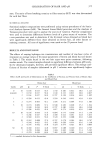
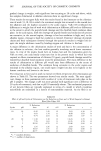
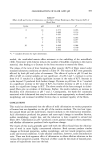
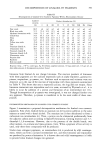
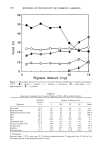
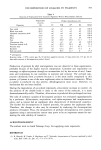
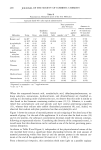
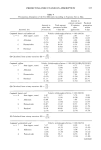
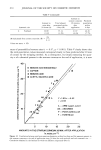
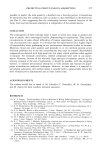
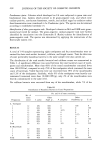
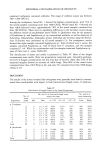
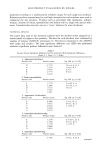
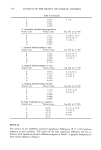
440 JOURNAL OF THE SOCIETY OF COSMETIC CHEMISTS the incidence of hazardous bacteria is higher in toothpastes than in mouthwashes. The tested mouthwashes often contained higher levels of substances with strong antimicro- bial activity such as phenol, sulfacetamide, ethyl alcohol, etc., in concentrations high enough to be diluted up to seven times and still be clinically effective (10). This general conclusion should be taken with reservation, since the brands chosen for this study were selected at random and do not necessarily reflect the entire spectrum of available prepa- rations. The distribution in microbial contamination patterns among different brands of each class of preparation may reflect one or more factors, including good manufacturing practices (GMP), post-process contamination, inadequate preservation, extended storage by the retailer, etc. It is significant, however, to note that brands No. 1 and 3 showed consistently high contamination levels. This might be due to production condi- tions, nature of the preparation, or high contamination levels of raw materials. The presence of hazardous bacteria such as S. aureus, P. aeruginosa, and E. co/i would give the consumer more than a strong worry when using such products. Fortunately, those organisms were detected at a low frequency in toothpastes, and mouthwashes were almost free of them (Table III). Due to wide variation in the nature and uses of cosmetics and personal care items, their allowable microbial limits are still a debatable subject. One would expect that micro- bial limits for eye area cosmetics would be different from mouthwashes (8,14). How- ever, most of the international standards recommend a maximum of 100 aerobic bac- teria and 100 fungal cells/g or ml and no detectable coliforms or pathogens (such as P. aeruginosa, S. aureus., etc.) in one g or ml of toothpaste, mouthwash, and cosmetics for intact skin (8, 14,15). Most of the reported data on the microbial content of such prepa- rations over the world are within these limits (16). Our studies showed that the examined mouthwashes, with few expectations (Table II), are in agreement with the international standards. However, a high percentage of the examined toothpastes are above the suggested quantitative microbial limits. Also, sev- eral pathogens, such as S. aureus and P. aeruginosa, as well as coliforms, were recovered from some of the toothpastes, which is unacceptable by any standard (Tables I, III, IV). As mentioned above, production conditions and raw materials are very likely to be the major sources of microbial contamination for toothpastes, especially with those brands which showed consistently high microbial counts in different samples (16). Before devising any code for microbial limits of toothpastes and mouthwashes, the absence of specific pathogens such as P. aeruginosa, S. aureus, etc. must be considered in addition to the overall limits for the microbial content of the product. To achieve the final goal of a safe and sound product, raw materials, containers, equipment, etc. must be carefully and continuously examined for their microbial content. REFERENCES (1) W. B. Hugo, Antimicrobial agents as preservatives in pharmaceutical and cosmetics products. The scope of the problem. J. Appl. Bacteriol., 44, Siii-SV (1978). (2) H. S. Bean, Preservatives for pharmaceuticals. J. Soc. Cosmet. Chem., 23, 703-708 (1971). (3) D. W. Anderson and M. Ayers, Microbiological profile of selected cosmetics with and without pre- servatives after use. J. Soc. Cosmet. Chem., 23, 863-873 (1972).

MICROBIAL CONTAMINATION OF PRODUCTS 441 (4) R. Smart and D. F. Spooner, Microbial spoilage in pharmaceuticals and cosmetics. J. Soc. Cosmet. Chem., 23, 721-737 (1972). (5) D. G. Ahearn, J. Sanghvi, and G. J. Haller, Mascara contamination: In use and laboratory studies. J. Soc. Cosmet. Chem., 29, 127-737 (1972) (6) S. Hills, The isolation of C. tetani from infected talcs N.Z. Med. J. 45, 419-421 (1946). (7) L. A. Wilson and D. G. Ahearn, Pseudomonas-induced corneal ulcers associated with contaminated eye mascaras Am. J. Ophthalmol., 54, 112-119 (1977). (8) C. W. Bruch, Objectionable microorganisms in non-sterile drugs and cosmetics. Drug. Cosmet. Ind., 111, 51 and 150 (1972). (9) A. A. Abdelazia and M. S. E. Ashour, Microbial contamination of a hexetidine mouthwash. Egyptian DentalJ., in press. (10) The Egyptian General Organization for Pharmaceuticals, Chemicals and Medical Appliances. Index of Specialities, Fifth Edition, pp. 221, 227 (1977). (11) C. H. Collins and P.M. Lyne, MicrobiologicalMethods (Butterworth and Co. Ltd., England, 1984). (12) G. O. Adegoke, Characteristics of Staphylococci isolated from man, poultry and some other animals. J. Appl. Bacteriol, 60, 97-102 (1986). (13) Enterotube II Roche for the rapid differential identification of Enterobacteriaceae. F. Hoffman La Roche & Co., Basel, Switzerland. Pamphlet. (September 1981). (14) United States Pharmacopeia XXI, Microbiological attributes of non sterile pharmaceutical products (Mack Printing Company Easton, PA, 1985), p. 1329. (15) British Pharmacopoeia, Tests for microbial contamination (Her Majesty's Stationary Office, London, 1980), Volume II, Appendix XVIB A 191. (16) B. Jarvis, A. J. Reynolds, A. C. Rhodes, and M. Armstrong, A survey of microbiological contamina- tion in cosmetics and toiletries in the U.K. (1971),J. Soc. Cosmet. Chem., 25, 563-575 (1974).
Purchased for the exclusive use of nofirst nolast (unknown)
From: SCC Media Library & Resource Center (library.scconline.org)