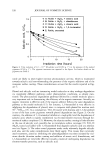
j. Cosmet. Sci., 54, 443-449 (September/October 2003) The 21-day human cumulative irritation test can be reduced to 14 days without loss of sensitivity JAMES P. BOWMAN, RICHARD S. BERGER, and OTTO H. MILLS, Hill Top Research Inc., P.O. Box 429501, Cincinnati, OH 45242 ALBERT M. KLIGMAN and TRACY STOUDEMAYER, S.K.I.N., Inc., 151 East Tenth Avenue, Conshohocken, PA 19428. Accepted for publication May 16, 2003. Synopsis The 21-day cumulative irritation test for assessing the irritancy of topical products and chemicals is a venerable procedure that appears to have become the gold standard for manufacturers. Berger and Bowman in 1982 (1) showed that reducing the exposure to 14 days was less traumatic to the volunteers, less costly, less arduous, and did not affect reliability or the capacity to place the test agents in the proper rank order of irritancy. In the current study we compared (a) the 21-day cumulative irritation test, (b) the 14-day cumulative irritation test, and (c) the 14-day test with every-other-day patching. Additionally, ten-day, seven-day and four-day data from the 21-day test were compared. Forty-one subjects completed this study of six test materials. Two sets of patches were applied to each subject's lower back. One set had 21 consecutive applications of the test articles. The second set was applied, and removal of the test articles occurred Monday, Wednesday, and Friday for 14 days. The 21-day test fully differentiated the test materials from each other. Using only the first 14 days of the 21-day test also fully differentiated the test materials. Every-other-day patching rank ordered the test materials the same as the everyday patching, but full differentiation of the test materials was not obtained. We conclude that the 14-day cumulative irritancy test is as reliable and sensitive as the 21-day test, along with the obvious advantages in time, cost, and minimization of trauma to the test subjects. INTRODUCTION The 21-day cumulative irritation test is a demanding and onerous procedure that poses a hardship to the volunteers as well as being costly and time-consuming. The aim of the present study was to confirm the results of a prior study that showed that reducing the time to 14 days did not result in loss of sensitivity or reliability. MATERIALS AND METHODS The procedure is a modification of that described by Lanman (2,3). Two sets of patches were applied to each subject's lower back. Nineteen-mm Hill Top Chambers © were used 443

444 JOURNAL OF COSMETIC SCIENCE with 0.2 ml of each solution applied to each patch. One set had 21 consecutive appli- cations of the test articles for 23 + 1 hours. Scoring for cumulative irritation and reapplication was done every 24 hours or until excessive irritation terminated further exposure. The second set had applications removed every other day on Monday, Wednes- day, and Friday for fourteen days. Scoring for cumulative irritation was done 48 hours after patch application (72 hours over the weekend). The six test articles used in this study were: A: Physiological saline 0.89% B: Mineral oil 100% U.S.P. C: Urea 20% aqueous D: Lactic acid 2.5% aqueous E: Sodium lauryl sulfate 0.1% aqueous F: Isopropyl myristate 50% in mineral oil Irritation was scored classically using a 100-watt incandescent blue bulb lamp as the artificial light source to illuminate the patch areas. The scorer was blinded as to treat- ment assignments. The following scale was used: 0: No evidence of irritation 1: Minimal erythema, barely perceptible 2: Definite erythema, readily visible or minimal erythema or minimal papular response 3: Erythema and papules 4: Definite edema 5: Erythema, edema, and papules 6: Vesicular eruption 7: Strong reaction spreading beyond test site Superficial textural changes were scored as follows: A: Slightly glazed appearance B: Marked glazing C: Glazing with peeling and cracking F: Glazing with fissures G: Film of dried serous exudate covering all or portion of patch site H: Small petechial erosions and/or crust s: Scaling y: Hyperpigmentation STATISTICAL ANALYSIS The actual patch test scores are a combination of a numerical and letter score consistent with the definitions given in the scoring scale. In order to perform statistical analyses, scores containing letter grades were converted to numerical equivalents. These were converted as follows: A -- 0, B = 1, C = 2, and F, G and H = 3. These equivalents are considered additive to any numerical score (e.g., 2C = 2 + 2 -- 4). However, an upper limit of 3 is selected since the intent of this test was to compare treatments that are relatively mild. Thus, for any value greater than 3, a value of 3 is used in the statistical analysis. Furthermore, following the development of a strong reaction, no further ex-
Purchased for the exclusive use of nofirst nolast (unknown)
From: SCC Media Library & Resource Center (library.scconline.org)