430 JOURNAL OF COSMETIC SCIENCE useful in the medical field for relieving perineal discomfort following childbirth, acting as aromatherapy for patients in the intensive care unit (3,4), inhibiting immediate-type allergic reactions in mice and rats (5), and relieving pain associated with rheumatic and musculoskeletal disorders (6). Lavender oil has been extensively studied, and much has been documented about its chemical constituents (1). There are many methods for its analysis (7). The supercritical extraction method was used to get high concentration of the oil (8). The effect of the place of growth on the oil composition was also studied (9). In addition to its previously mentioned uses, lavender oil is still used mainly in inex- pensive perfumes or fragrances. In many previous studies, a single compound of the whole oil was isolated, and its phase diagram, when combined with other compounds, such as water and surfactant, was studied. Some of these compounds are limonene and geraniol (10-15). Some studies prepared vesicles containing certain drugs in combina- tion with lavender oil and concluded that vesicles enhance skin penetration (16). In the present study, the flowering parts of the lavender plants were collected from the campus of the University of Jordan in Amman, and steam distillation was performed for the entire plant, including the flowering parts, to obtain the fresh lavender oil. For the first time in the literature, the phase behavior of all the constituents of lavender oil, when combined with water and surfactant, was investigated. Also, a vapor pressure and evaporation pathway study were performed for the lavender oil system. EXPERIMENTAL MATERIALS The following chemicals were used without further purification: polyoxyethylene (20) sorbitan mono-oleate (Tween © 80) from Fisher Scientific, Fair Lawn, NJ and polyoxy- ethylene-4-1aurylether, Laureth 4 (Brij © 30) from Uniqema Co, ICI Surfactants, Wil- mington, DE. Water was deionized and triple distilled. Lavender oil was freshly pre- pared by steam distillation from the flowering tops of the plant, which grew on the campus of the University of Jordan in Amman. INSTRUMENTS The following instruments were used: a Meiji ML 9400 polarizing microscope, a Mettier AJ150 analytical balance, a Vibrofix VFI electronic shaker, an SI TRON TINCA 4003 centrifuge with a maximum speed of 5500 rpm, and a Carl Zeiss 56627 refractometer. PHASE DIAGRAM DETERMINATION The solubility regions were determined by the addition of water to a combination of Tween 80 and lavender oil, while taking note of the point of clarity and turbidity. The extent of the solubility regions were confirmed first by centrifugation of the sample at 3500 rpm for 15 minutes second, by preparing a series of samples with compositions close to the solubility limits and third, by storing samples at room temperature for several days.

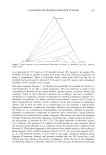
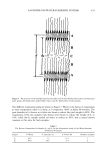
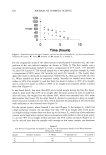
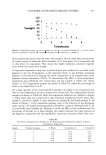
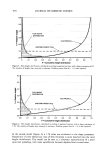
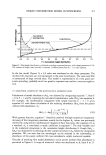
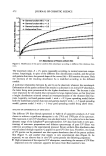
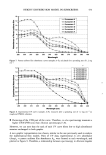
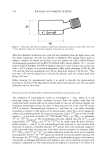
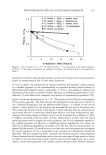
LAVENDER OIL/WATER/STABILIZER SYSTEMS 431 The liquid crystal phases were identified through visual observation of the light trans- mitted through them. A series of samples was prepared, then stored at room temperature for several days and identified by the visual observation of light transmitted through them, with the additional help of polarized microscopy. The tie lines were determined by preparing a series of samples using different ratios of the three compounds in the one-phase region close to the boundary, measuring their refractive indices by using a refractometer, and then making a calibration curve from the refractive index vs weight % of water. Another series of samples was prepared in the two-phase region, and a separation of their phases was performed by centrifugation to get two separate layers to be measured for their refractive indices. From the calibration curve of the refractive index vs weight % of water for the boundary sample, the tie lines for the two-phase region were determined. EVAPORATION The evaporation of water, lavender oil, and two samples (for each system) was studied at room temperature, and the samples were then spread on a glass slide and placed on an analytical digital balance to determine the weight lost with time. For the water/Laureth 4/lavender oil system, the evaporation path was studied for one week at room tempera- ture. A series of samples was prepared in one-phase and two-phase regions, with pure water and pure lavender oil in large-scale samples (exactly 5 g of each sample). The samples were placed in small beakers and placed in thermosrate to ensure no temperature change. The weight differences were then recorded for one week. EVAPORATION PATHWAY STUDY The instrument used was a simple design instrument that consisted of a 5-ml round- bottom flask, a small test tube (radius = 5 mm), a hot plate, and a water bath. The following method was used for evaporation pathway determination: The selected samples were prepared and placed in the small round-bottom flask, which was inserted in a hot water bath at 35øC. A small test tube, which was filled with cold water, was inserted into the flask up to the edge of the sample, and the condensing vapor was collected around the outside walls of the test tube. The residue sample was weighed to calculate the weight lost from the sample as vapor, and then the refractive indices for the collected vapor and for the residue were measured. In addition, the refractive index was measured for the calibrated samples, which were located in the boundaries of the one-phase region, to determine the structural change in the vapor and the exact structure of the vapor and the residue. This was a simple way to evaluate the evaporation pathway during evaporation for selected samples and to compare the results with the predicted ones from the phase diagrams. RESULTS AND DISCUSSION The investigation was made with four goals. The first was to compare the behavior of the phase diagram when dealing with a multicompound fragrance oil with that of a single- compound fragrance oil. The second was to compare the two surfactants and different
Purchased for the exclusive use of nofirst nolast (unknown)
From: SCC Media Library & Resource Center (library.scconline.org)