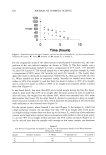
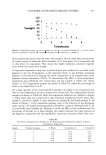
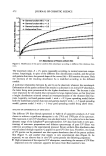
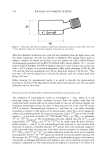
454 JOURNAL OF COSMETIC SCIENCE Permeation of sunscreens from microemulsions. The runs were performed using two- compartment horizontal cells (3.14 cm 2 section, 18 ml volume) separated by a mem- brane. The donor phase was the sunscreen microemulsion, and the receiving phase was an SDS 2.0 ß 10 -3 M aqueous solution (to dissolve sunscreens). A hydrophilic cellulose membrane and a Millipore membrane soaked with a (1:1) 1-decanol/1-dodecanol mix- ture constituted a double membrane a lipophilic membrane (Millipore membrane soaked with a (1:1) 1-decanol/1-dodecanol mixture) and Silastic © sheeting were also used. At scheduled times, small amounts of the receptor solution were withdrawn and the sunscreens were determined spectrophotometrically (4-methylbenzylidene camphor = UV•,•x: 306 nm, e: 23210 octylmethoxycinnamate = UV•,ax: 312 nm, e: 17630). All runs were repeated three times. RESULTS AND DISCUSSION USE OF PSEUDOTERNARY DIAGRAMS IN O/W MICROEMULSION PREPARATION The existence of transparent systems, i.e., O/W microemulsions, was shown by ternary diagrams, which are a useful tool in selecting the components of a system and their ratios. This experimental approach was suitable for obtaining multicomponent formu- lations as cosmetic products. Transparent formulations were obtained with optimal lipophilic mixtures comprising a fluid lipid, cyclomethicone, ethanol, a sunscreen agent, and surfactant blends. The more complex systems were formulated by assembling ingredients with similar chemical- physical properties at the same corner of the triangle. Solutions of (2:1) water/1,2 hexanediol and (2.5:1) water/2 methyl-2,4 pentanediol were used as polar phase. In a preliminary study a large number of blends of primary/secondary surfactant were prepared. The most significant blend studied was 5/95 (w/w) sodium cetearyl sulfate/ decylpolyglucose. In a further study, cetearyl sulfate was replaced by soya lecithin, which is more skin compatible. The soya lecithin/decylpolyglucose w/w ratio was 33/67, much higher than that of cetearyl sulfate/decylpolyglucose, since large amounts of lecithin were required for efficiency. Different blends of primary/secondary surfactant were then mixed with the appropriate amount of lipid phase. Only those lipid phase/surfactant mixtures that did not undergo phase separation were chosen to prepare microemulsions. First the 5/95 cetearyl sulfate/decylpolyglucose blend was mixed with different propor- tions of the lipid phase, and the different mixtures were diluted with the polar phase. Appropriate amounts of 30/70, 20/80, and 10/90 oil/surfactant mixture were added to the polar phase to obtain the following lipidic/polar phase ratios: 90/10, 60/40, 50/50, 40/60 and 10/90. The mixture of water/2-methyl 2,4-pentanediol (2.5 / 1) was allowed to obtain a transparent system with the lowest percentage of surfactants when the 20/80 mixture was diluted with 10% of the polar phase. The 10/90 oil/surfactant mixture could successfully be diluted with the polar phase, giving transparent systems in the range of 90% oil/surfactant to 60% oil/surfactant, this last being the limit of possible dilution. When water/1,2-hexanediol (2/1) was used as polar phase, an intermediate oil/surfactant mixture, i.e., 15/85 was also used. Employing this polar phase, transparent systems were

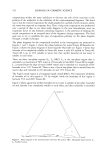
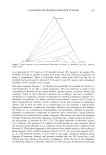
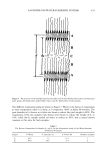
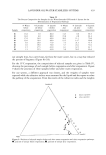
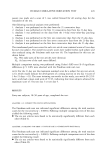
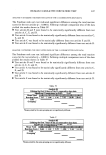
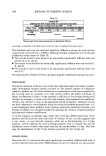
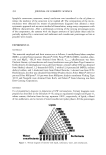
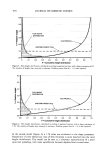
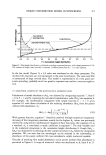
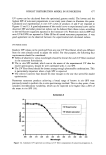
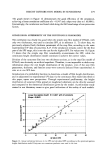
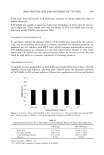
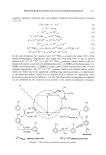
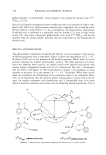
OW MICROEMULSION IN SUNSCREENS 455 obtained from the 10/90 oil/surfactant mixture at all dilutions between 10% polar phase and 90% polar phase. Ninety percent of the 15/85 oil/surfactant mixture combined with 10% polar phase gave a transparent system. Figures 2 and 3 show the ternary diagrams of C•2_ • 5 alkylbenzoate/ cetearyl sulfate/decylpolyglucose diluted with 2-methyl-2,4-pentanediol/water and 1,2- hexanediol/water. Table I shows the percentages of different components of transparent systems using 1,2-hexanediol. This and subsequent tables clarify the exact proportions of components of the microemulsions. The amount of total water is that present in the 55% decyl- polyglucose aqueous solution within the cetearyl sulfate/decylpolyglucose mixture, plus that of the polar phase. To calculate the percentages of the microemulsion compo- nents, total water was considered. Figure 4 shows the ternary diagram of the C•2_•5 C•-C•s alkylbenzoate Water/ 2-m etl•j I-2,4-penthaned iol ?_5/1 8GF20 ,0 fid Sodium cety Isulfate 5% • Decylpolyglucose 95% Figure 2. Ternary diagram of systems with C•2-C •5 alkylbenzoate, sodium cetylsulfate, decylpolyglucose, water, and 2-methyl-2,4-penthanediol. C=- C• alkylbenzoate . ,,. ,uco. .% 2/1 Figure 3. Ternary diagram of systems with C•2_•5 alkylbenzoate, sodium cetylsulfate, decylpolyglucose, water, and 1,2-hexanediol.
Purchased for the exclusive use of nofirst nolast (unknown)
From: SCC Media Library & Resource Center (library.scconline.org)