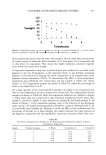
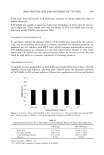
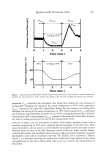
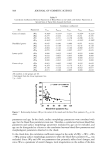
SKIN PENETRATION ENHANCEMENT BY TAT-GKH 489 PTH binds more specifically to [•-adrenergic receptors in human adipocytes than in rodent adipocytes. TAT-GKH was capable of inducing triglyceride breakdown in both cultured and iso- lated adipocytes. These results show that the fusion of TAT into GKH does not sig- nificantly modify GKH's own lipolytic effect. CYTOTOXICITY ON PREADIPOCYTES To determine whether the lipolytic effects of TAT-GKH were induced by the cytotox- icity, and the possibility of its use as a cosmetic ingredient for slimming products, we measured the cell viability with MTT tests, which evaluates mitochondria integrity. TAT-GKH produces no cytotoxicity at any dose concentration (Figure 3). This result shows that TAT-GKH not only induces lipolytic effects by its own activity, but also could be used safely as a cosmetic ingredient in slimming products. SKIN PERMEATION STUDY To identify the skin permeability of TAT-GKH in excised hairless mouse skin, vertically assembled Franz-type diffusion cells were used. Table II shows the permeated amounts of TAT-GKH in 20% ethanol solution 24 hours after application to the excised hairless 0.7 0.6 ..-. 0.5 E o 0.4. •' 0.3 t:: 0.2 0.1 0 10% serum 10 -4 10 -• 10 -6 10 -7 Concentration (mol/L) Figure 3. Cytotoxic effects of TAT-GKH at dose concentrations on 3T3-L1 preadipocytes through MTT tests. Values are mean + SEM (n = 6) and are expressed as absorption (ABS) at 570 nm. Table II Total Permeated Amount (%) of TAT-GKH in Excised Hairless Mouse, 24 Hours After Application GKH (pg) TAT-GKH (pg) Mice skin 2.73 + 0.22 119.66 + 9.33* Receptor solution 1.60 + 0.13 36.67 + 4.85* Total permeated amount 4.34 + 0.35 156.34 + 9.02* Percent 0.43% 15.63% Values are mean + SEM (n = 6). * P 0.001 when compared to values obtained with GKH.

490 JOURNAL OF COSMETIC SCIENCE mouse skin. The permeated amount of TAT-GKH was 36 times greater than that of GKH. It was considered that this result was due to an increase in the partition of GKH to skin by TAT fusion. We had challenged TAT-GKH in mice to obtain an antibody against TAT-GKH, to identify the penetration of TAT-GKH into skin through immunohistochemistry, but it failed to raise the antibody against TAT-GKH in mice. However, there is indirect evidence that TAT (9-polylysine)-SOD (TAT-superoxide dismutase) efficiently pen- etrated into the epidermis as well as the dermis when topically applied to mouse skin, as judged by immunohistochemistry and specific enzyme activities (9). To use TAT-GKH as a cosmetic ingredient, in vivo studies should be performed as well as in vitro studies. However, our results are limited only to in vitro studies and are not always consistent with the results of in vivo studies, since the fat cells were removed from their natural surroundings (22). Therefore, we will further study the measurement of transdermal lipolysis with microdialysis, which can continuously monitor both glycerol and penetration level in subcutaneous adipose tissue. CONCLUSIONS The peptide of TAT-GKH with bifunctional effects [skin penetration by TAT (9- polylysine) and lipolysis of GKH] was synthesized for use as a cosmetic ingredient for slimming products. In vitro studies showed the 37.6% and 41.5% lipolytic effects of TAT-GKH in both 3T3-L1 cultured adipocytes and isolated adipocytes from the rat, respectively, without the modifying lipolytic effects of GKH. In addition, TAT-GKH elevated penetration into mouse skin 36 times more effectively than GKH. Our result showed that the small peptide of TAT-GKH induced the lipolytic effects and efficiently increased penetration into mice skin. There was no cytotoxicity in any dose concentra- tion of TAT-GKH. This study suggests that TAT-GKH could be used as a cosmetic ingredient in slimming products. REFERENCES (1) (2) (3) M. Kreilgard, E.J. Pedersen, and J. W. Garoszewski, NMR characterization and transdermal drug delivery potential of microemulsion systems, J. Controlled Release, 69, 421-423 (2000). D. W. Osborne, A. J. Ward, and K. J. O'Neill, Microemulsions as topical drug delivery vehicles. Part 1. Characterization of a model system, Drug. Dev. Ind. Pharm., 14, 1202-1219 (1988). D.W. Osborne, A.J. Ward, and K.J. O'Neill, Microemulsions as topical drug delivery vehicles: In-vitro transdermal studies of a model hydrophilic drug,J. Pharm. Pharmacol., 43, 450-454 (1991). (4) C. Plank, W. Zauner, and E. Wagner, Application of membrane-active peptides for drug and gene delivery across cellular membranes, Adv. Drug Deliv. Rev., 34, 21-35 (1998). (5) A.D. Frankel and C. O. Pabo, Cellular uptake of the TAT protein from human immunodeficiency virus, Cell., 55, 1189-1193 (1988). (6) M. Ma and A. Nath, Molecular determinants for cellular uptake of TAT protein of human immuno- deficiency virus type 1 in brain cells, J. Virology, 71, 2495-2499 (1997). (7) E. Vives, P. Brodin, and B. Lebleu, A truncated HIV-1 TAT protein base domain rapidly translocates through the plasma membrane and accumulates in the cell nucleus,J. Biol. Chem., 272, 16010-16017 (1997). (8) S. Fawell, J. Seery, Y. Daikh, C. Moore, L. L. Chen, B. Pepinsky, and J. Barsoum, TAT-mediated delivery of heterologous proteins into cells, Proc. Natl. Acad. Sci. USA, 91, 664-668 (1994). (9) J. Park, J. Ryu, L. H. Jin, J. H. Bahn, J. A. Kim, C. S. Yoon, D. W. Kim, K. H. Han, W. S. Eum,
Purchased for the exclusive use of nofirst nolast (unknown)
From: SCC Media Library & Resource Center (library.scconline.org)