SKIN PENETRATION ENHANCEMENT BY TAT-GKH 491 H. Y. Kwon, T. C. Kang, M. H. Won, J. H. Kang, S. W. Cho, and S. Y. Choi, Polylysine protein transduction domain: Enhanced penetration efficiency of superoxide dismutase into mammalian cells and skin, Mol. Cells, 30, 202-208 (2002). (10) A. Taniguchi, K. Kataoka, T. Kono, F. Oseko, H. Okuda, I. Nagata, and H. Imura, Parathyroid hormone-induced lipolysis in human adipose tissue, J. Lipid Res., 28, 490-494 (1987). (11) H. Kather and B. Simon. Adenylate cyclase of human fat cell ghosts: Stimulation of enzyme activity by parathyroid hormone, J. C/in. Invest., 59, 730-733 (1977). (12) R. Leroux, O. Peschard, C. Mas-Chamberlin, K. Lintner, A. Guezennec, and J. Guesnet, Shaping up, Soap, Perfum. Cosmet., 30-32 (December 2000). (13) E. Atherton and R. C. Sheppard, Solid-Phase Peptide Synthesis (IRL, Oxford, 1989). (14) S.C. Souza, L. M. Vargas, M. T. Yamamoto, P. Lien, M.D. Franciosa, L. G. Moss, and A. S. Green- berg, Overexpression of perilipin A and B blocks the ability of tumor necrosis factor ot to increase lipolysis in 3T3-L1 adipocytes, J. Biol. Chem., 273, 24665-24669 (1998). (15) M. Rodbell, Metabolism of isolated fat cells. I. Effects of hormones on glucose metabolism and lipolysis, J. Biol. Chem., 29, 375-380 (1960). (16) C. Sengenes, M. Berlan, I. De. Glisezinski, M. Lafontan, and J. Galitzky, Natriuretic peptides: A new lipolytic pathway in human adipocytes, FASEB J., 14, 1345-1351 (2000). (17) F. Denizot and R. Lang. Rapid colorimetric assay for cell growth and survival: Modifications to the tetrazolium dye procedure giving improved sensitivity and reliability,J. Immunol. Meth., 89, 271-277 (1986). (18) Y. S. Song, H.J. Kim, C. G. Lee, W. G. Cho, and S. H. Kang, Evaluation of in vitro skin permeation of UV filters, Proc. 20th IFSCC Int. Congr. (1998). (19) A. H. Ghanem, H. Mahmoud, W. I. Higuchi, U. D. Rohr, S. Boesadia, P. Liu, J. L. Fox, and W. R. Good, The effects of ethanol on the transport of [3-estradiol and other permeants in hairless mouse skin, J. Controlled Release, 6, 75-83 (1987). (20) J.j. Egan, A. S. Greenberg, M. K. Chang, S. A. Wek, M. C. Moos, Jr., and C. Londos, Mechanism of hormone-stimulated lipolysis in adipocytes: Translocation of hormone-sensitive lipase to the lipid storage droplet, Proc. Natl. Acad. Sci. USA, 89, 8537-8541 (1992). (21) U. Smith, Studies of human adipose tissue in culture. II. Effect of insulin and of medium glucose on lipolysis and cell size, Anat. Rec., 176, 181-183 (1971). (22) P. Arner, J. Bolinder, A. Eliasson, A. Lundin, and U. Ungestedt, Microdialysis of adipose tissue and blood for in vivo lipolysis studies, Am. J. Physiol., 255, E737-E742 (1988).

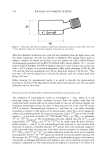
j. Cosmet. Sci., 54, 493-498 (September/October 2003) Synthesis of new fragrances from -methylfuran. Part III JANUSZ NOWICKI, Institute of Heavy Organic Synthesis "Blachownia," Energetykgw 9, 47-225 Kgdzierzyn-Kooe1e, Poland. Accepted for publication October 18, 2002. Synopsis The synthesis of new 2-methylfuran-based alcohols is described. The odor and physicochemical character- istics of all new compounds are also presented. INTRODUCTION This paper is a continuation of our research intended to find new outlets for commercial furan intermediates that can be converted into new fragrances (1-6). The investigations presented in Parts I and II covered the synthesis of new alcohols, esters, and acetals from 2-methylfuran. The obtained new furan derivatives offered very interesting flavor char- acteristics (5,6). In particular, cyclic acetals were found very attractive. One of their significant advantages is their relatively high chemical stability. A similar high stability is offered by a group of alcohols that has numerous representative compounds within both naturally occurring and synthesized fragrance materials. The obtained furfuryl alcohols are characterized by original floral fragrances. The purpose of this work was to synthesize a new group of alkylfurfuryl alcohols with expectedly interesting fragrances. Extension and branching of the alkyl chain should favorably affect the profoundness and diversity of the fragrance performance of these compounds. RESULTS AND DISCUSSION Furfuryl aldehydes 1 as described in earlier parts (5,6) were employed for the synthesis of new derivatives. HO 493
Purchased for the exclusive use of nofirst nolast (unknown)
From: SCC Media Library & Resource Center (library.scconline.org)