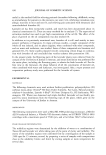
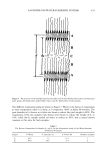
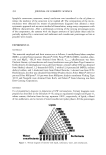
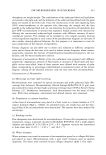
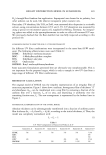
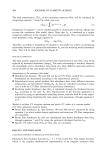
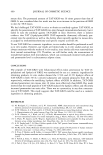
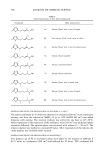
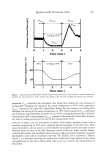
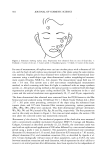
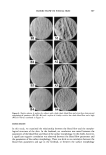
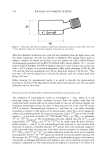
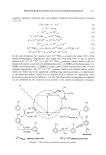
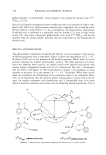
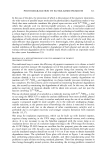
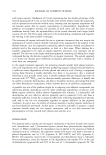
502 JOURNAL OF COSMETIC SCIENCE Figure 2. Schematic showing replica areas. Impressions were obtained from six sites of facial skin. 1: Forehead. 2: Corner of the eye. 3: Lower eyelid. 4: Nasolabial groove. 5: Cheek. 6: Corner of the mouth. For ease of measurement, all replicas were cut into circular pieces with a diameter of 1.8 cm, and the back of each replica was processed into a flat plane using the same impres- sion material. Replica pieces thus obtained were subjected to three-dimensional mea- surement using a small-object-type three-dimensional surface morphological measure- ment system (Voxelan, NKK Co., Ltd., Japan). The measurement visual field was 10 mm x 9.4 mm. This system uses a new non-contact morphological measurement method, in which scanning with laser slit light is combined with an image synthesis system, i.e., the optical cutting method as the optical system is combined with the shape regeneration principle of the space coding method (20). The resolutions in the x- and y-axes and the vertical resolution were approximately 20, 37, and 20 lnm, respectively. The three-dimensional data obtained were converted from the PC98 format to the Mac format and were analyzed using 3D Software Ver 1.3 (Rank Taylor Hobson Ltd.). After 217 x 203 point zoom processing, correction of the slope using the subtracted least squares plane, and 0.25-mm Gaussian filter waviness processing, various parameters (sWa, sWp, sWt, sWq) were calculated. This three-dimensional software determines Wa, Wp, Wt and Wq instead of Ra, Rp, Rt and Rq, respectively. The four parameters used in this study are shown in Figure 3. For cross-sectional analysis, the section 2.06 mm above the corrected screen was transversely extracted. Measurement of skin elasticity. The mechanical properties of the cheek skin were measured with a commercially available instrument (Cutometer SEM575, Courage and Khazaka, Cologne, Germany) as described previously (21,22). Briefly, the time/strain mode was used with an eight-second application of 200 mbar followed by a two-second relaxation period using a probe 2 mm in diameter. The parameters determined were immediate distention (Ue) measured at 0.15 second, final distention (Uf) measured at 7.85 seconds, delayed distention (Uv), and immediate retraction (Ur), as described by Agache eta/. (23). Certain biologically relevant ratios of these parameters, such as Ur/Uf, the ratio between immediate retraction and total distension, which represents the skin's ability to recover to its initial position after deformation, have been reported to be independent of

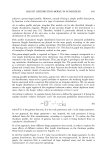
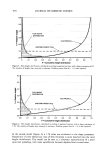
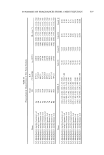
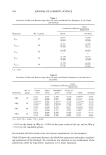
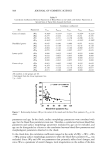
BLOOD FLOW IN FACIAL SKIN 503 Wa Wp Wa is the most commonly used international parameter of roughness. It is the arithmetic mean of the departures of the profile from the mean line. Wa= 1--Lf•]• Wp is the ma•mum height of the profile above the mean 1/ne within the assessment length. Wq Wq is the ms parameters corresponding to Wa. Wt Wt is the ma•mum peak to valley height of the profile in the assessment length. The parameters calculated on the surface repeat the parameter calculation methods used on the profiles, taking the same name preceded by the letter uS", for instance, the Wa parameter becomes sWa, with the same definition. Figure 3. Surface parameters determined in this study. skin thickness (21). Elasticity measurements were carried out five times at the same area, and values were averaged to obtain Uf and Ur/Uf values. Measurement of skin conductance. Changes in the water content of the cheek skin were measured using a skin surface hygrometer (Skicon-200, IBS Co., Hamamatsu, Japan). Conductance measurements were carried out five times at the same area, and values were averaged to obtain individual values. Statistical analysis. The correlation coefficient was calculated from an exponential regres- sion curve using all data. Differences were analyzed by Student's t-test. RESULTS BLOOD FLOW PARAMETERS AND AGE Table I shows the relationship between the blood flow parameters and the age of cheek and forehead skin. No significant correlations were obtained for the cheek skin of elderly subjects aged 60 years or above. However, for the forehead skin, the values of parameters Fn, ax (p 0.05) showed age-associated decreases. CORRELATION BETWEEN AGE AND SURFACE PARAMETERS AT DIFFERENT AREAS OF THE FACE Table II shows the correlation coefficients between age and surface parameters at dif- ferent areas of the face, calculated from the linear and exponential regression curves. Age-associated increases were observed in sWa (p 0.01), sWp (p 0.005), and sWt (p
Purchased for the exclusive use of nofirst nolast (unknown)
From: SCC Media Library & Resource Center (library.scconline.org)