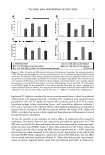
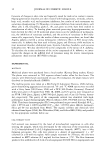
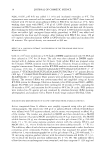
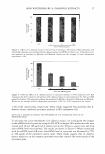
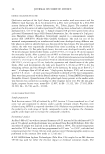
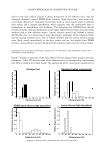
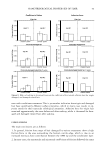
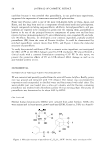
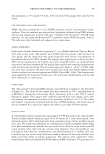
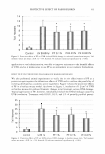
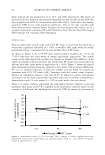
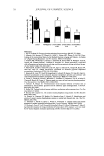
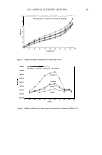
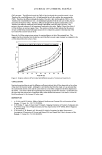
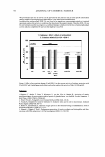
16 JOURNAL OF COSMETIC SCIENCE RESULTS AND DISCUSSION EFFECT OF A. DAHURICA EXTRACT ON MELANOGENESIS IN B16 MELANOMA CELLS We quantitatively examined the effect of A. dahurica extract on melanogenesis. The results are shown in Figure 1. A. dahurica extract decreased the intracellular melanin content at all testing concentrations. At a concentration of 100 µg/ml, A. dahurica extract decreased the melanin content to 68 ± 2.5% compared to those of control cells. These are very significant decreases in melanin content compared to other melanogenic inhibitors such as arbutin. In these experimental conditions, A. dahurica extract did not have any cytotoxic effects. EFFECT OF A. DAHURICA EXTRACT ON THE ACTIVITY OF TYROSINASE IN 816 MELANOMA CEil.S Tyrosinase is the rate-limiting enzyme in melanin synthesis, and some melanin produc- tion-inhibiting agents such as arbutin and kojic acid are known to inhibit tyrosinase activity (15,16). To clarify the inhibitory mechanism of A. dahurica extract on melano- genesis, we examined the effect of A. dahurica extract on tyrosinase activity in B16 melanoma cells. The results are shown in Figure 2. At all concentrations, A. dahurica extract exhibited no influence on tyrosinase activity. From these results, it was indicated that A. dahurica extract did not inhibit tyrosinase activity in B16 melanoma cells. EFFECT OF A. DAHURICA EXTRACT ON THE SYNTHESIS OF TYROSINASE IN 816 MELANOMA CELLS Tyrosinase synthesis was examined by an enzyme-linked immunosorbent assay (ELISA). The results are shown in Figure 3. A. dahurica extract at concentrations of 50, 100, and 1000 µg/ml reduced tyrosinase synthesis to 56 ± 1.5%, 43 ± 1.5%, and 18 ± 120 110 100 80 � ::1. � .!!!. 90 CD C: � 60 0 0 � u C: :c ·2 40 5 CD 70 20 50 0 Ctrl 10 100 Arbutin Cone. of A. dahurica (µg/ml) Figure 1. Inhibitory effects of A. dahurica extract on melanin synthesis in Bl6 melanoma cells. Bl6 melanoma cells were cultured in the presence of A. dahurica extract at concentrations of 1, 10, and 100 µg/ml for 72 hours. The concentration of arbutin was 2 mg/ml. The determination of melanin content (■) was measured as described in Materials and Methods. Cell cytotoxity was measured by an MTT assay ( ♦ ). The viability of cells was expressed as a percentage. Results are the averages of three independent experi- ments ± SD. *p 0.05 compared to the control.

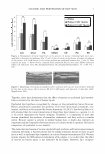
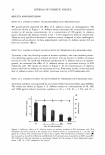
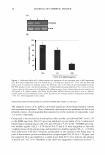
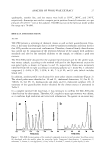
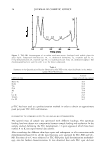
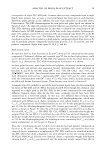
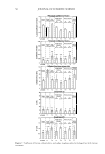
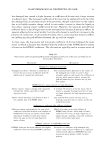
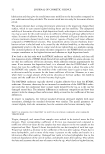
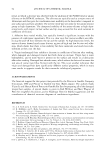
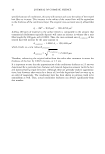
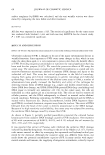
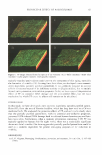
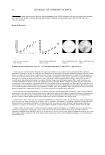
SKIN WHITENING BY A. DAHURICA EXTRACTS 17 100 �- i� 75 Q) 0 "' "' �u 50 �s [� 25 0 Ctrl 10 100 Cone. of A. dahurica(µg/ml) Figure 2. Effects of A. dahurica extract on the activity of tyrosinase. The lysates of Bl6 melanoma ceHs containing tyrosinase were incubated with A. dahurica extract and DOPA for three hours. Tyrosinase activity was measured as described in Materials and Methods. Results are the averages of three independent experiments ± SD. 100 'iii 75 �c:- c: e �§ II) .... ll 0 -� * e -- 50 25 0 Ctr1 50 100 1000 Cone. of A. dahurica (µ9/mL) Figure 3. Inhibitory effects of A. dahurica extract on tyrosinase synthesis in Bl6 melanoma ceHs. Bl6 melanoma cells were cultured in the presence of A. dahurica extract at concentrations of 50, 100, and 1000 µg/ml for 24 hours. The tyrosinase synthesis was examined by ELISA as described in Materials and Methods. Results are the averages of three independent experiments ± SD. *p 0.05 compared to the control. 1.5% of the control value, respectively. These results suggested the possibility that A. dahurica extract inhibited tyrosinase synthesis in B 16 melanoma cells. EFFECT OF A. DAHVRICA EXTRACT ON EXPRESSION OF THE TYROSINASE GENE IN B16 MELANOMA CELLS To elucidate the action mechanism of A. dahurica extract, we investigated the changes in the mRN A level of tyrosinase using the RT -PCR technique. B 16 melanoma cells were treated with 20 and 100 µg/ml of A. dahurica extract for 48 hours, respectively, and then each mRNA level was examined. The results are shown in Figure 4. When normalized with the mRNA level of �-actin, the mRNA level of tyrosinase was decreased by 75% at 100 µg/ml of the untreated control value. These results suggest that A. dahurica extract might act on the common upstream event that controls the transcription of the tyrosinase gene.
Purchased for the exclusive use of nofirst nolast (unknown)
From: SCC Media Library & Resource Center (library.scconline.org)