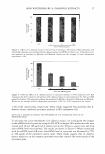
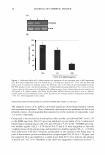
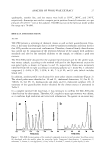
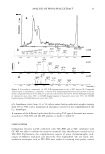
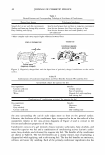
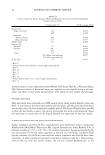
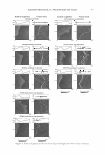
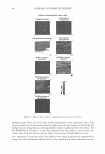
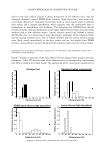
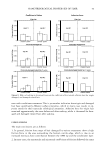
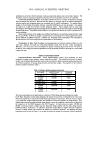
ANALYSIS OF WOOL-WAX EXTRACT 25 analyzed simultaneously by TLC-FID and GC-MS in order to confirm the TLC-FID chemical class identification and its viability as a quality control method. In order to carry out this work, an amber-colored wool-wax extract, obtained by supercritical fluid extraction (SFE) and fractionation of raw wool at constant pressure and temperature, using carbon dioxide modified with ethanol (1), was used. The chosen extract is par- ticularly relevant as it corresponds to the lipids soluble in ethanol therefore, it should contain the most polar lipids such as ceramides constituted of several subclasses (21), which are of major interest due to their properties (5). Therefore, a previous work (1) has been completed by confirming the identification carried out by TLC-FID and by char- acterizing in more detail the polar compounds. MATERIALS AND METHODS STANDARDS AND REAGENTS Chloroform, methanol, n-hexane, diethyl ether, acetone, and benzene (all for analysis) were purchased from Merck (Darmstadt, Germany), formic acid (85%) and perchloric acid (70%) were obtained from Probus (Badalona, Spain), and glacial acetic acid (99.5%) was obtained from Panreac (Barcelona, Spain). Palmitic acid behenyl ester (mono-ES), behenyl alcohol (AL), behenic acid (FFA) cho- lesterol (S), ceramide type II (Cer II), ceramide type IV (Cer IV), 7OH-cholesterol (analytical grade) (7OH-S), galactoceramides (G-Cer), tripalmitoylglycerol (TG), and cholesterol sulfate (S-Sul), all supplied by Sigma (St. Louis, MO) cholesteryl palmitate from Aldrich, (Steinheim, Germany) ceramide type III (Cer III) and ceramide type VI (II) (Cer VI) from Cosmoferm (Delft, The Netherlands) and dipalmitic acid hexadecyl ester (di-ES) synthesized in our laboratory were used as standard compounds for TLC/ FID lipid analysis. All purchased standards were analytical quality grade. Cholesteryl palmitate (97% purity) was obtained from Aldrich. Isooctane for trace analysis, ethyl acetate, and HPLC grade cyclohexane and BSTFA were purchased from Merck. Helium 5.0 grade from Air Liquide (France) was used as the carrier gas. The reagent gas for ionization was electronic grade ammonia from Air Liquide (France). PREPARATIVE TLC FRACTIONATION Fractionation of the lipid classes of an amber wool-wax extract was carried out by means of p-TLC. Prior to fractionation, four different weights of this wool-wax extract (11, 22, 29, and 35 mg) were tested to optimize the resolution, according to plate loading. The dry amber wool-wax extract (-30 mg) was redissolved in chloroform/methanol (2/1, v/v), developed on p-TLC plates silica gel 60 F2 54 (precoated for p-TLC, 20 x 20 cm, 2-mm thickness, Merck) and eluted with n-hexane/diethyl ether/acetic acid (80/20/1, v/v/v). Perchloric acid 40% was used as a universal organic compound developer. Spots were named from A to K, A being the original spotting point. The following spots were obtained: Rf A = 0.000, RfB = 0.033, Rfc = 0.072, RfD = 0.132, RfE = 0.191, Rf F = 0.23 7, Rf G = 0.283, Rf H = 0.368, Rf1 = 0.467, Rf 1 = 0.5 5 3, and RfK = 0. 7 30. They were scraped from the silica plate, extracted by sonication with chloroform/methanol (2/1, v/v) and concentrated roughly to 1 ml under a gentle nitrogen stream.

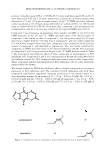
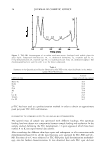
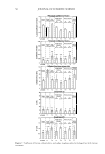
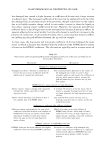
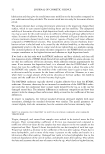
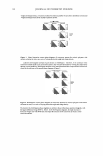
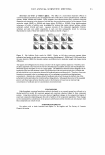
26 JOURNAL OF COSMETIC SCIENCE EXTRACT ANALYSIS BYTLC/FID Qualitative analyses of the lipid classes present in an amber wool-wax extract and the different lipid fractions (A to K) obtained by p-TLC were performed by a TLC-FID system (Iatroscan MK-5 Iatron Laboratories, Inc., Tokyo, Japan). The standard com- pounds or the dry extract of amber wool wax (25-60 mg) were redissolved in chloroform/ methanol (2/1, v/v) (5-12 mg ml- 1 ). Sample aliquots (0.8 µl) were spotted onto silica gel-coated Chromarods (type S-111) (Iatron Laboratories, Inc.) by means of a 2-µl preci- sion Hamilton syringe (Bondaluz, Switzerland) coupled to a semiautomatic sample spotter SES 3200/IS-0l (Nieder-Olm GmbH, Germany). The rods (in sets of ten mounted semipermanently on stainless-steel racks) were developed using different mo- bile phases in order to identify them as a function of the lipid classes. For non-polar lipid classes, the rods were sequentially developed four times according to the method de- scribed elsewhere (1). For polar lipid classes, the rods were developed initially with (i) 70 ml of n-hexane/ diethyl ether/ formic acid (5 3/17 /0.3, v/v/v) up to 10 cm (to separate the non-polar lipids). After a partial scan of 80% to eliminate the non-polar lipids, the redevelopment of the rod with (ii) 70 ml of chloroform/n-hexane/acetone/methanol (5 5/5/7 /3, v/v/v/v) up to 10 cm and (iii) 70 ml of chloroform/n-hexane/acetone/methanol (48/12/9/1, v/v/v/v) up to 10 cm, leads the separation and identification of the polar lipids. After each development, the rods were heated for 5-10 min at 60°C to dry the remaining solvent, and run through a FID in the Iatroscan, by using an air flow of 2 l min- 1 , a hydrogen flow of 160 ml min- 1 (high-purity hydrogen, C50), and a scanning speed of 3.0 cm sec- 1 . A total scan was performed to identify all the lipid components. Data were then processed with the Boreal software version 2.5 fromJMBS Developments (Grenoble, France). Quantification of the polar lipid classes present in the amber wool- wax fraction was carried out according to their response factor (22). For the non-polar lipids, response factors were: mono-ES= 32.007, di-ES= 21.322, TG= 27.652, FFA= 24.529, AL= 26.748, and S= 43.046. GC-MS CHARACTERIZATION Sample preparation Each fraction extract (100 µl) isolated by p-TLC (section 2.2) was transferred to a 2-ml conic vial and evaporated to dryness under a gentle nitrogen stream. Fractions were silylated using BSTFA as reported elsewhere (18). Silylation was performed to decrease the polarity of a wide range of lipidic compounds in order to improve the chromato- graphic peak shape and to increase the compound's volatility. Instrumental analysis An Rtx 5-MS of 15 m with an internal diameter of 0.25 mm and a film thickness of 0.25 µm of 5 %-phenyl-methylpolysiloxane was purchased from Restek (Bellefonte, PA). One microliter of sample was injected in the splitless mode at 300°C. The initial temperature was held at 70°C for 1 min, and then programmed at 10° min- 1 to 350 ° C, with the final temperature kept for 15 min (44 min total analysis time). Chromatographic analysis was performed in the constant flow mode at 1.2 ml min - 1 . A GC 6890A from Agilent Technologies (Palo Alto, CA) coupled to an MS detector 5973N was used for either the electron impact or chemical ionization modes. The
Purchased for the exclusive use of nofirst nolast (unknown)
From: SCC Media Library & Resource Center (library.scconline.org)