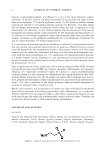
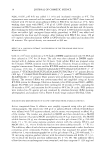
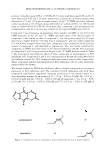
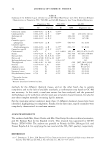
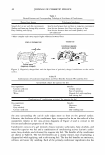
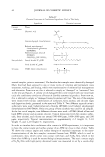
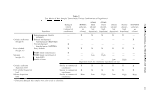
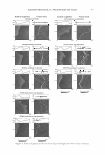
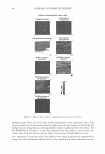
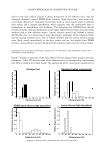
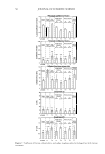
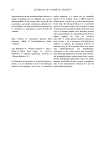
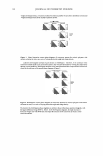
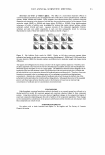
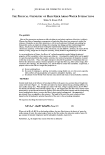
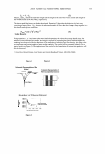
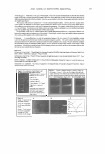
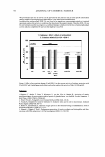
42 Cationic surfactants JOURNAL OF COSMETIC SCIENCE Table IV Chemical Structures of Conditioner Ingredients Used in This Study Ingredient Water Glutamic acid Stearamidipropyl dimethylamine Behenyl amiodopropyl dimethylamine glutamate (BAPDMA) Behentrimonium chloride (BTMAC) CH3(CH2)21N(Cl)(CH3)3 Chemical structure O � OH H,N OH II H,c ,N �N �CH ' H ' CH, CH,(CH,),,CH,-1-CH] 3 Cl. � CH, Fatty alcohols Stearyl alcohol (C 18 0H) CH, HO�CH, Cetyl alcohol (C16OH) HO�CH, Silicones PDMS blend (dimethicone) CH, treated samples, prior to treatment). The baseline hair samples were chemically damaged fibers that had been exposed to one or more cycles of coloring and permanent wave treatment, washing, and drying, which were representative of common hair management and alteration. From now on, this is referred to simply as "damaged" or "untreated" hair in the text and figures. A similar set of damaged fibers were treated with one rinse/wash cycle of a conditioner similar to a Procter & Gamble commercial product. From now on, this is referred to simply as "damaged treated (commercial)" hair. The rest of the samples were treated with various combinations of surfactant, fatty alcohol, and silicone types and deposition levels, presented in the matrix of Table V. Two different types of cationic surfactants were used: behentrimonium chloride (BTMAC) and behenyl amidopropyl dimethylamine (BAPDMA). Only one group of fatty alcohols was used for all samples. In the last set of samples, two different silicones were used: a PDMS (blend of low and high MW) silicone and an amino silicone. Typical deposition levels for cationic surfac- tant, fatty alcohol, and silicone are around 500-800 ppm, 1000-2000 ppm, and 200 ppm, respectively. Typical concentrations are approximately 2-5 weight %, 5-10 weight %, and 1-10 weight %, respectively. In order to simulate hair conditioner-skin contact in AFM experiments, it is important to have the contact angle and surface energy of an AFM tip close to that of skin. Table VI shows the contact angles and surface energies of materials important to the nano- characterization of the hair samples: untreated human hair PDMS, which is used in conditioners skin, which comes into contact with hair and Si 3 N 4 film, which in the form of an AFM tip is used for nanotribological measurements. The static contact angle of Si 3 N4 film with high-purity deionized water was measured in air by a sessile-drop

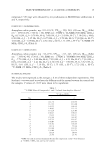
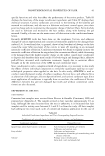
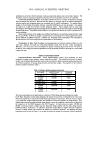
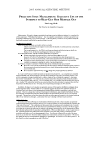
Table V Test Matrix of Hair Samples Treated with Various Combinations of Ingredients* (PDMS (PDMS Damaged (BTMAC blend blend (Amino treated surfactant, silicone, silicone, silicone, (commercial no low high low Ingredient conditioner) silicone) deposition) deposition) deposition) Behentrimonium chloride X X X X (BTMAC) Cationic surfactants Behenyl amidopropyl (weight %) dimethylamine (BAPDMA) Stearamidopropyl X dimethylamine (SAPDMA) Fatty alcohols Fatty alcohols X X X X X (weight%) PDMS blend (dimethicone) X Silicones PDMS blend (with blend of Low High (weight%) high MW) Amino silicone Low Deposition levels for conditioner ingredients on hair Cationic surfactant Similar to commercial X X X X deposition level conditioner Fatty alcohol deposition Similar to commercial X X X X level conditioner Silicone deposition Similar to commercial None Low High Low level conditioner * Untreated damaged hair samples were also tested as a baseline. (Amino silicone, high deposition) X X High X X High (BAPDMA surfactant, no silicone) X X X X None z 0 ?=' - 0 0 Q - r ""CJ ?=' 0 ""CJ trJ ?=' - trJ en 0 "TI ::r: - ?=' � vJ
Purchased for the exclusive use of nofirst nolast (unknown)
From: SCC Media Library & Resource Center (library.scconline.org)