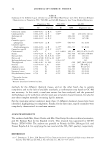
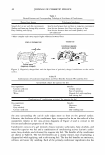
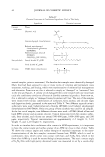
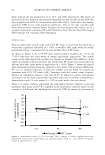
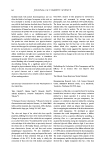
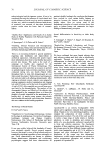
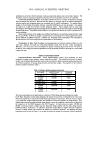
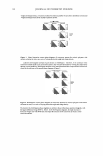
44 JOURNAL OF COSMETIC SCIENCE Table VI Contact Angle and Surface Energy of Relevant Materials Associated with Nanotribological Characterization of Hair Contact angle (0) Human hair Virgin untreated 103a 1006 Damaged Brown coloring 606 Blond coloring 556 PDMS (bulk) 105c Human skin Forehead 55e Forearm 88e 84f Finger 74f 58g (before soap-washing) 104g (after soap-washing) Si3N4 film 356 a Ref. 8. 6 Values obtained from dynamic contact angle measurements. c Ref. 9. d Ref. 10. "Ref. 11. r Ref. 12. g Ref. 13. 11 Values obtained from static contact angle measurements. 1 Ref. 14 Surface energy Q/m2) 0.024a 0.0286 0.0386 0.0476 0.020d 0.043e 0.038e 0.029f 0.024f 0.027g o.o4i method using a contact angle goniometer (Model 100, Rame-Hart Inc., Mountain Lakes, NJ). Five microliters of deionized water was applied on two samples using a micropi- pette, and three contact angle measurements were taken on each sample and averaged. SPECIMEN MOUNTING Hair specimens were mounted onto AFM sample pucks using Liquid Paper® correction fluid. A thin layer of the fluid was brushed onto the puck, and when the fluid hardened into a tacky state, the hair sample was carefully placed. The Liquid Paper® dries quickly to keep the hair firmly in place. An optical microscope was used to preliminarily image the specimen to ensure none of the Liquid Paper® was deposited on the hair surface. SURFACE ROUGHNESS AND FRICTION FORCE MEASUREMENTS Surface roughness and friction force measurements were performed using a commercial AFM system (MultiMode Nanoscope Illa, Digital Instruments, Santa Barbara CA) in ambient conditions (22 ° ± 1 ° C, 50 ± 5% relative humidity). Square pyramidal Si 3 N 4 tips of nominal 30-50-nm radius attached to the end of a soft Si 3 N 4 cantilever beam (spring constant of 0.06 Nim) were used for surface roughness and friction force mea- surements. A softer cantilever was used to minimize damage to the hair. After engage- ment of the tip with the cuticle surface, the tip was scanned perpendicular to the

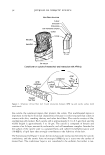
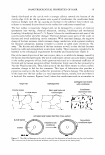
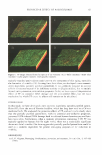
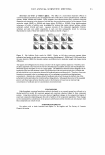
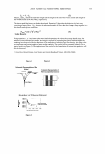
NANOTRIBOLOGICAL PROPERTIES OF HAIR 45 longitudinal axis of the fiber. The tip was centered over the cross section in order to be at the very top of the fiber, so as to negate effects caused by the AFM tip hitting the sides of the hair and adding error to the measurements. In order to minimize scanning artifacts, a scan rate of 1 Hz was used for all measurements. Topographical images to characterize the shape and structure of the various hair specimens were taken at 5 x 5 and 10 x 10 µm2 scans at a normal load of approximately 5 nN. These scan sizes were suitable for capturing the surface features of multiple scales and scale edges of the cuticle. To characterize roughness, 2 x 2 µm2 scans of the cuticle surface without edges were used. Friction force mapping of the scan area was collected simultaneously with rough- ness mapping. A quantitative measure of friction force was calculated by first calibrating the force based on a method by Bhushan (15,16). The normal load was varied from 5 nN to 45 nN in roughly 5-nN increments, and a friction force measurement was taken at each increment. By plotting the friction force as a function of normal force, the average coefficient of friction was determined from the slope of the least-squares fit line of the data. For the macroscale coefficient of friction, the tests were conducted using a flat-on-flat rribometer under reciprocating motion, using polyurethane film as an upper specimen to simulate skin. The coefficient of friction values for the various hair specimens were then indexed against the reference values available for damaged treated hair. Surface roughness images shown in this study were processed using a first-order plane/it command available in the AFM software, which eliminates tilt in the image. Roughness data as well as friction force data were taken after the plane/it command was employed. A first-order flatten command was also used on friction force mappings to eliminate scanning artifacts and to present a cleaner image. ADHESIVE FORCE MEASUREMENTS Adhesive force measurements were made with square pyramidal Si 3 N4 tips attached to the end of an Si 3 N4 cantilever beam (spring constant of 0.58 Nim), using the "force calibration plot technique." In this technique, the AFM tip is brought into contact with the sample by extending the piezo vertically, then retracting the piezo and calculating the force required to separate the tip from the sample. The method is described in detail by Bhushan (15-18). The force calibration plot allows for the calculation of an adhesive force at a distinct point on the sample surface. Consequently, by taking a force calibration plot at discrete sampling intervals over an entire scan area, a resulting adhesive force mapping (also known as force-volume mapping) can be created to display the variation in adhesive force over the surface (19). In this work, plots were taken at 64 x 64 distinct points over a scan area of 2 x 2 µm2 for all hair types and ethnicities. Current Digital Instruments software for the Multimode AFM does not allow direct calculation of the adhesive force from the force-volume maps. Thus, a custom program coded in Matlab was used to display the force-volume maps. The adhesive force for each force calibration plot was obtained by multiplying the spring constant with the horizontal distance (in the retract mode) traveled by the piezo from the point of zero applied load to the point where the tip snaps off.
Purchased for the exclusive use of nofirst nolast (unknown)
From: SCC Media Library & Resource Center (library.scconline.org)