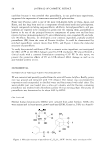
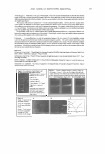
94 JOURNAL OF COSMETIC SCIENCE Power of the Internet It is common knowledge that the general public's use of the Internet is growing exponentially. Just think of how often you use the Internet each day to learn about new products, find facts, do research, fmd an organization, look for vacation destinations, etc. Therefore, it makes sense to consider how we can utilize this great technological tool to help increase public access to information about the science and safety of our products. The Internet may be a great way to inform and educate, establish dialogue, answer questions and, ultimately, build trust with our customers and stakeholders. Our research shows that while most consumers are likely to first hear about a negative, anti-cosmetics campaign on the evening news or in the newspaper, if they want to learn more about the issues, they tend to tum to the Internet. In a recent survey, when asked where they would look for outside information on the ingredients in their products, 57% of both Americans and Europeans indicated they would look on the Internet. The next most turned to resources were news/magazine articles (22% U.S./26% Europe) and family/friends (16% U.S./23% Europe). So, if we accept that the Internet is a good way to reach consumers with our key messages and product information, how can we accomplish our goal without also raising concerns in the minds of consumers who might be casually visiting our sites for other information and had not already been exposed to the issues? I would like to present a short case study that demonstrates the impact of an Internet-based issue management technique P&G Beauty piloted earlier this year in response to an ongoing anti-cosmetics campaign. We call the technique "selective visibility." By this, I mean: Making information "findable" via search engines in this way, the consumers use the search engines to find (and be taken directly to) the information that they want (i.e., the consumer is boss) At the same time, the issue-specific information on our site was slightly 'buried' in the site architecture to avoid raising issues for "casual" visitors to the site. Specific website content was developed to address key issues being raised in the anti-cosmetic campaign, such as general cosmetic safety, phthalate ingredient safety, regulation of cosmetics in the U.S. versus the EU, etc. This information was "optimized" for Internet "fmdability" by using techniques that are very common to IT professionals and then placed several layers down within our tiered site architecture. In this way, the information was available in two ways ... 1) via search engine results using specific key words in Google, Yahoo, etc. or 2) by really looking for it on our P&G Beauty Science website (a process that would generally take 3-4 "clicks" to navigate to the relevant data). Was It Successful? To help determine whether these techniques were effective in getting our message in front of the targeted consumers and stakeholders, we analyzed site traffic/visitors to the pages containing the specified content. Even though media coverage of the anticipated anti-cosmetics campaign was minimal during the monitoring period, traffic to our site was doubled compared to the pre-optimization months (4,000 visitors in July '05 versus - 2000/month in the April-June '05 period). In addition, traffic to the key pages containing the content that addressed specific issues approximately quadrupled (see table below)! Had the anti-cosmetics campaign really received a lot of media attention, we believe that the site would have been even more useful and successful in helping to get our side of the story heard ..... ensuring at least a more balanced coverage. Beauty Science Web Page Page Views Page Views (July '06) (last half of June '05) !Cosmetic Product Safety Substantiation 11 33 �IR Process 5 37 Cosmetic Regulatory Comparison US vs. EU 37 123 Phthalate Safety 7 546 Hair Dye Safety 24 122 !Antiperspirant/Breast Cancer Myth 4 32 CommonQ&As 25 57 Total 113 950
Purchased for the exclusive use of nofirst nolast (unknown)
From: SCC Media Library & Resource Center (library.scconline.org)