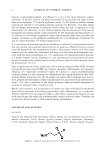
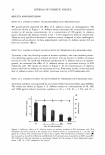
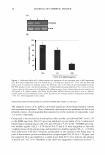
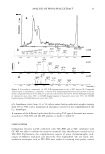
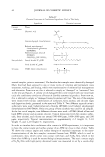
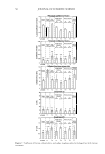
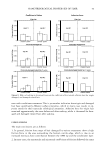
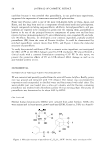
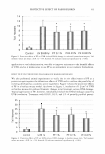
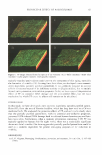
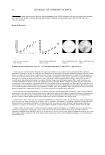
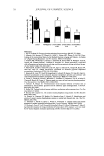
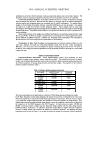
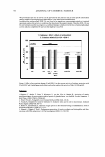
92 JOURNAL OF COSMETIC SCIENCE We proved that such loss of activity can be prevented by the judicious use of some specific antioxidants that are capable of scavenging peroxynitrite before it can induce protein modifications. In addition the catalase mimic EUK-134 was found to be impervious to peroxynitrite attack as it retained maximum catalase-like activity in conditions that deactivated the natural catalase. Therefore EUK-134 can be used with peroxynitrite scavengers in a combined strategy to both prevent the loss of natural antioxidant activity and also complement for any loss that might have occurred. 100 80 � ·= 60 0 no SIN-1 - cat 1. Catalase + SIN-1: effect of antioxidant 2. Catalase mimic Euk-134 + SIN-1 cat +SIN-1 cat + NAC cat+ grape ••d euk-134 euk-134 Figure 1. Effect of peroxynitrite damage (2 mM SIN-1) on the enzyme activity of catalase protection with 25 µM NAC and 4 µg/ml grape seed extract, and on the catalase-like activity ofEuk-134 (50 µg/ml). References I.Okamoto T, Akaike T, Sawa T, Miyamoto Y, van der Vliet A, Maeda H., Activation of matrix metalloproteinases by peroxynitrite-induced protein S-glutathiolation via disulfide S-oxide formation. J Biol Chem ( 2001) 276(31), 29596-602. 2. Elias P, Wood L, Feinglod K, Am J Contact Dermat (1999) 10(3), 119-26. 3. Trouba K, Hamadeh H, Amin R, Germolec D, Oxidative stress and its role in skin disease. Antioxid Redox Signal. (2002) 4(4), 665-73. 4. Dedon P., Tannenbaum S. , Reactive oxygen species in the chemical biology of inflammation. Arch of Biochem and Biophys. (2004) 423, 12-22. 5. Marnett L, Riggins J, West J, Endogeneous generation of reactive oxidants and electrophiles and their reactions with DNA and protein. J ofClin Investigation (2003) 111, 583-593.

2005 ANNUAL SCIENTIFIC MEETING PROACTIVE ISSUE MANAGEMENT: SELECTIVE USE OF THE INTERNET TO HELP GET OUR MESSAGE OUT Tim Long, Ph.D. The Procter & Gamble Company Main premise: We need to change our mindset from being a reactive/defensive industry (i.e., even the title of this symposium - "Defending Our Industry" - has very negative connotations) to one that is proactive in a) promoting/communicating a very positive message ... a) the long history of safe use of our products and b) the health and emotional benefits that our products bring to society. The Bad News Syndrome What do they hear/see about our products in the new media: Almost exclusively they see negative stories about the hazards of cosmetic/personal care products and their ingredients That our government (i.e., the FDA) is not doing an adequate job of protecting our health, etc. Rarely, if ever, do they hear anything positive about our industry Given this media climate, what do consumers think about our products: Perhaps surprisingly, the majority believe that the products� use are safe However, 81 % (US)/53% (Europe) find it very or somewhat believable that personal care products, even when used as directed, could contain ingredients that can be harmful to your body You may also find it surprising that 71 (US)/74% (Europe) of consumers are very/somewhat confident in companies evaluating the safety of products/ingredients So, what are consumer's reactions to what they hear about cosmetic/personal care products? Most can't even recall having heard about the key negative media/ad campaigns against cosmetics Most react positively and are reassured by our counter-balancing key messages (when they have access to them) and, Most consumers indicate that they will not change their product purchase/use behavior So, to put concerns about cosmetic/personal care products into perspective ... our consumers are constantly being bombarded with "doom and gloom" messages about chemicals in all types of consumer products. The activist community is trying extremely hard to create a climate of fear of chemicals in general - what many have termed "chemophobia." Yet, when we ask consumers about their attitudes towards chemicals and they use, our research shows that in the U.S., 25% of consumers feel "very confident" that the products they buy are safe. Another 55% indicate that while they are oncerned about the safety of products in general, they feel that the products that they buy are safe. In Europe, the corresponding percentages are 54% and 39%. In addition, the majority of consumers are generally unaware of the negative information campaigns about product/ingredient safety. Research that we've conducted suggests that about 56% (US)/83% (Europe) of consumers have never heard or read anything about health problems related to ingredients in personal care products. However, among those who have heard negative information, approximately half indicate that they are somewhat concerned about what they heard and about one-third indicate that they are very or extremely concerned. The good news is that these same individuals are often open and receptive to the counter-balancing effect of our industry key messages ... particularly when you're dealing with brand-loyal customers. A Time for Action Given this somewhat conflicting set of information (which basically tells us that consumers are generally confused and uncertain about what they believe), isn't it time for industry to step forward and tell consumers the "other side of the story?" The combination of their general lack of awareness and a moderate level of concern creates an environment that is ripe for more disclosure and information sharing on our part. I'd like to suggest to you that this is exactly the right time for industry to be taking a more proactive role in sharing what we know about the great safety profile of our products and ingredients. When you think about it, we have a great story to tell. Cosmetic/personal care products have been around for a long time and, contrary to what the activists would have you believe, we're not harming people's lives. If we are not willing to tell our side of the story, however, no one else will. The news media certainly aren't interested in our kind of"good news". We need to stop letting the activists' misinformation campaigns go unchallenged. It's time for us to be more proactive! So how, then, do we best communicate our side of the story? 93
Purchased for the exclusive use of nofirst nolast (unknown)
From: SCC Media Library & Resource Center (library.scconline.org)