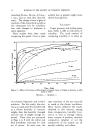
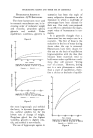
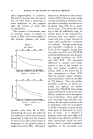
HYGROSCOPIC AGENTS AND THEIR USE IN COSMETICS 29 humectants, based on equilibrium data, is presented. Rate of weight loss of water from O/W cosmetic creams was studied at different humidities and different levels of humectant. In a stearic acid-soap type cream sorbitol was found to retard moisture loss to an increasing extent with increasing amounts of sorbitol. In contrast, the addition of small amounts of glycerin or propylene glycol in- creased the rate of weight loss and only the addition of large propor- tions of these polyols resulted in a reduction of weight loss. In non- ionic emulsified creams the differ- ences between the three humectants were less pronounced. Humectants are added to retard "drying out" of cosmetic creams. One of the effects observed on drying of most cosmetics is the formation of a crust at the exposed surface. In this study, soap emulsified creams formed crusts badly, whereas non- ionic emulsified creams remained smooth and homogeneous even though they had lost similar amounts of weight. Methods of measurement of these properties are described. BIBLIOGRAPHY (1) "Amines," Carbon & Carbide Co., New York (1944). (2) "Average Temperature and Humidity," American Maize-Products Co., Twelve Maps (months of year), New York (1939). (3) "Atlas Sorbitol," Atlas Powder Com- pany (1947). (4) Bauschinger, CI., Fette u. Seifen, 46, 723 (1939). (5) "Carbowaxes," Carbon & Carbide Co., New York (1946). (6) Cessna, O. C., Ohlmann, E. O., and Roehm, L. S., Proc. Sci. Sect., Toilet Goods Assoc., No. 6, 20 (1946). (7) "Dow Glycols," Dow Chemical Co. (1947). (8) Gallagher, A. F., and Hibbert, H., 5 t. Am. Chem. Sot., 58, 813 (1936). (9) "Glycols," Carbon & Carbide Co., New York (1941). (10) Gregory, T. C., e,d,., "Condensed Chem- ical Dictionary,' Reinhold, N. ¾. (1942). (11) Griffin, W. C.,Ind. Eng. Chem., $7, 1126 (1945). (12) Hangen and Watson, "Chemical Proc- ess Principles," P•trt I, John Wiley & Sons, New York (1943), p. 155. (13) Heilbron, I. M., ed., "Dictionary of Organic Compounds," Oxford Univer- sity Press, New York (1934). (14) Hodgroan, C., ed., "Handbook of Chem- istry & Physics," Chemical Rubber Publ. Co., Cleveland (1939), pp. 351- 847. (15) 7. Assoc. Oj•c. Agr. Chem., $, 255 (1925). (16) Karolet, J., U.S. Pat., 2,483,418. (17) Kline, G. M., •t. Research Natl. Bur. Standards, 14, 67 (1935). (lit) "Handbook of Chemistry," Lange, N. A., ed., Handbook Publishers, San- dusky, Ohio (1944), pp. 314-654. (19) Lawrie, J. W., "Glycerol and the Glycols," ACS Monograph No. 44, Chem. Cat. Co., New York (1928), pp. 155-207, 369-374. (20) Lesser, M. A., Proc. Sci. Section, Toilet Goods Assoc., No. 3, 7-12 (1945). (21) Livengood, S. M., Chem. Ind., 65, 9411 (1948). (22) deNavarre, Proc. Sci. Sec., Toilet Goods Assoc., No. 4, 22 (1945). (23) "Chem. Eng. Handbook," J. H. Perry, ed., McGraw-Hill, New York (1941), pp. 271-574. (24) Rinkenbach, W. H., Ind. Eng. Chem., 19, 474 (1927). (25) Sheeley, M. L., Ibid., 24, 1060 (1932). (26) Spaght, M. E., Thomas, S. B., and Parks, G. S., •'. Phys. Chem., 36, 882 (1932). (27) "Synthetic Organic Chemicals," Car- bon & Carbide Co., New York (1945). (28) "International Critical Tables," E. W. Washburn, ed., Vols. III and V.

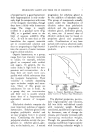
EVALUATION OF IN-VITRO AND IN-VIVO METHODS OF TESTING DEODORANTS WITH PARTICULAR REFERENCE TO CHLOROPHYLL AND ITS DERIVATIVES* By Jox-xN A. K•LL•^N, Ph.D. New York, N.Y. THIs REPORT has been pre- pared with two objectives in mind. The primary objective was the pres- entation of a few series of experi- mental studies which had been selected as representative of both in-vitro and in-vivo methods of evaluating the comparative effi- ciencies of deodorants. Both types of experimental procedures have been adapted to determinations of the deodorant actions of chlorophyll and some of its derivatives. A discussion of the potentialities and limitations of chlorophyll and its derivatives as determined by in- vitro and in in-vivo methods, was the second objective to which this report has been directed. Throughout all subsequent dis- cussions, the term "deodorant" has been used to define chemical compounds or preparations which possess capacities either to inhibit developments of odors and/or to eradicate pre-existing odors. * Presented at the May 18, 1951, Meet- ing, New York City. INTRODUCTION Two principal considerations de- termined the selection of the series of experiments for presentation in the following tables and charts, viz. (a) the fact that the sources of the malodorous compounds, utilized for test purposes, were amenable to the inhibitory or deodorizing actions of cosmetic preparations and (b) the fact that the experimental procedures yielded results which were utilizable as premises for esti- mates of comparative efficiencies of deodorants under actual conditions of use. Inasmuch as all of these sources of odors are either inter•mediate or end products of metabolism taking place within the human body or the resultant products of metabolism of microiSrganisms resident upon the body's surface, the odors have been classified as "biological." The sole purpose of this descriptive classification is to differentiate odors originating in the body or on its cutaneous surface from those de- rived from extraneous sources. 3O
Purchased for the exclusive use of nofirst nolast (unknown)
From: SCC Media Library & Resource Center (library.scconline.org)