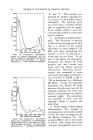
TESTING DEODORANTS WITH CHLOROPHYLL AND DERIVATIVES 31 Biological odors may be sub- divided into two major categories: (a) the metabolic or endogenous odors and (b) the perspiratory or exogenous odors. Odors originating in the mouth or exhaled through the respiratory tract, fecal odors, odors derived from metabolites excreted in urine and odors produced in the vagina are typical examples of metabolic odors. However, dis- cussions in this report will be limited to the sources of odors which are or may be eliminated through the skin. In their identifications of samples of mixtures of liquids and suspended solids which had been collected from skins of human subjects, many authors of publications in clinical and physiological literature have used the words "sweat" and "per- spiration" as synonymous terms. This laxity in nomenclature is de- plorable inasmuch as it has given rise to states of misapprehension and confusion in reference to the chemi- cal composition of the excreta of the skin as distinguished from the diverse constituents of the cu- taneous mantle many of which have been derived from extraneous sources. As a prerequisite to an intelligen t appreciation of the differ- entiation between metabolic odors eliminated through the skin and the putrid odors resulting from putre- factire reactions initiated by bac- teria in the cutaneous mantle, it was deemed advisable to give suc- cinct definitions of the term "sweat" and "perspiration" as they have been used throughout this report. Sweat is the mixture of excretory products, including water, of the coil glands (or eccrine glands) of the skin. Since the collection of pure sweat in quantitiek adequate for comprehensive analyses presents many practical and frequently in- surmountable difficulties (1), the accumulated knowledge of the chemical composition of this excre- tion is, at best, very fragmentary. All that is known concerning the constituents of sweat may be sum- marized briefly in the following statements. Sweat has a specific gravity only slightly greater than that of distilled water (between 1.001 and 1.0015) it contains prac- tically the same metabolites as does the urine but in significantly lower concentrations the principal solid components are sodium chlo- ride, sugar, urea, ammonia, amino acids, lactic acid, uric acid, phos- phates, and sulfates (2, 3, 8, 9, 10, and 11). Excretory functions of the sweat glands are very responsive to incre- ments in body temperature resulting from either rises in temperatures of the environment or increases in internal temperature of the body. The critical range of skin surface temperature, at which the acceler- ated rate of excretion of sweat re- sults in the accumulation of gross moisture on the skin's surface, is between 33 ø and 33.5 ø C. (4 and 5). Thermal stimulation of sweating is the procedure which has been adopted by most experimentalists for purposes of collecting sweat (2 and 6). Although samples col-

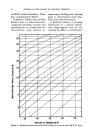
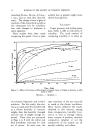
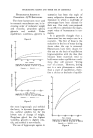
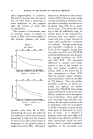
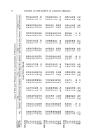
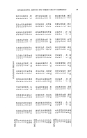
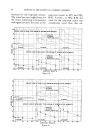
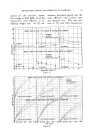
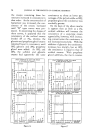
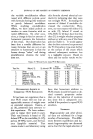
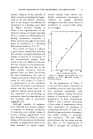
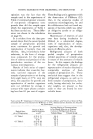
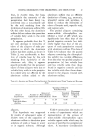
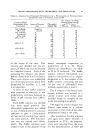
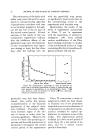
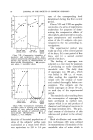
32 JOURNAL OF THE SOCIETY OF COSMETIC CHEMISTS lected from any part of, or from the entire surface area of, the body (except the head and neck) may have been called sweat, in reality they are mixtures of sweat and of a variety of materials which were on the surface of the skin at the time of excretion of the sweat (5). Among these materials which become in- corporated in the sweat either by solution or suspension are: (1) sebum excreted by the sebaceous glands, (2) desquamated epithelial cells and debris derived from these cells, (3) soil or dirt from extraneous sources, and (4) micro6rganisms including resident and contaminant bacteria (7). This mixture of sweat and accumulated materials which the sweat has washed from the skin's surface is called perspiration. Marked variations in the chemical composition of perspiration are de- monstrable among samples collected from any one subject either during morning and afternoon sweating tests of one day or during chrono- logically similar periods on consecu- tive days. Results of analyses of samples of perspiration collected daily from subjects over •eriods of two or more weeks have shown that the diurnal variations in composi- tion are attributable to differences in amounts of the non-sweat con- stituents of perspiration (5). The two predominant factors which con- tribute to these diurnal variations are (a) the rate of excretion of sweat in response to thermal stimu- lation and (b) the state of cleanliness of the skin at the time of collection of the samples (5). Inasmuch as an earlier report published by the author and one of his collaborators (5) has presented all of the essential details of the pro- cedure utilized in collection of samples of perspiration from human subjects and, also, of the techniques adopted for determinations of pO values for odors, descriptions of these methods have been omitted from this report as unnecessarily repetitious: However, at this point, attention should be directed to the fact that two determinations of in- tensities of odors were made of all samples of perspiration. Of these two determinations, the first was carried out on the sample immedi- ately after collection, i.e., of the fresh sample, whereas the second was made on the same sample at the end of a period of storage at 37.5 ø C. for twenty-four hours. The difference between these two pO values for any one sample of perspiration was taken as a quan- titative index of its capacity to develop odors under test conditions which were optimum for growth and multiplication of the several species of micro-organisms removed from skin in the sample of perspiration. During the lag phase of the life cycle of the cutaneous bacteria, the consumption of oxygen by the micro-organisms in perspiration is relatively high. Chart I summa- rizes the results of an experiment which is illustrative of the com- parative oxygen requirements of sterile and non-sterilized aliquots of a pooled sample of perspiration which had been collected from five
Purchased for the exclusive use of nofirst nolast (unknown)
From: SCC Media Library & Resource Center (library.scconline.org)