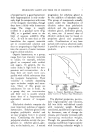
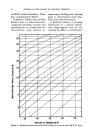
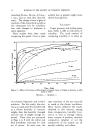
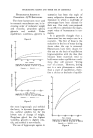
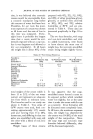
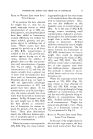
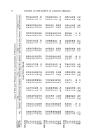
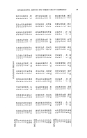
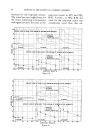
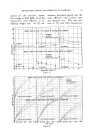
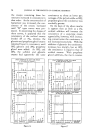
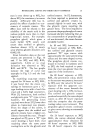
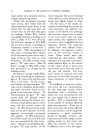
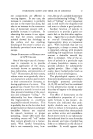
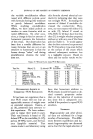
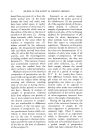
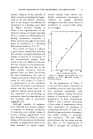
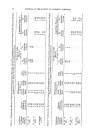
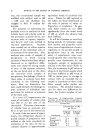
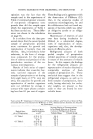
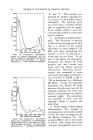
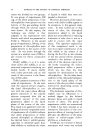
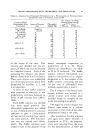
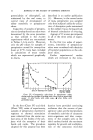
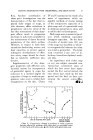
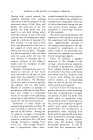
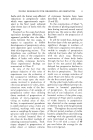
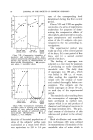
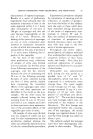
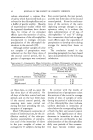
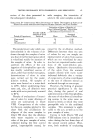
TESTING DEODORANTS WITH CHLOROPHYLL AND DERIVATIVES 53 flora. Another contribution of these prior investigations was the demonstration of the fact that re- peated daily usages of soaps, as skin cleansers, effect reductions in perspiratory odors by virtue of the fact that summations of their deter- gent effects result in progressive decreases in substrates available for the maintenance of dense bacterial populations of the skin's surface. However, in respect to both their immediate deodorizing actions and their capacities to protect against subsequent developments of offen- sive odors, soaps should be classi- fied as relatively ineffective deo- dorants. Supplementation of the deter- gent properties with effective anti- bacterial actions by incorporation of germicidal agents in soaps has enhanced to a marked degree the capacities of soaps to eradicate per- spiratory odors and to inhibit their resurgescence on the skin. Charts IV and V summarize the results of a series of experiments which ex- emplify methods of in-vivo testing of the comparative capacities of a plain soap and of a germicidal soap to eliminate perspiratory odors and to inhibit their re-development. Both soaps were commercial prod- ucts which exhibited equivalent detergent capacities. On the basis of results of in-vitro tests (21) one of the soaps was classified as "plain" or non-germicidal whereas the other was rated as germicidal. The latter soap contained 2 per cent of di- hydroxy hexachloro-diphenyl-meth- ane (22). An experiment with either soap on any one subject extended over twenty-four consecutive days of which the first seven days repre- sented the first control period, the next eleven days made up the test period and the final six days con- stituted the second control [pe- riod. I•/ L I' I I I I f I I I • o o // o_ .a -20 •-o O •- O • -80 -•oo I I I I I I I I I I 2 • 4 T 8 9 10 11 OAYS OF WASHINGS WITH SOAPS I i I I 0 •"0 I I I I 3 4 5 6 OAYS OF SECONO C ON TROt PERIO0 Chart V.--Comparative changes in numbers of viable cutaneous bacteria effected by washings with either plain or germicidal soaps. O after baths with plain soap, ß after baths with germicidal soap.

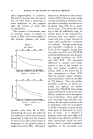
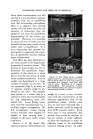
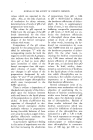
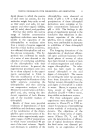
54 JOURNAL OF THE SOCIETY OF COSMETIC CHEMISTS During both control periods, the subjects refrained from washing their skins with the exception of the cutaneous areas of their faces and hands. On each day of the test period, the soap under test was used in a tub bath during which both the manner of use of the soap and the time of bathing were super- vised by a laboratory assistant (5). The amount of soap used in each bath was determined as the loss in dry weight of a fresh cake of soap before and after the bath. Through- out the test period, a daily tub bath with the soap under test was the only method of cleansing the cu- taneous surfaces of the subjects' bodies with the exception of their faces and hands. Samples of perspiration were col- lected at intervals of four hours after the baths on all days of each week with the exception of Satur- days and Sundays. On Mondays of the first week of the test periods, the subjects did not take baths. Results of analyses of samples of perspiration collected on these Mon- days were added to comparable results for samples of the preceding seven days in calculations of average results for the first control period. Intensities of odors which are summarized graphically in Chart IV were recorded as dilutions with air and not as pO values. Among the 15 subjects, averages of intensities of odors of six daily samples of per- spiration varied from 32 to 128 with average deviations ranging from +4 to +8. The average ofintensi- tie.• of perspiratory odors deter- mined during the first control period for any one subject was adopted as a standard and comparable intensities of odors determined during the test and second control periods were calculated as percentage fractions of this standard. One week intervened between the experiment with the plain soap and the experiment with the germicidal soap. Approximately one-half of the subjects participated in the two comparative experiments in the order stated in the preceding sen- tence but this sequence was reversed for the remaining subjects. Chart IV presents a graphic summary of the changes in the average odor-producing capacities of samples of perspiration collected from subjects during test periods, at intervals of four hours after baths with either soap (i.e., between 2 and $ p.m.), and, during the second control period, at corresponding times on each of the last four days of the second control period. Curves in Chart IV indicate pro- gressive decreases in odor-producing capacities of perspiration through- out periods of daily tub baths with either plain or germicidal soap. Comparative rates of declination of the curves give evidences of signifi- cantly more rapid reductions in potentialities for development of perspiratory odors resulting from baths with the germicidal soap than those determined following compa- rable cleansings of the subjects' skins with the product lacking bactericidal properties. It will be noted that four consecutive daily
Purchased for the exclusive use of nofirst nolast (unknown)
From: SCC Media Library & Resource Center (library.scconline.org)