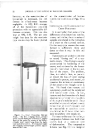
TESTING DEODORANTS WITH CHLOROPHYLL AND DERIVATIVES 57 Sweating tests for purposes of collecting samples of perspiration from subjects' axillas were carried out during mornings (9-10 a.m.) and afternoons (3-4 p.m.) of the first five days of the first control and test periods and of the third day of the second control period. On the sixth day of the first control and test periods (Saturdays), sweating tests were limited to mornings. In three sweating tests, partially disrobed subjects were placed in a hot room of which the temperature is maintained between 40 and 42øC. during one hour. Axillas of all subjects were dried by applications of cleansing tissues to remove gross moisture prior to the admission of the subjects to the hot room. Dried and weighed absorbent pads, which had been designed to contact the entire cutaneous surfaces of the axilla, were introduced into the subjects' axillary fossas and main- tained in place by straps fastened over the shoulders. Each pad is marked for sub- sequent identification in respect to both the subject's number and the axilla into which it was introduced. After the initial drying process, the pads were maintained in a desic- cator up to the time of weighing. Two weighed pads intended for use on one subject were placed in one aluminum container and kept in this closed container until they were placed in the axillary fossas for which they had been intended. Intervals between the weighings of the pads and their insertions into subjects' axillas did not exceed thirty minutes. After introduction of the pads, the inner surfaces of the forearms were fixed against the walls of their chests by placing over the subjects' shoulders a full-length Terry cloth robe and, then, by encircling the chests and arms with several layers of gauze bandages at a level of the middle third of the forearm. At the end of the first fifteen minutes in the hot room, each subject drank 200 c.c. of a hot brew of tea. At the end of the sweating test, the pads were removed from the axillas, and placed in the aluminum container which bore the subject's number. Then, the pads were weighed and the combined increases in weights of the two pads were re- corded as quantities of perspiration excreted into the two axillas during the sweating tests. Following com- pletions of the weighings, the two pads used on any one subject were disintegrated completely and the entire disintegrated mass was sus- pended in 50 c.c. of odorless, dis- tilled water. After thorough agita- tion, this suspension in a closed gas bottle was stored at 37øC. for twenty-four hours. At the ends of periods of incubation, odor values were determined by the air dilution method. During the times requisite for these determinations, the sus- pensions were maintained at 37øC. In view of the fact that several series of preliminary experiments had shown that the maintenance of the absorbent pads in subjects' axillas during sweating tests did not influence significantly the numbers of viable bacteria on the cutaneous

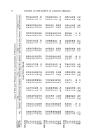
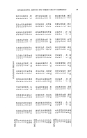
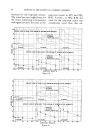
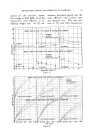
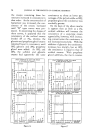
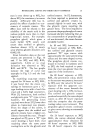
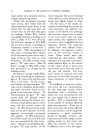
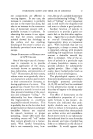
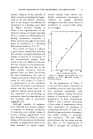
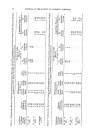
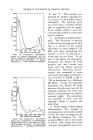
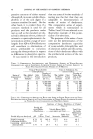
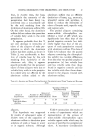
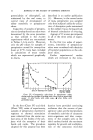
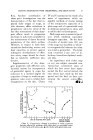
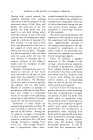
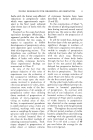
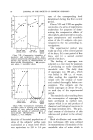
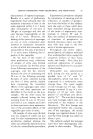
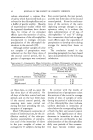
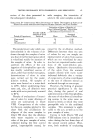
58 JOURNAL OF THE SOCIETY OF COSMETIC CHEMISTS surfaces, samplings of the bacteria on skin were carried out after re- movals of the pads at the ends of these tests. The procedure utilized for these purposes was the direct method of preparing cultures of cutaneous bacteria which has been described by Pillsbury and Nichols (26). Cultures were made oerom two sections of skin in each axilla. Each section had an area of 13.3 sq. cm. The preparation which was ap- plied to skins of the subjects' axillas was a cream of which the principal antiperspirant ingredient was aluminum sulfate constituting, as the anhydrous salt, about 12 per cent of the preparation. On the last day of the first control period, one application of the product under test was made to subjects' axillas after completion of the prepa- rations of the cultures of cuta- neous bacteria which followed the afternoon sweating test of that day. On each of the first five days of the test period, two applications of the preparation were made to both axillas of all subjects. The first of these followed immediately the morning sweating test and the sub- sequent culture of bacteria on the skin and the second had a similar chronological relationship to the afternoon sweating tests and cul- tures. Hence, the p.m. sweating tests yielded data relative to the deodorant and antibacterial actions at intervals ooe about six hours after the preceding application whereas the a.m. sweating tests were repre- sentative of these effects at periods of seventeen ]•ours after the pre- ceding application. Surface areas of skin within the axillary fossas varied among the subjects within the approximate limits of 60 to 84 sq. cm. the mean for all axillas of 15 subjects was 76 sq. cm. One gm. of the cream was weighed out on glassine paper and then transferred to a subject's axilla. After this portion of cream had been spread uniformly, it was rubbed over the entire cutaneous area of the axilla, by a laboratory assistant, until it was apparent that all of the preparation had been absorbed or had penetrated the skin. Throughout the entire period of the experiment, the use of any anti- perspirant or deodorant in the axillary fossas was prohibited. On each day of the first control period, qualitative tests were made for aluminum on skins of all axillas. Also, the subjects were instructed not to wash under their arms. .The schedule for sweating tests followed by cultures of cutaneous bacteria during control periods was the same as that described above for the test periods. In fact, the sole difference between the control periods and the test period was the omission of applications of the anti- perspirant and deodorant cream. The scheme of plotting results of this series of experiments in Chart VI is the same as that adopted in the construction of Charts IV and V. In other words, results ob- tained• for any one subject, during the test and second control period have been represented graphically
Purchased for the exclusive use of nofirst nolast (unknown)
From: SCC Media Library & Resource Center (library.scconline.org)